

This piece looks at that gap specifically — not the mechanics of budgeting line by line, but the handful of underlying patterns that separate people who consistently have money set aside from people who, despite earning a perfectly reasonable income, never quite do.
Quick Answer
Consistent savers aren’t usually earning dramatically more than everyone else — they’re managing the gap between income and spending differently. The core pattern is treating savings as a fixed commitment made the moment income arrives, rather than whatever happens to be left over at the end of the month. Everything else — tracking spending, resisting lifestyle inflation, setting specific goals — supports that one habit rather than replacing it.
Why Saving Doesn’t Come Naturally
Most people assume saving is purely a matter of self-control. It’s more accurate to say it fights against a basic wiring issue: humans generally weigh an immediate reward more heavily than a future one, a tendency researchers call present bias. Spending $50 today feels good right away. Saving that same $50 pays off eventually, but “eventually” isn’t very persuasive against “right now.”
Modern spending has also gotten frictionless in a way that makes this bias easier to act on. Saved payment details, one-tap purchases, and instant delivery have removed most of the natural pauses that used to exist between wanting something and buying it. People who consistently save aren’t necessarily more resistant to that pull — they’ve generally built systems that don’t require resisting it in the moment at all.
The Income Myth
It’s tempting to assume the whole gap comes down to what people earn. In practice, it’s common to see someone earning $120,000 a year with an expensive car payment, frequent takeout, and almost nothing saved, while someone earning half that amount has a steady emergency fund and consistent investment contributions. Income creates the opportunity to save. What actually determines whether that opportunity gets used is spending behavior.
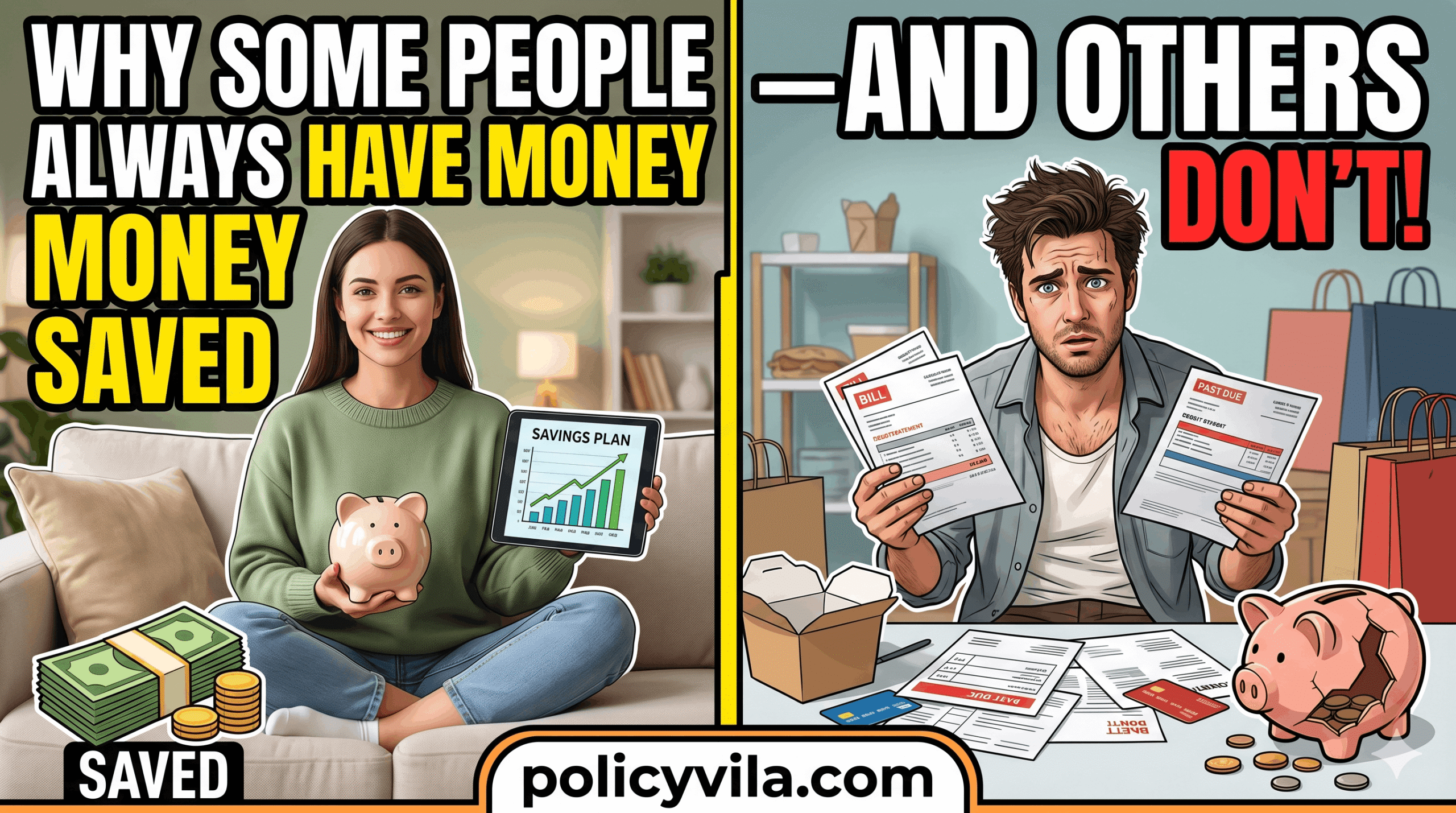
Part of why this myth persists is that income and lifestyle are visible — the car, the apartment, the vacations — while savings balances aren’t. It’s easy to assume a comfortable-looking lifestyle means a comfortable financial position, when in practice the two can be almost unrelated. Wealth accumulates in the gap between income and spending, not in the size of either number alone.
The One Pattern Behind Almost Everything Else
Most people manage money in this order: earn, pay bills, spend, and save whatever happens to be left. By the time housing, groceries, subscriptions, and discretionary spending are accounted for, there’s rarely much remaining.
Consistent savers generally reverse that order: earn, save immediately, then pay bills and spend what’s left. The dollar amount doesn’t need to be large to matter — $25 a week works out to roughly $1,300 a year, purely through consistency rather than size. What matters is that saving happens before spending decisions get made, not after.
This works because it removes a decision that would otherwise need to be made fresh every month. An automatic transfer that moves money the day income arrives doesn’t depend on willpower holding up through a hard week; it’s already done before the temptation to spend it ever comes up.
The Habits That Support It
A few other patterns tend to travel alongside “save first,” reinforcing rather than replacing it.
They Know Where Their Money Actually Goes
Consistent savers generally have a reasonably accurate sense of their spending, built from actually looking at statements rather than estimating. That awareness is what makes budget leaks — a subscription nobody uses, delivery fees that crept up — visible enough to fix.
They Resist Letting Spending Rise With Income
A raise or promotion is often treated as an opportunity to upgrade a car, an apartment, or a dining budget. Consistent savers tend to direct a meaningful share of any increase — sometimes as much as half — toward savings or investments before adjusting their lifestyle at all, so income growth actually shows up in their financial position rather than disappearing into it.
They Save Toward Something Specific
“I should save more” rarely sustains itself. “I want $10,000 saved for a down payment within two years” gives the habit an actual target, and breaking that target into smaller milestones makes progress visible along the way.
They Draw a Clear Line Between Wants and Needs
Housing, food, transportation, and healthcare are needs. Most other spending is a want, however reasonable it feels in the moment. A simple pause before non-essential purchases — do I need this, or would I rather have the money toward my goal — catches a surprising number of purchases before they happen.
They Treat an Emergency Fund as Non-Negotiable
Not because they expect disaster, but because they’ve internalized that unexpected expenses aren’t a matter of if but when. A modest cushion — even $500 to start — keeps a car repair or a medical bill from becoming a new source of debt.
They’re Comfortable Waiting
Saving for a purchase and paying cash, rather than financing it immediately, is a small act of delayed gratification that shows up repeatedly among people who build savings consistently. It’s less about deprivation and more about which reward they’re prioritizing — today’s convenience or tomorrow’s flexibility.
A Different Relationship With Money
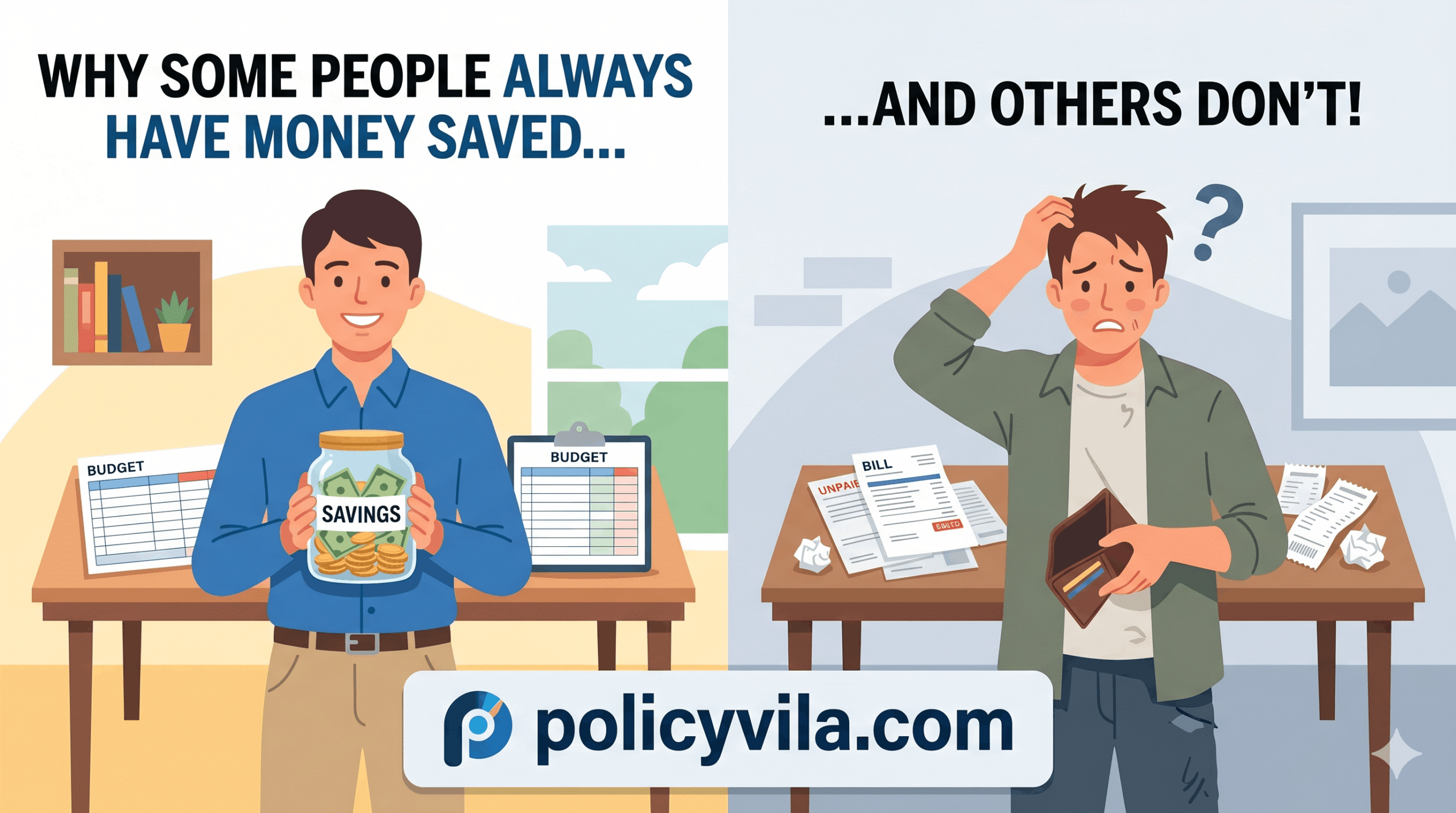
Beyond the mechanics, there’s often a genuine difference in how saving gets framed mentally. People who struggle to save tend to experience it as a sacrifice — money they don’t get to spend. People who save consistently more often describe it as buying future options: flexibility, security, the ability to handle a bad month without panic.
That reframing changes behavior more than it might seem to on paper. Money set aside as “protection” or “freedom” is psychologically easier to leave alone than money experienced as “stuff I’m not allowed to have.” Neither framing changes the math, but one of them makes the habit far easier to sustain for years instead of weeks.
Savers vs. Non-Savers, Side by Side
| Pattern | People Who Struggle to Save | People Who Consistently Save |
|---|---|---|
| Saving order | Save whatever’s left over | Save first, spend the remainder |
| Expense awareness | Estimates spending | Tracks it reasonably closely |
| Response to a raise | Lifestyle expands to match | A share goes to savings before lifestyle changes |
| Financial goals | Vague or unstated | Specific and time-bound |
| Emergency preparedness | Relies on credit if something breaks | Has a fund set aside for exactly this |
| Time horizon | Focused on the current month | Weighs decisions against future goals |
| View of saving | A sacrifice | A form of future flexibility |
Mistakes That Undo Good Intentions
Waiting Until the End of the Month
By the time bills and everyday spending are covered, there’s rarely much left. Reversing the order — saving first — is a bigger structural fix than almost any individual budgeting tweak.
Setting a Target That’s Too Aggressive to Sustain
An ambitious savings goal that collapses after six weeks produces less progress than a modest one kept up for a year. Starting smaller and increasing over time beats an all-or-nothing target that burns out quickly.
Overlooking Small, Recurring Costs
Subscriptions and small convenience charges rarely feel significant individually. Left unchecked, they’re often the biggest gap between what someone assumes they spend and what they actually do.
Measuring Progress by Income Alone
A higher income helps, but it doesn’t automatically translate into savings if spending rises at the same pace. The relevant number is the gap between the two, not either one in isolation.
Comparing Your Progress to Someone Else’s Visible Lifestyle
A nice car or a well-curated social media feed says nothing reliable about someone’s actual financial position — plenty of people who look financially comfortable are carrying real debt, and plenty who live modestly have substantial savings nobody sees.
read also: Renters Insurance for College Students: The Coverage Gap Many Students Overlook
Myths vs. Facts
| Myth | Fact |
|---|---|
| You need a high income to save meaningfully | Saving is primarily a behavior; plenty of moderate earners save more than high earners do |
| Small amounts saved don’t really matter | A small amount saved consistently compounds into a real sum over a few years |
| A good budget means giving up everything enjoyable | A working budget is about spending intentionally, not eliminating enjoyment |
| It makes sense to start saving once income is higher | People who can’t save a small share of a modest income often struggle to save a larger share of a bigger one later |
| Emergency funds are only for major crises | They’re just as useful for the smaller, more frequent surprises — a repair, a medical bill |
If You’re Starting From Zero
None of this requires a financial overhaul to begin. A reasonable starting sequence:
- Set up one automatic transfer, even a small one, timed to the day your income arrives.
- Track spending for a month, honestly, before trying to change anything.
- Pick one specific goal for that money rather than leaving it in a generic account.
- Revisit the amount every few months and increase it when income allows, before lifestyle spending has a chance to absorb the difference.
Frequently Asked Questions
Is there a meaningful difference between people who save naturally and people who had to learn it?
Not really, in outcome. Very few people are simply wired to prefer saving over spending; most consistent savers built the habit deliberately, usually through automation rather than ongoing willpower.
Does having a partner who spends differently make this harder?
It can complicate things, since a shared income with different underlying habits often needs an explicit agreement rather than an assumption that both people are approaching money the same way. Some couples handle this by automating shared savings first and treating remaining income as more flexible individually.
Can someone become a consistent saver later in life, or does it need to start early?
It can start at any point. The habit itself doesn’t depend on age — it depends on reordering when saving happens relative to spending, which is just as effective built at 45 as at 22, even if there’s less time left for compounding to work.
What if my income is irregular and “save first” doesn’t fit neatly into a schedule?
The same principle still applies, just anchored to whenever income actually arrives rather than a fixed calendar date — transferring a percentage of each payment as it comes in, rather than a fixed dollar amount tied to a specific day.
Is it a problem if my savings rate looks small compared to what financial advice generally recommends?
A small, sustained rate that you’ll actually keep up beats a larger one that collapses after a few months. The commonly cited 20% figure is a reasonable aspiration, not a threshold below which saving doesn’t count.
Do consistent savers ever spend impulsively, or is that ruled out entirely?
They generally still do, occasionally. The difference isn’t the complete absence of impulse spending — it’s that the automatic saving already happened before the impulse purchase, so the spending doesn’t come at savings’ expense.
Final Thoughts
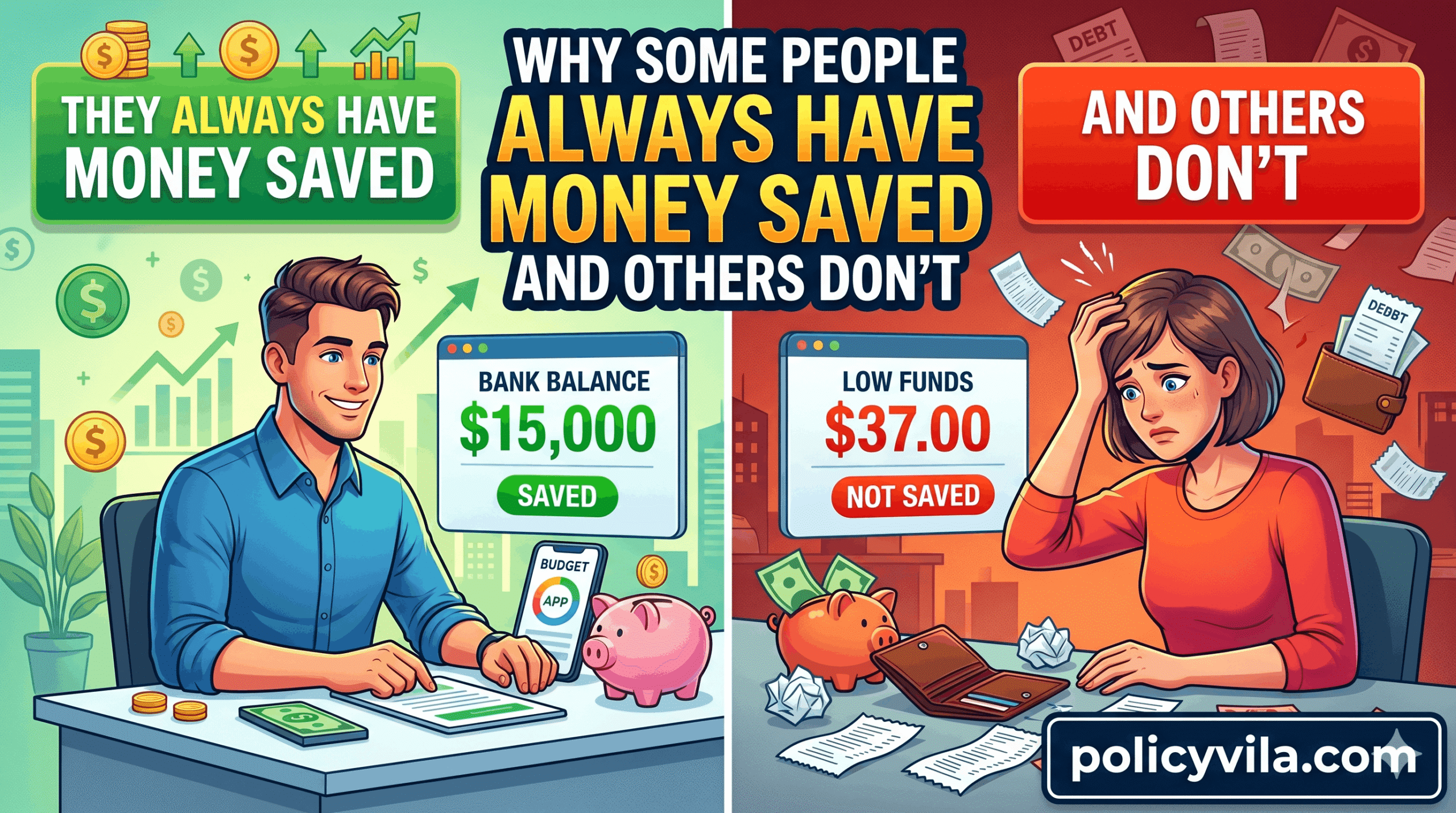
The gap between people who always seem to have money set aside and people who never quite do isn’t luck, and it isn’t usually income either. It’s a handful of habits — saving before spending, tracking where money actually goes, letting income growth strengthen savings rather than just lifestyle — repeated consistently enough to compound.
None of it requires a six-figure income or financial expertise to start. It requires reordering one thing: making saving the first decision in the sequence, not the leftover one.
2 thoughts on “Why Some People Always Have Money Saved—and Others Don’t 2026”