
The Smart Policyholder’s Handbook to Insurance Claim Adjusters

Insurance Claim Adjusters: Insurance is something most homeowners hope they’ll never have to use. Policies are purchased for peace of mind, filed away in a drawer, and often forgotten until an unexpected event turns everyday life upside down. A windstorm tears shingles from the roof, a kitchen pipe bursts overnight, or a vehicle crashes into the front fence. In those moments, the insurance policy suddenly becomes one of the most important financial documents a family owns.

Reporting the loss is usually the easy part. Understanding what happens after the claim is opened is where uncertainty begins.

Within hours of filing a claim, many policyholders receive a message informing them that an insurance claim adjuster has been assigned. For someone who has never filed an insurance claim before, that title can raise more questions than answers. Is the adjuster there to approve the claim? Will they determine the settlement amount? Do they work for the insurance company or for the homeowner? And how much influence do they really have over the final outcome?

These questions are common because insurance claim adjusters work behind the scenes for most of the year. They become visible only when policyholders are dealing with property damage, financial uncertainty, or stressful situations that require quick decisions. Understanding their responsibilities before the inspection takes place allows homeowners to approach the claims process with realistic expectations instead of assumptions.

An insurance claim adjuster is not simply someone who looks at damaged property. Their role is to gather facts, evaluate evidence, review policy coverage, document losses, and prepare an objective assessment that helps move the claim toward a fair resolution. They serve as one of the most important links between the reported damage and the insurance company’s final claim decision.

This handbook has been created to explain that role from the policyholder’s perspective. Rather than focusing on industry jargon or legal language, it explores how insurance claim adjusters work, what homeowners should expect during an inspection, how claims are evaluated, and what practical steps can help create a smoother claims experience.

Whether you’re filing your first homeowners insurance claim or simply preparing for future situations, understanding the adjuster’s responsibilities can help you communicate more effectively, organize stronger documentation, and make informed decisions throughout the entire claims process.


When Your Insurance Claim Starts Taking Shape

For many homeowners, the claims process seems to begin when the adjuster arrives at the property. In reality, that visit is only one stage of a much larger investigation that starts almost immediately after the claim is reported.

Once the insurance company receives notice of a loss, a digital claim file is created. This file becomes the central record for everything related to the incident, including policy information, reported damages, photographs, communication history, and supporting documentation. Before scheduling an inspection, the assigned insurance claim adjuster reviews this information to understand the circumstances surrounding the reported event.

Although every claim is different, the adjuster’s initial review usually focuses on several key questions:

  • What type of loss has been reported?
  • When did the damage occur?
  • Which areas of the property appear to be affected?
  • Has emergency mitigation already been completed?
  • What insurance coverage may apply?
  • What additional information will be needed during the inspection?

This preparation allows the inspection to be organized, efficient, and focused on verifying facts rather than collecting basic information from the beginning.

The Importance of Accurate First Reports

The first description submitted to the insurance company often becomes one of the most important documents in the entire claim. Small details recorded during the initial report may later be compared with inspection findings, repair estimates, contractor reports, and photographs.

For that reason, policyholders should describe the damage clearly and honestly without making assumptions about repair costs or coverage decisions. If information is uncertain, it is usually better to say so than to guess.

Preparing Before the Inspection

A well-prepared homeowner can often make the inspection process more efficient by organizing available documentation before the adjuster arrives. Helpful materials may include:

  • Clear photographs of the damage
  • Videos recorded immediately after the incident
  • Receipts for emergency repairs
  • Maintenance records
  • Contractor estimates (if available)
  • Purchase receipts for damaged property
  • Warranty information
  • A written timeline of events

These records provide valuable context and help support the information discussed during the inspection.

Quick Summary

Before the insurance claim adjuster ever visits your property:

  • The insurance company has already opened a claim file.
  • Initial policy information has been reviewed.
  • Reported damages have been documented.
  • Inspection objectives have been established.
  • Supporting evidence begins shaping the investigation.

The Professionals Working Behind Every Insurance Claim

Most policyholders only meet one person during the claims process, yet several different professionals may be involved behind the scenes. One of the biggest misconceptions is that every insurance claim adjuster performs exactly the same job under the same employer. In reality, the insurance industry relies on multiple types of adjusters, each with distinct responsibilities, reporting structures, and relationships with policyholders.

Understanding who is handling your claim can make conversations more productive and help set realistic expectations from the very beginning.

Rather than viewing every adjuster as simply “the insurance company’s representative,” it’s helpful to recognize that different adjusters enter the claims process for different reasons. Some are permanent employees of an insurer, others are hired temporarily after major disasters, and another group works directly for policyholders instead of insurance companies.

Although their employment arrangements differ, every adjuster shares one primary responsibility: documenting facts and evaluating the reported loss according to the terms of the insurance policy.

Insurance claim adjuster performing a detailed roof and property damage inspection using digital tools after a severe storm.

Staff Adjusters

Staff adjusters are full-time employees of an insurance company. They manage claims exclusively for the insurer that employs them and typically receive ongoing training related to the company’s internal claims procedures, policy language, and documentation standards.

A staff adjuster’s responsibilities often include:

  • Reviewing insurance policies
  • Contacting policyholders
  • Scheduling inspections
  • Examining damaged property
  • Photographing losses
  • Preparing repair estimates
  • Collecting supporting documentation
  • Recommending claim settlements

Because they work within the insurance company, staff adjusters have direct access to internal claim systems, underwriting information, and company guidelines. They frequently handle claims from start to finish, serving as the primary point of contact for the policyholder throughout the investigation.


Independent Adjusters

Independent adjusters are not permanent employees of a single insurance company. Instead, they work for independent adjusting firms and are contracted by insurers whenever additional claim support is needed.

Insurance companies often rely on independent adjusters after:

  • Hurricanes
  • Tornado outbreaks
  • Wildfires
  • Flooding
  • Hailstorms
  • Large regional disasters

These catastrophic events can generate thousands of claims within a short period, making it impossible for an insurer’s internal staff alone to handle the workload.

Although independent adjusters work outside the insurance company, they still evaluate claims according to the insurer’s policies and reporting requirements. Their inspection process generally follows the same professional standards as staff adjusters.


Public Adjusters

Public adjusters operate differently from both staff and independent adjusters.

Instead of representing an insurance company, they represent the policyholder.

Homeowners may choose to hire a public adjuster when they want professional assistance with documenting damages, preparing claim information, reviewing repair estimates, or negotiating certain aspects of the settlement.

Public adjusters typically assist with:

  • Large property losses
  • Complex insurance claims
  • Extensive documentation
  • Inventory preparation
  • Settlement discussions

Unlike insurer-appointed adjusters, public adjusters generally charge a fee for their services based on the agreement made with the homeowner.


Specialty Adjusters

Some insurance claims require expertise beyond standard residential inspections. In these situations, insurers may assign specialty adjusters or bring in technical experts with experience in a specific field.

Examples include:

  • Commercial property losses
  • Heavy equipment damage
  • Agricultural claims
  • Marine insurance
  • Aviation claims
  • Large industrial facilities

These professionals often work alongside engineers, contractors, restoration specialists, or forensic investigators when additional technical analysis is required.


Comparing the Different Types of Insurance Claim Adjusters

Adjuster TypeRepresentsTypical AssignmentMain Responsibility
Staff AdjusterInsurance CompanyEveryday insurance claimsInvestigate and manage claims for one insurer
Independent AdjusterContracted by Insurance CompanyHigh claim volume or catastrophe eventsInspect losses and prepare reports for multiple insurers
Public AdjusterPolicyholderHomeowner-selected representationAssist the policyholder throughout the claims process
Specialty AdjusterInsurance Company or Specialist FirmTechnical or complex lossesEvaluate specialized property or unique claim situations

Beyond the Broken Roof: What an Adjuster Really Evaluates

When most homeowners hear that an insurance claim adjuster is coming to inspect their property, they picture someone taking a few photographs, measuring the damaged area, and preparing a repair estimate.

A professional inspection is far more detailed than that.

The visible damage is only one piece of a much larger investigation. An experienced adjuster evaluates the cause of the loss, the extent of the damage, the condition of the property before the incident, and whether the reported damage falls within the policy’s coverage.

The objective is not simply to determine what is broken—it’s to determine why it happened and what the insurance policy is designed to cover.


The Story Behind the Damage

Every insurance claim tells a story, and the adjuster’s job is to verify whether the available evidence supports that story.

Rather than making assumptions, they compare multiple sources of information, including:

  • The homeowner’s description of the incident
  • Physical evidence at the property
  • Weather conditions
  • Maintenance history
  • Repair records
  • Photographs and videos
  • Contractor observations (when available)

If all of these elements support one another, the investigation generally progresses more smoothly. When significant inconsistencies appear, the adjuster may need additional documentation before reaching a conclusion.


Areas That Receive Special Attention

Although every claim is unique, adjusters commonly inspect several key areas depending on the reported loss.

Inspection AreaPurpose
RoofMissing shingles, hail impact, wind damage, leaks
Exterior WallsCracks, siding damage, impact marks
Windows & DoorsBroken glass, water intrusion, frame damage
Interior CeilingsWater stains, sagging drywall, mold indicators
FlooringMoisture damage, structural movement
PlumbingBurst pipes, leakage source, water spread
Electrical SystemsFire damage, exposed wiring, safety concerns
Personal PropertyVisible damage to insured belongings

Each observation helps determine both the scope of repairs and whether additional investigation may be necessary.


Looking for the Cause, Not Just the Consequences

Two homes can show nearly identical damage while resulting in completely different claim outcomes.

Why?

Because insurance policies often respond to the cause of the damage, not simply its appearance.

For example:

  • A roof damaged by a severe windstorm may qualify as a covered loss.
  • The same roof leaking because of years of neglected maintenance may not receive the same treatment under the policy.

This is why adjusters spend considerable time identifying the origin of the damage rather than focusing solely on visible repairs.


Photographs Become Part of the Permanent Record

Photography plays an essential role during modern insurance inspections.

Rather than taking only a handful of pictures, adjusters may capture dozens—or even hundreds—of images documenting:

  • Overall property condition
  • Close-up damage
  • Roof surfaces
  • Structural components
  • Interior moisture
  • Exterior elevations
  • Safety hazards
  • Serial numbers for damaged equipment (where applicable)

These photographs become part of the official claim file and may later support repair estimates, engineering reviews, or settlement decisions.

Homeowner and insurance claim adjuster reviewing settlement documents, repair estimates, and insurance claim paperwork.

Measurements Matter More Than Estimates

Visual observations alone rarely provide enough information.

Adjusters often measure damaged areas to calculate:

  • Roof replacement size
  • Drywall repairs
  • Flooring replacement
  • Paint requirements
  • Siding quantities
  • Fence repairs
  • Window dimensions

Accurate measurements help produce repair estimates that reflect the actual scope of work rather than rough approximations.


Signs That May Trigger Additional Review

Some inspections reveal circumstances requiring further evaluation.

Examples include:

  • Structural movement
  • Hidden moisture
  • Mold growth
  • Foundation concerns
  • Electrical hazards
  • Multiple causes of damage
  • Conflicting evidence

In these situations, insurers may request additional inspections from engineers, contractors, restoration specialists, or other technical professionals before completing the claim evaluation.


Homeowner Tip

One of the best ways to assist an adjuster is to avoid cleaning up or permanently repairing damaged areas before they have been documented—unless emergency work is necessary to prevent further loss.

Temporary mitigation is usually appropriate, but preserving evidence helps ensure the original condition can still be evaluated accurately.


Inspection Checklist

Before leaving the property, an insurance claim adjuster typically aims to complete the following:

✔ Inspect all reported damage

✔ Photograph affected areas

✔ Record measurements

✔ Verify the reported cause of loss

✔ Discuss observations with the homeowner

✔ Identify any additional documentation needed

✔ Prepare information for the repair estimate

From Inspection Notes to Settlement Numbers

Once the inspection is complete, many homeowners assume the difficult part is over. In reality, one of the most important phases of the insurance claim begins after the adjuster leaves the property.

The photographs have been taken.

Measurements have been recorded.

Damage has been documented.

Now the information must be transformed into a detailed claim evaluation that supports the insurance company’s settlement decision.

This stage combines field observations with policy language, repair pricing, and claim documentation to determine what the insurer may pay under the policy.


Turning Field Evidence Into a Claim Report

An insurance claim adjuster doesn’t simply submit photographs and wait for approval. Instead, they prepare a structured report that summarizes the inspection and organizes every relevant finding.

A typical claim report may include:

  • Property information
  • Cause of loss
  • Date of inspection
  • Areas inspected
  • Damage description
  • Supporting photographs
  • Measurements
  • Repair recommendations
  • Policy considerations
  • Additional documentation requested

The report becomes one of the primary references used throughout the remainder of the claim.


Estimating the Cost of Repairs

One of the adjuster’s key responsibilities is preparing—or reviewing—a repair estimate.

Rather than guessing repair costs, insurers typically rely on standardized estimating software and current regional pricing databases. These systems help produce consistent repair estimates based on local labor rates and material costs.

A repair estimate may include:

Repair CategoryExamples
RoofingShingles, flashing, underlayment
Interior RepairsDrywall, insulation, paint
FlooringCarpet, hardwood, tile replacement
PlumbingPipe repairs, fixtures
ElectricalWiring, outlets, switches
ExteriorSiding, gutters, fencing
CleanupDebris removal, drying services

These estimates represent the projected cost of returning the damaged property to its condition before the covered loss, subject to the policy terms.


Understanding Depreciation

Many homeowners are surprised when the initial payment is lower than the total repair estimate.

One common reason is depreciation.

Depreciation reflects the reduction in value that occurs as certain building materials or personal property age over time. Depending on the insurance policy, depreciation may temporarily reduce the initial claim payment until repairs are completed.

For example:

  • A brand-new roof and a 20-year-old roof do not have the same remaining value.
  • Older flooring may receive a different valuation than newly installed materials.

The way depreciation is applied depends on the specific policy and coverage purchased.


Replacement Cost vs. Actual Cash Value

Insurance policies generally value covered property using one of two methods.

Valuation MethodGeneral Description
Replacement Cost Value (RCV)Pays the cost to replace damaged property, subject to policy terms and conditions.
Actual Cash Value (ACV)Considers depreciation when determining the property’s value at the time of loss.

Understanding which valuation method applies helps homeowners better interpret their claim estimate and payment breakdown.


Reviewing Policy Coverage

A repair estimate alone does not determine the settlement amount.

The adjuster must also compare the documented damage with the coverage provided under the insurance policy.

During this review, several questions are considered: Insurance Claim Adjusters

  • Is the reported cause of loss covered?
  • Are there policy exclusions that apply?
  • Does the deductible affect payment?
  • Are coverage limits sufficient?
  • Are additional endorsements relevant?

This comparison ensures that settlement decisions align with the contractual terms agreed upon when the policy was purchased.

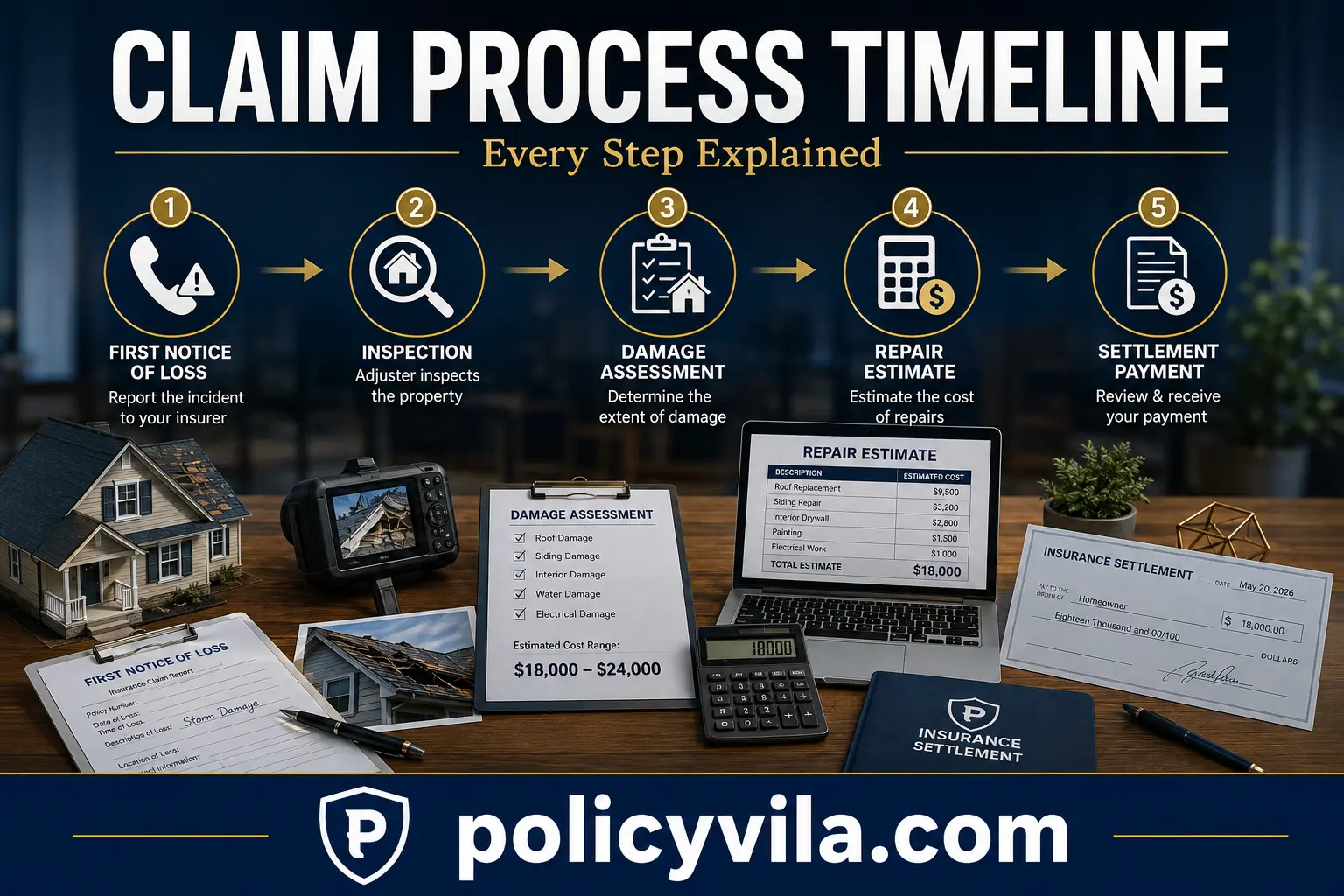
Step-by-step insurance claim process timeline from first notice of loss to final insurance settlement payment.

When More Information Is Needed

Not every claim moves directly from inspection to payment.

Sometimes additional documentation becomes necessary.

Examples include:

  • Contractor repair estimates
  • Engineering reports
  • Additional photographs
  • Maintenance records
  • Proof of ownership
  • Receipts for damaged belongings
  • Temporary repair invoices

Providing requested documents promptly can help reduce unnecessary claim delays.


Common Reasons Settlement Reviews Take Longer

Several factors may extend the review process, including:

  • Extensive structural damage
  • Multiple causes of loss
  • Severe weather affecting many properties
  • Missing documentation
  • Complex commercial claims
  • Disagreements regarding repair scope

Delays do not automatically indicate a denied claim. In many cases, additional review simply ensures that the insurer has enough information to make an accurate coverage decision.


Policyholder Tip

Before discussing settlement amounts, carefully review the estimate provided by the insurance company.

Pay attention to:

  • Areas included in the estimate
  • Items not included
  • Depreciation applied
  • Deductible amount
  • Recommended repairs
  • Measurement accuracy

Asking questions early helps clarify the estimate before repair work begins.

Where Claims Often Go Off Track: Mistakes That Cost Policyholders Time and Money

Insurance claims are rarely denied because a homeowner asked the wrong question. More often, problems arise because important information is missing, documentation is incomplete, or avoidable mistakes create unnecessary complications.

An insurance claim adjuster can only evaluate the evidence available. When records are limited or the damage has been altered before inspection, reaching an accurate conclusion becomes more difficult.

Fortunately, many of the most common claim problems are entirely preventable.


Waiting Too Long to Report the Damage

One of the biggest mistakes homeowners make is delaying the claim.

Some people wait because they hope the problem is minor. Others worry that filing a claim will automatically increase future premiums.

Unfortunately, delaying the report may create additional issues.

For example:

  • Water damage may continue spreading.
  • Mold can develop.
  • Temporary repairs become permanent.
  • Physical evidence may disappear.
  • Determining the original cause becomes more difficult.

Prompt reporting allows both the homeowner and the insurance claim adjuster to document conditions while evidence remains fresh.


Throwing Away Damaged Property Too Soon

Cleaning up after a disaster is understandable.

However, disposing of damaged materials before documentation can weaken the claim.

Whenever possible, homeowners should preserve damaged items until the insurance company confirms they are no longer needed.

Examples include:

  • Broken roofing materials
  • Damaged flooring
  • Burned appliances
  • Water-damaged furniture
  • Broken windows
  • Damaged plumbing components

If immediate disposal is necessary for health or safety reasons, photographs should be taken first.


Forgetting to Document Emergency Repairs

Temporary repairs help prevent additional damage and are often necessary after storms, fires, or plumbing failures.

Examples include:

  • Roof tarping
  • Water extraction
  • Boarding broken windows
  • Temporary fencing
  • Pipe repairs

Homeowners should keep:

  • Receipts
  • Contractor invoices
  • Before-and-after photographs
  • Written descriptions

These records help demonstrate that reasonable steps were taken to reduce further loss.


Guessing Instead of Providing Facts

During stressful situations, homeowners sometimes estimate details they aren’t certain about.

Examples include:

  • Exact repair costs
  • Date damage first occurred
  • Cause of the loss
  • Size of damaged areas

When uncertain, it’s better to simply explain what is known.

Insurance claim adjusters appreciate accurate information far more than confident guesses that later prove incorrect.


Ignoring Small Areas of Damage

Homeowners naturally focus on the most obvious problems.

However, secondary damage can sometimes become just as important.

Examples include:

  • Ceiling stains
  • Damp insulation
  • Warped flooring
  • Exterior cracks
  • Loose gutters
  • Damaged flashing

Mentioning every observed issue allows the adjuster to evaluate the complete scope of the loss rather than only the most visible damage.


Failing to Read the Repair Estimate

Many policyholders immediately look at the settlement amount without reviewing the estimate itself.

The estimate often explains:

  • What repairs were included
  • What materials were calculated
  • Labor assumptions
  • Measurements
  • Depreciation
  • Deductible

Reviewing these details helps identify questions before repairs begin.


Myth vs. Reality

MythReality
The adjuster decides everything alone.Settlement decisions usually involve company procedures, policy language, and documentation.
Bigger damage automatically means a larger payment.Coverage depends on the policy, cause of loss, deductibles, and documented repairs.
Taking more photographs guarantees approval.Photos help support evidence but must align with the facts and policy coverage.
Every repair estimate is final immediately.Estimates may change if additional covered damage is discovered.
The insurance company already knows everything about the property.The adjuster relies heavily on the documentation provided during the claim.

Building a Productive Working Relationship With Your Insurance Claim Adjuster

An insurance claim doesn’t have to become a battle.

Many homeowners assume they need to “fight” the insurance claim adjuster to receive a fair outcome. In reality, most claims progress more efficiently when both parties communicate professionally, exchange accurate information, and focus on documented facts rather than assumptions.

A productive relationship doesn’t mean agreeing on every detail. It means working from the same set of verified information to reach an accurate evaluation of the loss.


Think of the Adjuster as Your Primary Claim Contact

Throughout the investigation, the insurance claim adjuster often becomes your main point of communication.

Their responsibilities typically include:

  • Scheduling inspections
  • Explaining the next stages of the claim
  • Requesting additional documentation
  • Reviewing repair estimates
  • Providing claim updates
  • Answering policy-related questions within their role

Instead of contacting multiple departments, keeping communication organized through the assigned adjuster usually helps avoid confusion. Insurance Claim Adjusters

Homeowners reviewing insurance documents with a professional insurance claim adjuster inside a modern home.

Ask Questions—Don’t Make Assumptions

Insurance terminology can be unfamiliar, especially for first-time policyholders.

If something isn’t clear, ask.

Examples of useful questions include:

  • Which damages were included in the inspection?
  • Are additional documents needed?
  • What happens after today’s inspection?
  • How was the repair estimate prepared?
  • What does my deductible affect?
  • When should I expect the next update?

Most adjusters appreciate questions because they help ensure everyone understands the process.


Keep Every Conversation Organized

As a claim progresses, multiple phone calls, emails, inspection reports, and contractor discussions may occur.

Creating a simple claim record helps keep everything organized.

Consider tracking:

RecordWhy It Matters
Inspection datesCreates a clear timeline
Phone conversationsHelps recall important discussions
Email correspondenceDocuments claim updates
Contractor estimatesSupports repair comparisons
Claim reference numbersMakes future communication easier
Submitted documentsConfirms what has already been provided

Even a basic notebook or digital folder can prevent confusion later.


Respond Promptly to Information Requests

Sometimes an adjuster requests additional documents before moving forward.

Common requests include:

  • Repair invoices
  • Contractor estimates
  • Proof of ownership
  • Photographs
  • Temporary repair receipts
  • Inventory lists

Providing requested information quickly can help reduce unnecessary processing delays.

Waiting several weeks to respond may extend the overall claim timeline.


Stay Focused on Facts

Insurance claims work best when discussions remain objective.

Instead of saying:

“Everything in my house is ruined.”

Try explaining:

“Water entered through the ceiling and affected the drywall, insulation, flooring, and furniture in these three rooms.”

Specific information is easier to investigate than broad statements.

Facts supported by documentation almost always carry more weight than emotional descriptions.


Respect Scheduled Inspection Appointments

Being available during the inspection can be extremely helpful.

Walking through the property with the adjuster allows homeowners to:

  • Point out hidden damage
  • Explain how the incident occurred
  • Answer inspection questions
  • Identify areas that might otherwise be overlooked

If attendance isn’t possible, ensuring someone familiar with the property is present can still improve communication.


Communication Mistakes That Slow Claims

Even straightforward claims can experience delays when communication breaks down.

Avoid these common mistakes:

❌ Ignoring emails for several days

❌ Sending incomplete documentation

❌ Submitting duplicate information repeatedly

❌ Assuming the adjuster already knows new developments

❌ Making permanent repairs before documentation is complete (unless emergency repairs are necessary)

❌ Waiting until the last minute to ask important questions

Small communication habits often make a significant difference in how smoothly a claim progresses.

When the Settlement Arrives: Understanding Your Payment and Your Options

For many homeowners, receiving the settlement letter feels like the finish line.

In reality, it marks the beginning of another important decision-making stage.

The payment you receive is more than just a number deposited into your account. It reflects the insurance company’s evaluation of the documented damage, the terms of your policy, applicable deductibles, depreciation (if relevant), and the estimated cost of restoring the property after a covered loss. Insurance Claim Adjusters

Before accepting any payment or scheduling major repairs, policyholders should understand exactly how that amount was calculated.


Breaking Down a Typical Claim Payment

Insurance settlements often consist of several components rather than one simple figure.

A typical payment may include:

Settlement ComponentPurpose
Covered repair costsEstimated cost to restore damaged property
Personal property reimbursementCompensation for covered belongings
Temporary living expenses (if applicable)Housing and related costs during repairs
Less deductibleHomeowner’s out-of-pocket responsibility
Less depreciation (when applicable)Reduction based on age or condition under certain policies

Understanding each component makes the settlement much easier to evaluate.


Why the First Payment May Not Be the Final Payment

Many homeowners expect to receive one check that covers every repair immediately.

That isn’t always how property claims work.

Depending on the policy and the nature of the loss, claims may involve:

  • An initial payment
  • Supplemental payments
  • Recoverable depreciation (when eligible)
  • Additional approved repairs discovered during reconstruction

For example, contractors occasionally uncover hidden damage after removing drywall or roofing materials. If the newly discovered damage is related to the covered event, additional documentation may allow the claim to be reviewed again.


Reviewing the Estimate Before Hiring Contractors

Before signing repair contracts, compare the insurance estimate with contractor proposals.

Pay attention to:

  • Scope of repairs
  • Materials included
  • Measurements
  • Labor quantities
  • Items listed as excluded
  • Estimated replacement methods

Small differences are common.

Large differences deserve clarification before work begins.


What If the Repair Costs Are Higher?

Construction prices change frequently.

Labor shortages, material costs, or additional damage discovered during repairs can increase expenses beyond the original estimate.

If this happens:

  1. Request a detailed written estimate from the contractor.
  2. Compare it with the insurance estimate.
  3. Provide supporting documentation to the adjuster.
  4. Discuss whether a supplemental review is appropriate.

Never assume the original estimate cannot be updated.

Insurance companies often review additional documentation when justified.


Situations That May Require Further Discussion

Although many claims conclude without complications, homeowners sometimes have questions about the settlement.

Examples include:

  • Certain repairs were not included.
  • Damage appears incomplete.
  • Measurements seem inaccurate.
  • Hidden damage was later discovered.
  • Contractor pricing differs significantly.

These situations do not automatically indicate an error.

They simply mean additional communication and documentation may be necessary.


Decision Matrix: What Should You Do After Receiving a Settlement?

SituationRecommended Action
Settlement matches repair needsBegin scheduling repairs.
Estimate contains unclear itemsRequest clarification from the adjuster.
Contractor identifies additional covered damageSubmit documentation for supplemental review.
Payment seems incompleteCarefully compare the estimate with observed damage before discussing concerns.
Repairs have not started yetReview all documentation before signing contracts.

Keep Every Repair Record

Once repairs begin, continue maintaining organized records.

Important documents include:

  • Contractor contracts
  • Final invoices
  • Material receipts
  • Inspection reports
  • Warranty information
  • Photographs before, during, and after repairs

These records can be valuable if questions arise later or if future insurance claims involve the same property.


Financial Planning After a Claim

Receiving an insurance payment should not automatically change your financial priorities.

Consider: Insurance Claim Adjusters

  • Using settlement funds only for covered repairs.
  • Keeping emergency savings separate.
  • Avoiding unnecessary upgrades that exceed insurance coverage unless planned personally.
  • Reviewing future maintenance needs after repairs are completed.

Insurance is designed to restore covered losses—not finance unrelated renovations.

Comprehensive guide to insurance claim adjusters helping policyholders understand inspections, documentation, and settlements.

Frequently Asked Questions About Insurance Claim Adjusters

1. What does an insurance claim adjuster actually do?

An insurance claim adjuster investigates reported losses, inspects damaged property, reviews documentation, evaluates policy coverage, prepares repair estimates, and helps the insurance company determine how a claim should be handled. Their role is to assess the facts surrounding a claim rather than simply approve or deny payments.


2. Does the insurance claim adjuster work for me?

Usually, no. Most insurance claim adjusters work for the insurance company or an independent adjusting firm hired by the insurer. If you hire a public adjuster, that professional represents your interests instead of the insurance company’s.


3. Can I be present during the property inspection?

Yes. In fact, it’s often beneficial. Walking through the damaged areas with the adjuster allows you to explain what happened, identify less obvious damage, answer questions, and ensure the inspection reflects the full scope of the reported loss.


4. What documents should I prepare before meeting the adjuster?

Helpful documents include:

  • Photos and videos of the damage
  • Repair receipts
  • Emergency mitigation invoices
  • Maintenance records
  • Contractor estimates
  • Purchase receipts for damaged belongings
  • Warranty documents
  • A written timeline of the incident

Organized documentation can make the claims process more efficient.


5. Can an insurance claim adjuster deny my claim?

Adjusters investigate and document the claim, but claim decisions are generally made according to the insurance policy, supporting evidence, company procedures, and internal review processes. The adjuster’s findings are an important part of that evaluation.


6. What happens if I discover additional damage after the inspection?

Notify your insurance company or assigned adjuster as soon as possible. If repairs reveal hidden damage related to the covered loss, additional documentation may allow the claim to be reviewed and updated.


7. Why is my insurance payment lower than the repair estimate?

Several factors can affect the payment amount, including:

  • Policy deductible
  • Depreciation (if applicable)
  • Coverage limits
  • Excluded damage
  • Policy endorsements

Reviewing the estimate carefully helps explain how the settlement was calculated.


8. Should I hire a contractor before receiving the insurance estimate?

Emergency repairs to prevent additional damage are generally appropriate. However, for major restoration work, many homeowners wait until they understand the insurance estimate and scope of covered repairs before signing large contracts.


9. How long does the insurance claim process usually take?

Every claim is different. The timeline depends on factors such as:

  • Severity of the damage
  • Weather-related claim volume
  • Availability of inspections
  • Required documentation
  • Complexity of repairs

Providing requested information promptly can help reduce delays.


10. How can I make future insurance claims easier?

Good preparation makes a significant difference.

Maintain:

  • Updated home inventory records
  • Annual property photographs
  • Maintenance documentation
  • Digital copies of insurance policies
  • Organized receipts for major purchases

These records can simplify future claims and support more accurate documentation.


Final Perspective

Insurance Claim Adjusters claims are about far more than repairing damaged property—they’re about restoring stability after an unexpected event. Whether the loss involves a roof damaged by a storm, water leaking through a ceiling, or personal belongings affected by a covered incident, the claims process works best when homeowners understand how it functions.

Insurance claim adjusters play a central role in that process. They document evidence, inspect property, evaluate reported losses, and help translate physical damage into an organized claim supported by facts and policy language. While they may not make every final decision themselves, their work forms the foundation of nearly every property insurance claim.

For policyholders, preparation is one of the strongest tools available. Accurate documentation, timely communication, organized records, and a clear understanding of policy coverage can reduce misunderstandings and create a smoother claims experience from beginning to end.

No homeowner hopes to file an insurance claim. But when the unexpected happens, knowledge becomes just as valuable as insurance coverage itself.

Leave a Comment