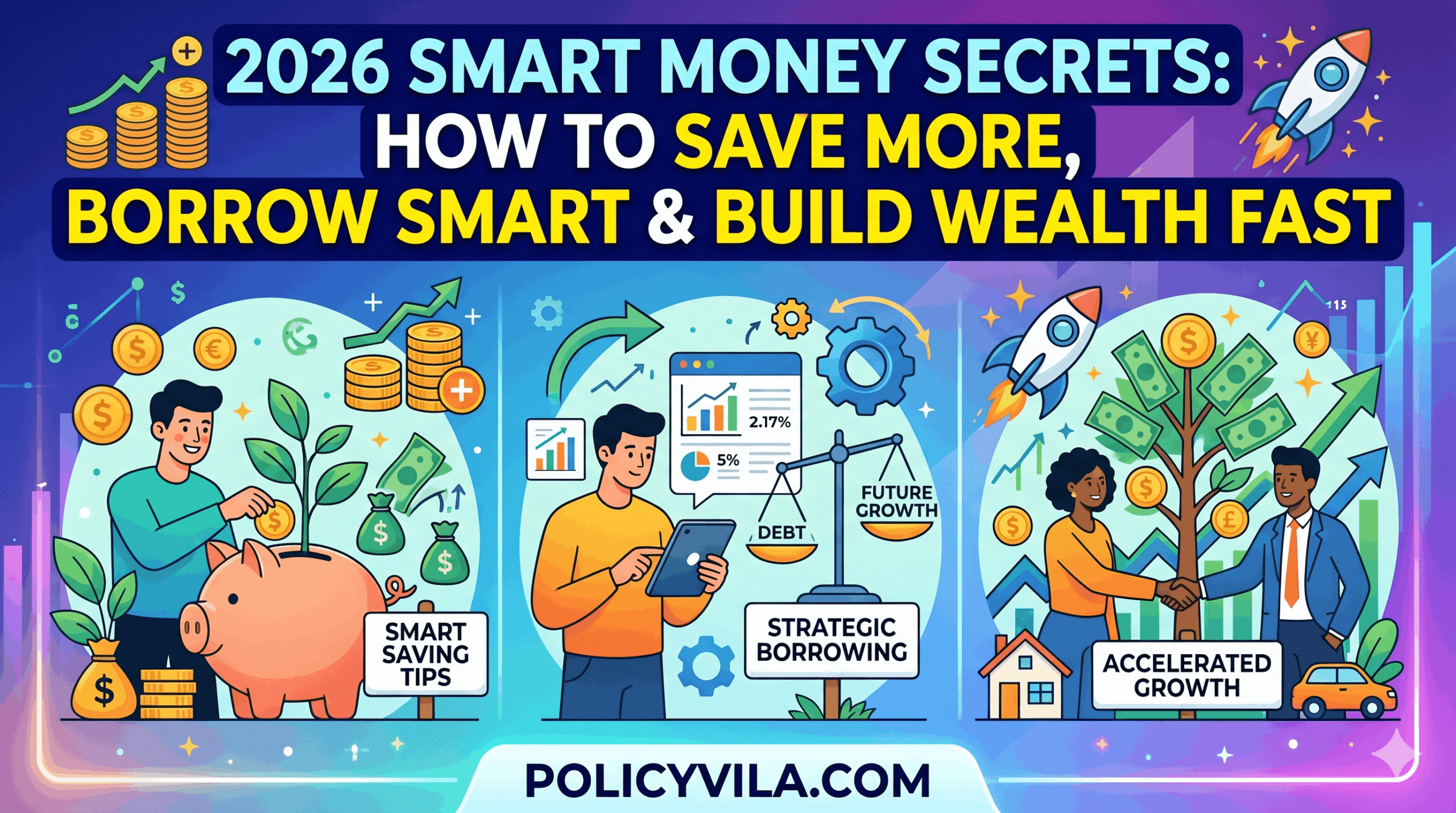

2026 Smart Money Secrets: How to Save More, Borrow Smart & Build Wealth Fast

Introduction to Smart Money Management in 2026

Managing 2026 Smart Money is no longer just about earning and spending—it is about making informed financial decisions that support long-term stability and growth. With rising living costs, digital banking expansion, instant loan approvals, and widespread credit card usage, personal finance has become more dynamic and complex than ever before.

2026 Smart Money Secrets How to Save More, Borrow Smart & Build Wealth Fast

Smart money management in 2026 means understanding how to balance income, control expenses, use credit responsibly, and build savings in a structured way. People who follow basic financial discipline often find it easier to avoid debt stress and achieve financial goals over time.

Today, financial tools are easily accessible. Personal loans can be approved within minutes, credit cards are widely available, and digital payment systems make spending effortless. While this convenience is helpful, it also increases the risk of overspending and poor financial planning if not managed carefully.

A strong financial approach focuses on four key areas: budgeting, saving, borrowing wisely, and planning for the future. Budgeting helps track where money goes, saving builds financial security, borrowing provides support during emergencies, and planning ensures long-term financial independence.

In simple terms, smart money management in 2026 is not about restriction—it is about control. It allows individuals to make better decisions, reduce financial pressure, and build a stable financial future step by step.


Smart Money Guide 2026: Understanding Financial Basics

Understanding financial basics is the first step toward building a strong and stable money management system. In 2026, with increasing access to digital banking, loans, and credit cards, it has become even more important to clearly understand how money flows in and out of your life.

At the core of personal finance are two simple elements: income and expenses. Income refers to the money you earn from jobs, business, or other sources, while expenses refer to everything you spend on daily life, such as food, rent, bills, transportation, and entertainment. When expenses are consistently higher than income, financial stress and debt can quickly build up.

Another important concept is saving. Saving means setting aside a portion of your income instead of spending everything. Even small savings, when done regularly, can create a strong financial safety net over time. This helps in handling emergencies without depending heavily on loans or credit cards.

Credit is another key part of financial understanding. Credit allows you to borrow money and repay it later, but it must be used responsibly. Whether it is a personal loan or a credit card, improper use of credit can lead to long-term debt problems.

Interest is also a crucial concept. When you borrow money, lenders charge extra cost known as interest. Understanding how interest works helps you make better decisions about borrowing and repayment.

In simple terms, financial basics in 2026 revolve around three main principles: earning, saving, and spending wisely. Once these basics are clear, it becomes easier to build a strong financial foundation and make smarter money decisions in the future.


Why Money Management Matters in 2026

Good financial habits help you:

  • Avoid unnecessary debt
  • Build savings faster
  • Improve credit score
  • Reduce financial stress
  • Achieve financial independence

Smart Money Guide 2026: Budgeting for Financial Control

Budgeting is one of the most important parts of smart money management in 2026. It gives you control over your income and expenses so you can decide where your money should go instead of wondering where it went. With rising living costs and easy digital spending options, having a clear budget has become essential for financial stability.

At its core, budgeting means creating a plan for your money. You divide your income into different categories such as essential needs, lifestyle spending, savings, and debt payments. This helps ensure that every rupee or dollar has a purpose and nothing is spent without awareness.

One of the biggest benefits of budgeting is better financial control. When you track your spending regularly, you start noticing unnecessary expenses that can be reduced or removed. Even small changes, like cutting down on unused subscriptions or limiting impulse purchases, can significantly improve your savings over time.

Budgeting also reduces financial stress. When you know exactly how much money you have and where it is going, you feel more in control of your financial situation. This clarity helps you avoid overspending and prevents last-minute financial pressure.

In 2026, many people use simple budgeting methods to manage their money effectively. The 50/30/20 rule is one of the most popular approaches, where income is divided into needs, wants, and savings. Others prefer zero-based budgeting, where every unit of income is assigned a specific purpose so that nothing is left unplanned.

A good budget is not about restricting your lifestyle—it is about creating balance. It allows you to enjoy your money while still preparing for future needs. Whether your goal is saving, investing, or paying off debt, budgeting acts as the foundation of all financial decisions.

In short, budgeting in 2026 is about awareness, discipline, and control. Once you master it, managing money becomes easier, more predictable, and far less stressful.

Budgeting is the foundation of financial success.

What is Budgeting?

Budgeting means planning how to spend your money before you actually spend it.


Popular Budgeting Methods

1. 50/30/20 Rule

  • 50% needs
  • 30% wants
  • 20% savings

2. Zero-Based Budgeting

Every rupee is assigned a purpose.

3. Envelope Method

Cash is divided into spending categories.


Benefits of Budgeting in 2026

  • Better control over spending
  • Higher savings potential
  • Reduced financial stress
  • Improved financial discipline

Smart Money Guide 2026: Smart Borrowing Strategies

Borrowing money is not a negative financial action by itself, but it becomes risky when it is done without proper planning. In 2026, easy access to digital loans and instant credit has made borrowing more convenient than ever, but it has also increased the chances of debt mismanagement. That is why understanding smart borrowing strategies is essential for financial stability.

The main idea behind smart borrowing is simple: take credit only when it is necessary, affordable, and planned. Borrowing should support financial goals, not create long-term pressure.

Smart money management 2026 budgeting and savings planning concept
2026 Smart Money Secrets: How to Save More, Borrow Smart & Build Wealth Fast

When Borrowing Makes Sense in 2026

There are certain situations where borrowing can be a practical financial decision. These include:

  • Medical emergencies where immediate funds are required
  • Home renovation or repair costs
  • Education-related expenses and skill development
  • Debt consolidation to simplify multiple payments
  • Urgent financial needs that cannot be delayed

In such cases, borrowing can help manage cash flow and handle important responsibilities without disrupting financial stability.


Understanding Personal Loans in Smart Borrowing

A personal loan is a structured borrowing option where a fixed amount is borrowed and repaid in equal monthly installments over a set period. It is commonly used for planned or large expenses.

Key Features of Personal Loans

  • Fixed EMI throughout the loan period
  • Fixed repayment duration
  • Predictable monthly financial commitment
  • Clear repayment schedule

Because of this structure, borrowers can plan their monthly budget more effectively.


Advantages of Personal Loans

Personal loans offer several benefits when used responsibly:

  • Often lower interest compared to credit cards
  • Suitable for large and planned expenses
  • Helps consolidate multiple debts into one payment
  • Provides structured repayment discipline

However, it is still important to compare lenders, interest rates, and fees before choosing a loan to ensure affordability.


Smart Money Guide 2026: Credit Card Usage Tips

Credit cards can be a powerful financial tool in 2026 when used with discipline and proper planning. They offer convenience, flexibility, and additional benefits, but they can also lead to financial stress if spending is not controlled. Understanding how to use credit cards wisely is an important part of smart money management.


Benefits of Credit Cards in 2026

When used responsibly, credit cards provide several advantages:

  • Easy and cashless payments for daily expenses
  • Reward points, cashback, and discount offers
  • Emergency access to funds when needed
  • Helps build a strong credit history over time

These benefits make credit cards useful for both regular spending and financial planning.


Risks of Credit Card Usage

Despite the advantages, credit cards also carry certain risks:

  • High interest rates on unpaid balances
  • Temptation to overspend beyond budget limits
  • Possibility of debt accumulation if not managed properly

These risks increase when users do not track their expenses or pay attention to repayment schedules.


Smart Credit Card Usage Tips for 2026

To avoid financial problems and maximize benefits, follow these smart usage habits:

  • Always try to pay the full outstanding balance every month
  • Avoid unnecessary or impulse purchases
  • Track your spending regularly through mobile banking apps
  • Use reward points and cashback offers wisely instead of overspending

Smart Money Guide 2026: Loans vs Credit Cards

the difference between personal loans and credit cards is an important part of smart financial planning in 2026. Both options provide access to borrowed money, but they work in very different ways and are suitable for different financial needs.

Choosing the right option depends on the purpose of borrowing, repayment ability, interest costs, and overall financial discipline.


Personal Loans vs Credit Cards: Key Differences

Personal loans and credit cards differ mainly in structure and repayment style.

  • Personal loans provide a fixed amount of money with a fixed repayment schedule
  • Credit cards offer a revolving credit limit that can be reused after repayment

This difference affects how each option should be used in financial planning.


When Personal Loans Are a Better Choice

Personal loans are usually more suitable for planned or large expenses such as:

  • Medical treatments or emergencies
  • Home renovation or repair costs
  • Education-related expenses
  • Debt consolidation needs
  • Large one-time purchases

Because personal loans have fixed EMIs, they are easier to plan and manage over time.


When Credit Cards Are a Better Choice

Credit cards are more suitable for short-term or flexible spending needs such as:

  • Daily purchases and shopping
  • Online transactions
  • Travel bookings
  • Small emergency expenses
  • Reward-based spending opportunities

Credit cards provide flexibility but require careful control to avoid debt buildup.


Interest Rate and Cost Comparison

One of the most important differences between these two options is cost.

  • Personal loans generally offer lower and fixed interest rates
  • Credit cards often have higher interest rates on unpaid balances

This means long-term borrowing is usually more affordable with personal loans, while short-term spending is more practical with credit cards.

Personal finance guide showing loans credit cards and financial growth
2026 Smart Money Secrets: How to Save More, Borrow Smart & Build Wealth Fast

Financial Discipline and Usage Impact

The effectiveness of both tools depends on user behavior.

  • Personal loans encourage structured repayment habits
  • Credit cards require strong self-control to avoid overspending

Responsible usage of either option can help improve financial stability and credit profile.


Smart Money Guide 2026: Building Emergency Savings

Emergency savings play a crucial role in smart money management in 2026. They act as a financial safety net that protects you from unexpected situations and reduces the need to rely on loans or credit cards during emergencies. Without proper savings, even small financial shocks can turn into long-term debt problems.


Why Emergency Funds Are Important in 2026

Life is unpredictable, and financial emergencies can happen at any time. Having an emergency fund helps you stay financially stable during difficult situations such as:

  • Unexpected medical bills or health issues
  • Job loss or sudden income reduction
  • Urgent home or vehicle repairs
  • Unplanned travel emergencies or family situations

In these cases, emergency savings provide quick access to money without borrowing or paying high interest.


How Much Emergency Savings Should You Have?

Financial experts generally recommend building an emergency fund that covers:

👉 3 to 6 months of essential living expenses

This amount may vary depending on personal lifestyle, income stability, and financial responsibilities. For example, individuals with irregular income may prefer saving more, while those with stable jobs may start with a smaller target.


How to Build Emergency Savings in 2026

Building an emergency fund does not happen overnight. It requires consistency and discipline. Some effective methods include:

  • Saving a fixed percentage of monthly income
  • Cutting down unnecessary expenses
  • Using automatic savings transfers
  • Avoiding unnecessary debt while saving

Even small contributions, when done regularly, can grow into a strong financial backup over time.


Benefits of Having Emergency Savings

Maintaining emergency savings provides several advantages:

  • Reduces financial stress during emergencies
  • Prevents dependency on high-interest loans or credit cards
  • Improves financial confidence and stability
  • Supports better long-term financial planning

Smart Money Guide 2026: Debt Management Strategy

Debt management is a key part of smart money planning in 2026. Debt itself is not always harmful, but the way it is used and managed determines whether it becomes a helpful financial tool or a long-term burden. Understanding how to control debt properly can improve financial stability and reduce stress.


Understanding Debt in Personal Finance

Debt refers to money borrowed that must be repaid over time, usually with interest. In modern financial systems, debt is commonly used for education, housing, business, and emergency needs.

The important factor is not avoiding debt completely, but using it wisely and keeping repayment under control.


Good Debt vs Bad Debt in 2026

Not all debt has the same impact on financial health. It is often divided into two categories:


Good Debt Examples

Good debt is borrowing that may help improve your future financial position or increase long-term value. Examples include:

  • Education loans for skill development or higher studies
  • Home loans for property ownership and long-term asset building

These types of debt are often considered productive because they may contribute to future income or asset growth.


Bad Debt Examples

Bad debt usually refers to borrowing that does not provide long-term value and may create financial pressure. Examples include:

  • Unnecessary shopping or lifestyle-related borrowing
  • High-interest credit card debt carried over time

This type of debt can increase financial stress and reduce savings capacity if not controlled properly.


Smart Debt Management Practices

Managing debt effectively requires discipline and planning. Some useful strategies include:

  • Paying high-interest debt first
  • Avoiding unnecessary borrowing
  • Consolidating multiple debts when possible
  • Making payments on time consistently
  • Keeping total debt within manageable limits

Why Debt Control Matters

Proper debt management helps in:

  • Maintaining a healthy credit profile
  • Reducing financial stress
  • Improving future borrowing opportunities
  • Increasing long-term savings potential

Smart Money Guide 2026: Common Financial Mistakes

financial mistakes is just as important as learning how to manage money. In 2026, with easy access to digital payments, loans, and credit cards, many people make simple errors that can lead to long-term financial stress. Avoiding these mistakes is a key part of smart money management.


Common Money Mistakes to Avoid in 2026

Many financial problems do not happen suddenly—they build up over time due to repeated poor decisions.


Spending More Than Your Income

One of the most common financial mistakes is spending more money than you earn. This creates a gap that often leads to borrowing and debt accumulation.

Over time, this habit can:

  • Increase financial pressure
  • Reduce savings potential
  • Lead to dependency on credit

Ignoring Savings Completely

Many individuals focus only on spending and forget to save. Without savings, even small emergencies can become financial crises.

Not saving regularly may result in:

  • Lack of emergency funds
  • Dependence on loans or credit cards
  • Financial insecurity

Missing Loan or Credit Payments

Missing payments on loans or credit cards can create serious financial consequences.

It may lead to:

  • Late payment penalties
  • Higher interest charges
  • Negative impact on credit score

Consistent payment discipline is essential for financial health.


Using Credit Without Control

Credit cards and loans should be used carefully. Uncontrolled usage often leads to unnecessary debt.

Common issues include:

  • Overspending beyond budget
  • Carrying unpaid balances
  • Accumulating high-interest debt
Digital banking and AI finance tools for smart money control 2026
2026 Smart Money Secrets: How to Save More, Borrow Smart & Build Wealth Fast

Lack of Financial Planning

Without proper financial planning, it becomes difficult to achieve long-term goals.

Poor planning can result in:

  • No clear savings strategy
  • Unorganized spending habits
  • Difficulty managing future expenses

Why Avoiding These Mistakes Matters

Avoiding financial mistakes helps in:

  • Building stronger savings habits
  • Maintaining a healthy credit profile
  • Reducing financial stress
  • Achieving long-term financial goals

Smart Money Guide 2026: How to Build Wealth

Wealth building requires discipline and time.

Wealth Building Strategies

  • Regular saving habits
  • Long-term investing
  • Avoiding unnecessary debt
  • Financial discipline
  • Multiple income sources

Smart Money Guide 2026: Financial Planning Tips

Financial planning is one of the most important parts of smart money management in 2026. It helps individuals take control of their income, expenses, savings, and future goals in a structured way. Without proper planning, it becomes difficult to achieve financial stability or prepare for unexpected situations.


Key Financial Planning Steps in 2026

A strong financial plan is built step by step. Each step plays an important role in improving financial health and long-term security.


Set Clear Financial Goals

The first step in financial planning is setting clear and realistic goals. These goals give direction to your money decisions.

Common financial goals include:

  • Saving for a home
  • Building retirement funds
  • Paying off debt
  • Starting a business
  • Funding education

Having clear goals helps you stay focused and motivated.


Create a Monthly Budget Plan

A monthly budget is essential for controlling income and expenses. It ensures that money is spent in a planned and responsible way.

A good budget helps you:

  • Track spending habits
  • Control unnecessary expenses
  • Improve savings consistency
  • Avoid financial stress

Build an Emergency Fund

An emergency fund protects you from unexpected financial situations.

It can help during:

  • Medical emergencies
  • Job loss situations
  • Urgent repairs
  • Sudden expenses

Having emergency savings reduces dependence on loans or credit cards.


Reduce Unnecessary Expenses

Cutting down unnecessary spending is an important part of financial discipline.

This may include:

  • Unused subscriptions
  • Impulse purchases
  • Excessive entertainment spending

Small savings in daily life can add up significantly over time.


Track Your Financial Progress

Regularly tracking your finances helps you understand your progress and improve decision-making.

Tracking helps you:

  • Monitor savings growth
  • Identify spending patterns
  • Adjust budget when needed
  • Stay on financial goals

Why Financial Planning Matters in 2026

Proper financial planning provides:

  • Better money control
  • Reduced financial stress
  • Improved savings habits
  • Long-term financial security

Smart Money Guide 2026: Future of Personal Finance

In 2026, personal finance is rapidly evolving due to technology, automation, and artificial intelligence. Managing money is no longer limited to traditional banking methods. Instead, digital tools are transforming how people save, invest, borrow, and plan their financial future.

Understanding these changes is important for anyone who wants to stay financially smart and competitive in a fast-changing economy.


Future Trends in Personal Finance in 2026

Several major trends are shaping the future of money management and financial services.


AI-Based Financial Tools in Smart Money Management

Artificial intelligence is now playing a major role in personal finance. AI-powered tools help users:

  • Analyze spending habits
  • Suggest saving strategies
  • Detect unusual transactions
  • Provide personalized financial advice

These tools make financial planning easier and more accurate.


Digital Banking Growth in 2026

Digital banking continues to expand rapidly, reducing the need for physical bank visits. Most financial services are now available through mobile apps and online platforms.

Key benefits include:

  • Instant account access
  • Easy money transfers
  • Real-time transaction tracking
  • Paperless banking services

This shift has made financial management faster and more convenient.


Instant Loan Approvals and Digital Lending

One of the biggest changes in 2026 is the rise of instant loan approval systems. Many financial institutions now use automated systems to approve loans within minutes.

Advantages include:

  • Faster processing time
  • Reduced paperwork
  • Quick emergency access to funds

However, responsible borrowing is still essential to avoid debt issues.


Mobile-First Finance Apps

Mobile applications have become the primary tool for managing money. Users can now:

  • Track expenses
  • Pay bills instantly
  • Manage investments
  • Monitor credit scores

Mobile-first finance solutions provide full control over finances in one place.


Smart Budgeting Tools for Better Money Control

Modern budgeting tools help individuals create and maintain financial discipline.

Features include:

  • Automatic expense tracking
  • Budget alerts and notifications
  • Savings goal tracking
  • Monthly financial reports

These tools help users stay consistent with their financial goals.


The Future of Smart Money Management

The future of personal finance in 2026 is focused on automation, convenience, and personalization. While technology makes financial management easier, it also requires users to stay responsible and informed.

Key takeaway: Technology can support financial success, but smart decisions still depend on personal discipline and awareness.

read also: CGL Policy Insurance: Complete Business Coverage Guide 2026


Conclusion: 2026 Smart Money Secrets for Financial Freedom

Achieving financial freedom in 2026 is not about earning a specific amount of money—it is about how effectively you manage what you already have. Smart money management is built on simple but powerful habits like budgeting, saving consistently, and using credit responsibly.

Throughout this guide, we explored how financial discipline plays a key role in long-term success. Budgeting helps control spending, emergency savings protect you from unexpected situations, and smart borrowing ensures that debt remains manageable instead of overwhelming.

Understanding financial tools like personal loans and credit cards also helps you make better decisions based on your actual needs. When used wisely, they can support your goals; when misused, they can create financial stress.

The real “smart money secret” in 2026 is consistency. Small financial actions taken every day—tracking expenses, avoiding unnecessary debt, and saving regularly—can lead to major long-term results.

Financial freedom is not built overnight. It is the result of disciplined choices, informed decisions, and a clear financial plan. By applying these principles, anyone can move closer to a stable, secure, and independent financial future.

Financial planning strategy with budgeting savings and debt management
2026 Smart Money Secrets: How to Save More, Borrow Smart & Build Wealth Fast

Leave a Comment