

Quick Answer
A typical loan approval process moves through five stages: application submission, document and identity verification, credit and risk assessment, income and debt-to-income analysis, and a final underwriting decision. Many lenders now complete this in minutes for simple cases using automated systems, but that speed depends on clean documentation and a straightforward financial profile — anything unusual (self-employment income, a thin credit file, a high debt load) typically triggers manual review and adds time. Most rejections trace back to one of a few recurring issues: incomplete documentation, a debt-to-income ratio that’s too high, or a credit history that looks inconsistent rather than simply low.
Table of Contents
- The Loan Approval Process, Step by Step
- What Happens Behind the Scenes
- How Automation Has Changed the Timeline
- Common Reasons Applications Get Rejected or Delayed
- Document Checklist Before You Apply
- How Long Approval Actually Takes
- After Approval: What Comes Next
- Mistakes That Slow Down the Process
- Frequently Asked Questions
- Final Thoughts

The Loan Approval Process, Step by Step
1. Application Submission
You provide basic personal, employment, and financial details, along with the loan amount and purpose. Most lenders now accept this entirely online, and some offer an instant pre-qualification estimate based on a soft credit check at this stage.
2. Document and Identity Verification
The bank confirms your identity and cross-checks the details you provided — income statements, employment records, identification documents — against what’s on file or submitted. This step is where mismatched names, outdated addresses, or missing pages most often cause delays.
3. Credit and Risk Assessment
Your credit report is pulled and reviewed alongside repayment history, credit utilization, and account age. This produces an initial risk classification that shapes what happens next — a strong file often moves through automated approval, while a thinner or more complicated one gets flagged for manual underwriting.
4. Income and Debt Analysis
The bank verifies that your income is real and reasonably stable, then calculates your debt-to-income ratio to judge whether you can comfortably absorb another monthly payment. This is often where approved loan amounts get adjusted down from what was requested.
5. Final Underwriting Decision
All of the above gets combined into a final decision: approve at the requested terms, approve with adjusted terms (lower amount, different rate), request more documentation, or decline. Straightforward applications can clear this stage automatically; anything flagged earlier usually goes to a human underwriter.
What Happens Behind the Scenes
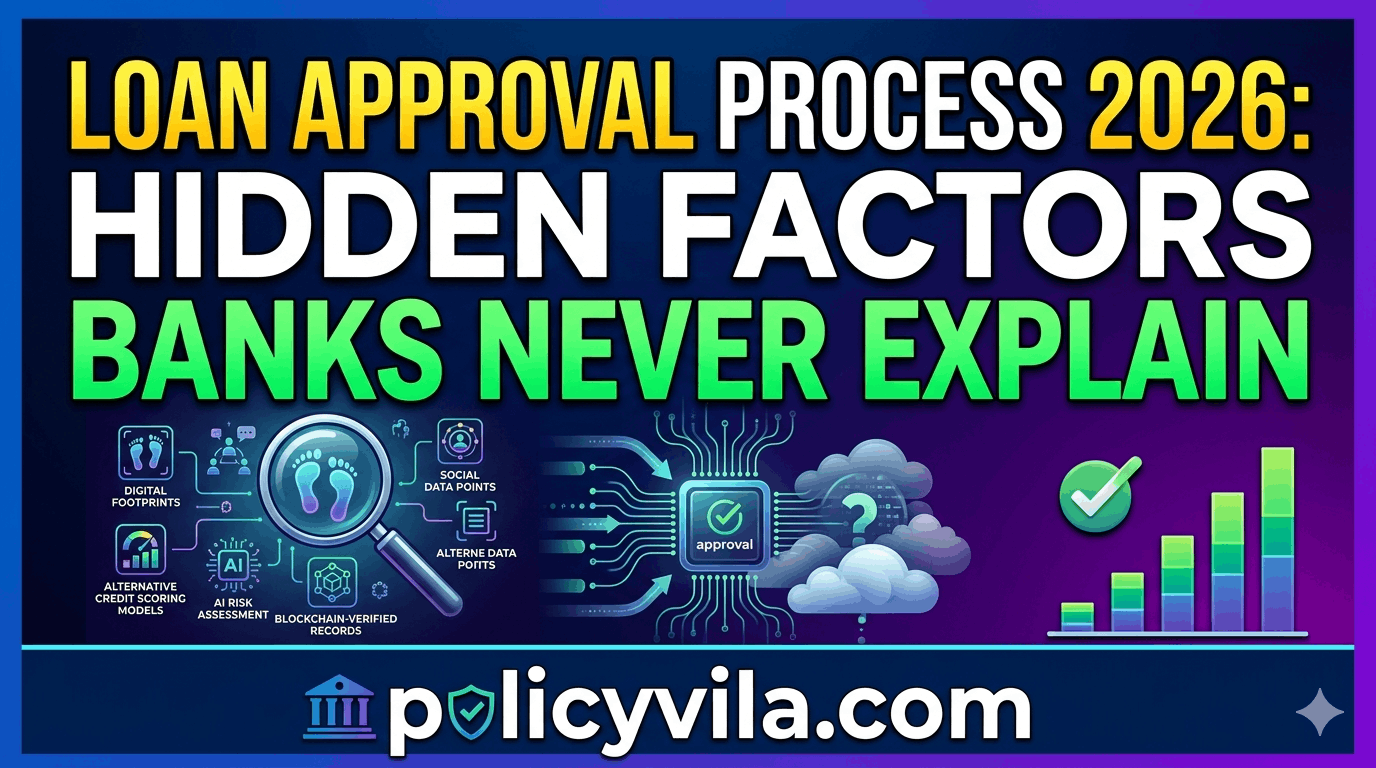
Beyond the visible steps, most banks run an internal risk-scoring process that isn’t fully disclosed to applicants. Rather than a single number, it’s typically a composite built from credit history, income consistency, existing debt exposure, banking relationship history, and — for many digital lenders — transaction-level spending and saving patterns pulled from linked accounts or statements.
This is why two applicants with similar credit scores and income can get different outcomes: the underlying behavior feeding that composite score can differ significantly even when the summary numbers look alike.
How Automation Has Changed the Timeline
Automated underwriting and digital identity verification have made it possible for many lenders to issue decisions on simple, well-documented applications within minutes rather than days. Instant KYC checks, automated income verification through linked bank accounts, and rules-based approval for low-risk profiles all contribute to this speed.
The trade-off is that automation raises the bar for what counts as a “clean” file. A self-employed applicant, someone with a thin credit history, or anyone whose documents don’t perfectly match across sources is more likely to get kicked into manual review — which can take considerably longer than the advertised instant-approval timelines suggest.

Common Reasons Applications Get Rejected or Delayed
| Reason | Why It Happens |
|---|---|
| High debt-to-income ratio | Existing obligations already absorb too much of monthly income to comfortably add another payment. |
| Incomplete or mismatched documentation | Names, addresses, or income figures don’t match across submitted documents. |
| Inconsistent credit history | A pattern of late payments or irregular utilization, even alongside a reasonable score. |
| Unstable or undocumented income | Frequent job changes, or self-employment income without sufficient supporting records. |
| Multiple recent applications | A cluster of hard inquiries in a short window can read as financial distress. |
| Thin banking relationship | Little account history for the lender to assess, especially with a brand-new bank. |
Document Checklist Before You Apply
- Government-issued photo identification
- Proof of address (utility bill, lease, or similar recent document)
- Recent pay stubs or, for self-employed applicants, 1–2 years of tax returns
- Several months of bank statements
- Details of existing loans and credit obligations
- Employment verification contact or letter, if requested
Having these ready before applying — rather than scrambling to produce them after a request — is one of the simplest ways to avoid the delays that come from back-and-forth document requests.
How Long Approval Actually Takes
For a straightforward application with a clean credit file, stable documented income, and a reasonable debt load, many digital lenders can issue a decision within minutes to a day. Applications that require manual underwriting — due to self-employment income, a thin credit file, or unusual banking activity — commonly take anywhere from a few days to two weeks, depending on how quickly requested documents are supplied.
The biggest controllable variable in this timeline isn’t the lender’s technology — it’s how complete and consistent your documentation is when you first submit.
After Approval: What Comes Next
Once approved, you’ll typically receive a formal offer specifying the loan amount, interest rate, term, and any fees. Reviewing this offer carefully — not just the headline rate, but origination fees and prepayment terms — matters before accepting, since the final terms can differ from what was initially estimated during pre-qualification. After acceptance, funds are usually disbursed within a few business days, sometimes instantly for smaller digital loans.
Mistakes That Slow Down the Process
- Submitting incomplete documentation upfront. Each missing item typically triggers a follow-up request, and the process pauses until it’s resolved.
- Applying to several lenders simultaneously without a plan. Beyond the credit-inquiry impact, juggling multiple simultaneous requests for documents can slow down every application at once.
- Providing inconsistent information across documents. A pay stub that doesn’t match a bank statement, or an address that differs across forms, routinely triggers manual review.
- Not disclosing existing debt accurately. Lenders cross-check this against your credit report regardless, so omissions just add a verification step rather than helping the application.
- Assuming pre-qualification is the same as final approval. Pre-qualification is a preliminary estimate; treating it as guaranteed can lead to poor timing on other financial decisions made in the meantime.
Frequently Asked Questions
Can a loan be approved and then denied later?
Yes, though it’s uncommon. If verification during underwriting reveals inconsistencies — undisclosed debt, income that doesn’t match documentation, or a significant change in credit standing before funds are disbursed — a lender can rescind an earlier approval.
Does the loan purpose affect how the application is processed?
For personal loans, the stated purpose rarely changes the underwriting process itself, though some lenders offer different rate tiers for specific purposes like debt consolidation, and a few restrict use for certain purposes (like further investment in volatile assets).
Why did I get approved for less than I requested?
This usually reflects the lender’s debt-to-income calculation — even with good credit, the requested amount may have pushed your monthly obligations past what the lender’s internal threshold allows.
Does checking my own credit score before applying hurt my chances?
No. Checking your own credit report or score is a soft inquiry and doesn’t affect your score, unlike the hard inquiry a lender performs when you formally apply.
What’s the difference between pre-qualification and pre-approval?
Pre-qualification is typically a quick estimate based on self-reported information and a soft credit check. Pre-approval usually involves a more thorough review, sometimes including a hard credit inquiry, and carries more weight — though neither guarantees final approval once full underwriting begins.
Can I speed up manual underwriting?
Responding quickly and completely to document requests is the most effective lever you control. Following up proactively — rather than waiting for a reminder — can also help, particularly with smaller lenders that don’t have fully automated status tracking.

Final Thoughts
The loan approval process looks simple from the applicant’s side — fill out a form, wait for a decision — but underneath it involves document verification, credit and risk analysis, debt-to-income calculations, and, at many lenders, an automated behavioral risk score built from banking data. Most delays and rejections trace back to a small set of avoidable issues: incomplete or mismatched documents, a debt load that leaves too little room for a new payment, or a credit history that reads as inconsistent even when the score itself looks fine.
Preparing documentation before applying, understanding your own debt-to-income ratio ahead of time, and treating pre-qualification as an estimate rather than a guarantee are the most reliable ways to move through this process smoothly and avoid surprises at the underwriting stage.
2 thoughts on “Loan Approval Process 2026: Hidden Factors Banks Never Explain”