
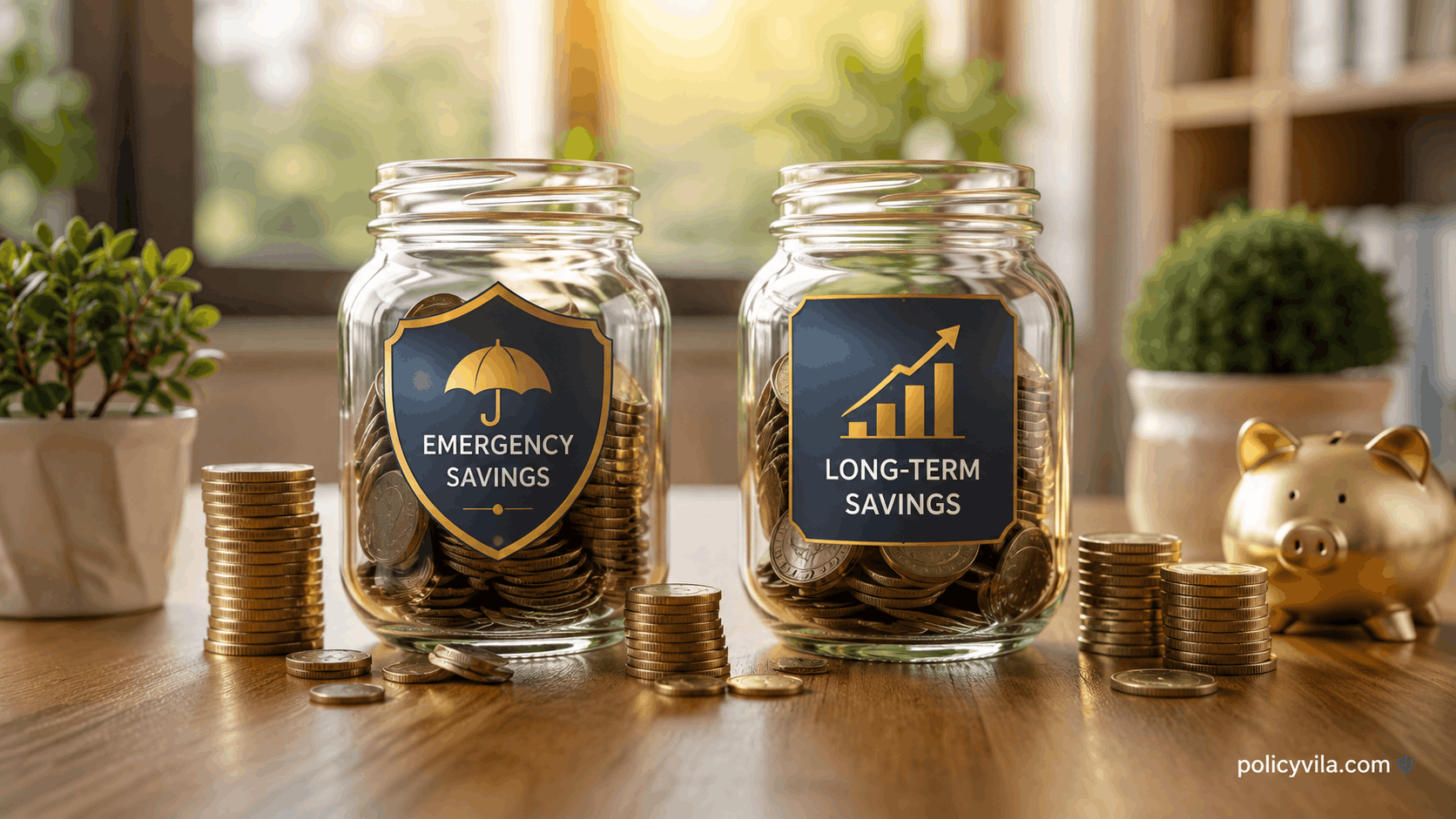
That’s the core confusion behind this topic. An emergency fund and a savings account both hold money you’re not spending right now, so people assume they’re interchangeable. They’re not. One is insurance against the unpredictable; the other is a plan for something you already know is coming. Mixing them up is what leaves people short on both fronts when life actually gets messy.
Quick Answer
An emergency fund covers unexpected, necessary expenses — job loss, a medical bill, a failed furnace. A savings account funds expenses you’re already planning for, like a vacation or a down payment. If you’re starting from zero, build a small emergency cushion first (many planners suggest $500 to $1,000 to start), then work toward three to six months of essential expenses before shifting focus to other savings goals.
The Core Difference Between the Two
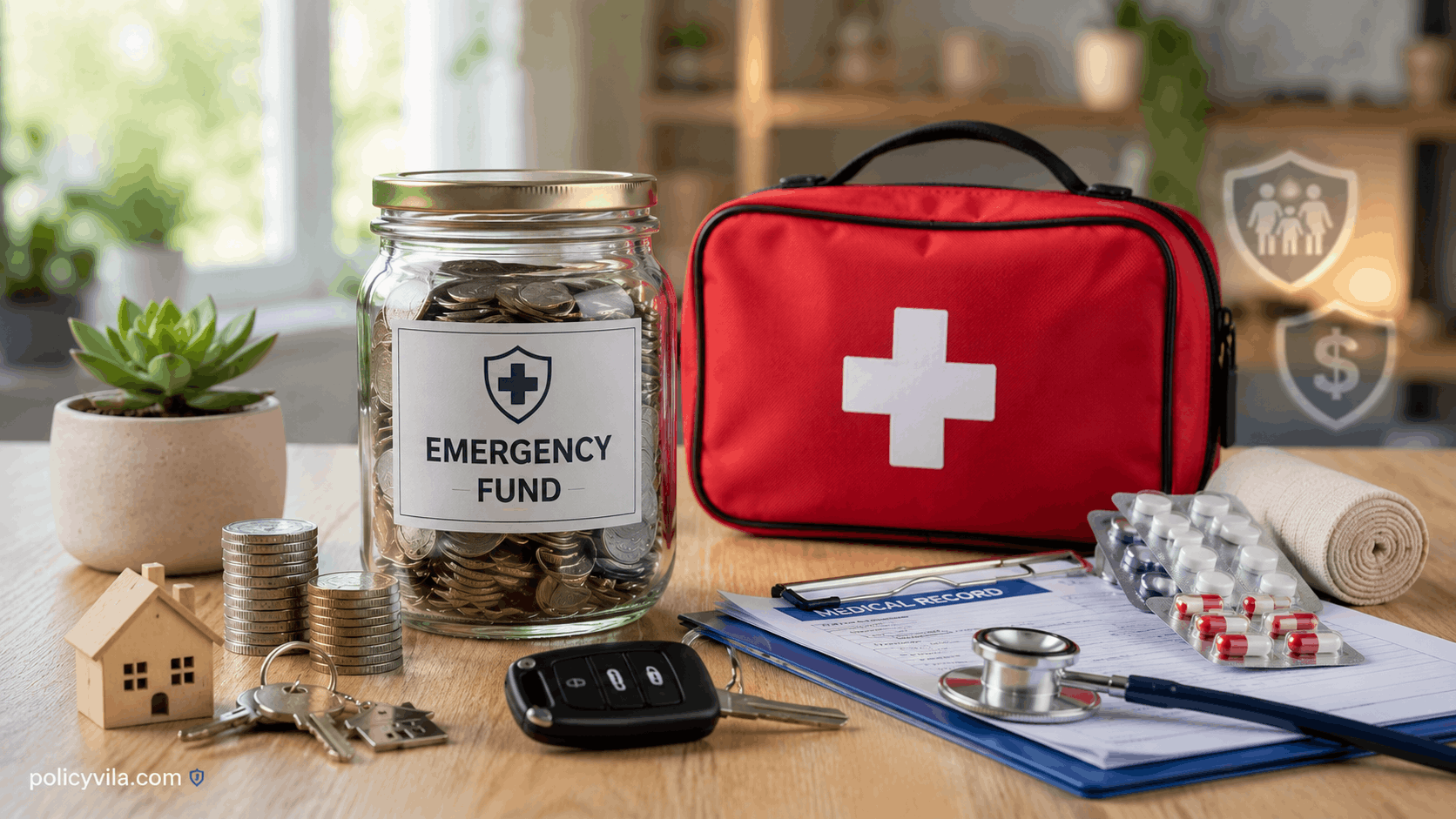
An emergency fund is money set aside strictly for the unplanned: a layoff, a hospital visit, a car that won’t start. Its entire job is to keep a sudden problem from turning into debt.
A savings account, in the everyday sense people mean when they compare the two, holds money for things you’ve already decided to spend on eventually — a wedding, a renovation, next year’s trip, a future down payment.
The mix-up happens because plenty of people keep both kinds of money in the same account. That’s not wrong exactly, but it makes it hard to know, at a glance, how much is actually available if something goes wrong versus how much is earmarked for a vacation you’ve already started planning.
A useful shorthand: your emergency fund protects you from the future going badly. Your savings account helps you get somewhere on purpose. Neither one should be asked to do the other’s job.
Why You Need Both, Not Just One
Some people rely on a single account for everything. Others build a large emergency cushion and never save for anything beyond it. Both approaches create problems eventually.
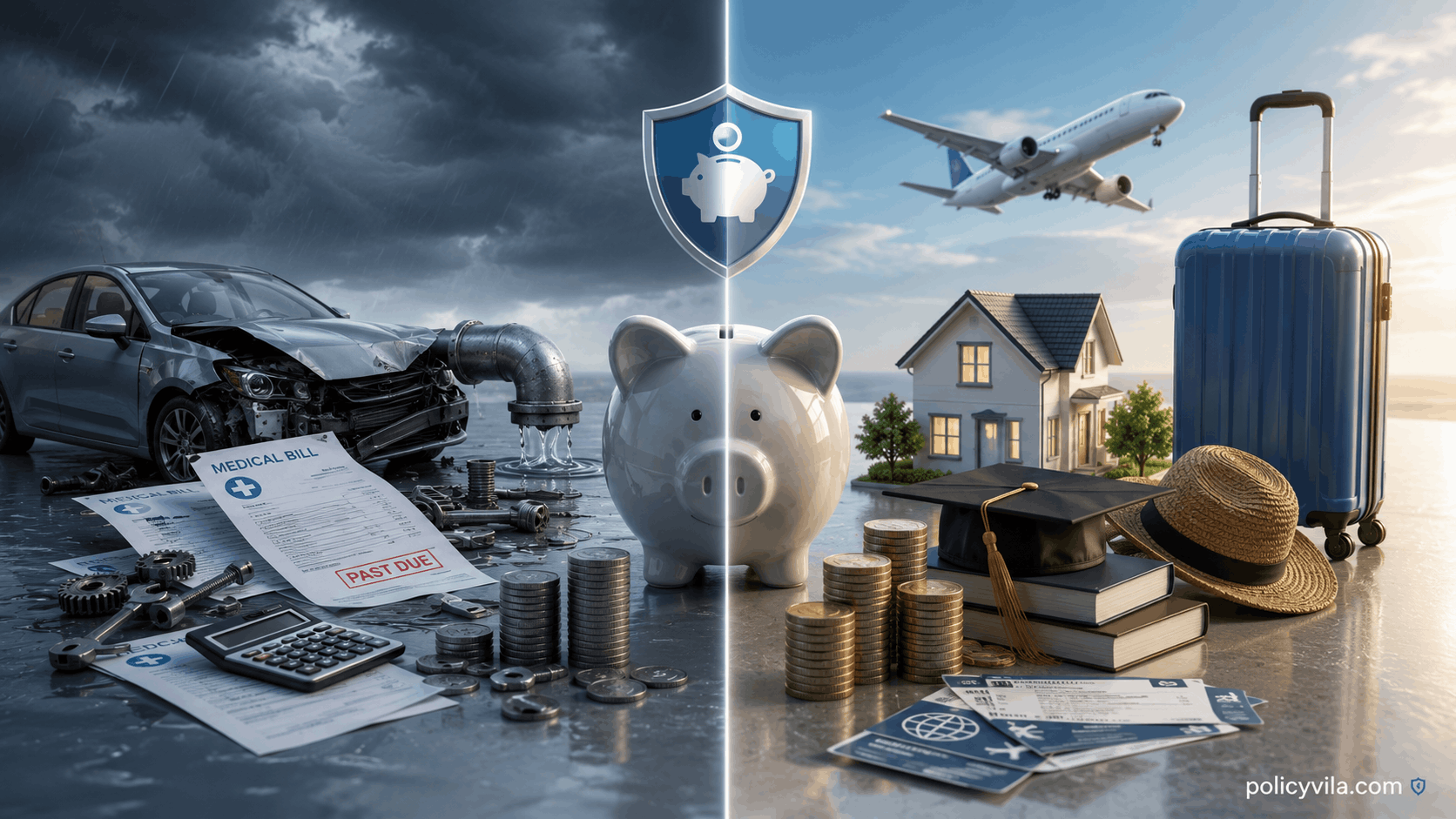
Without emergency savings, an unexpected expense usually gets paid for with a credit card or a loan, and what should have been a one-time cost turns into months or years of interest. Without a separate savings account for planned goals, those goals either never happen or end up competing with the money you need for emergencies.
Households that keep both tend to handle bad months better and reach their goals more reliably, simply because the two pools of money aren’t fighting each other for the same dollars.
Emergency Fund vs. Savings Account at a Glance
| Feature | Emergency Fund | Savings Account |
|---|---|---|
| Primary purpose | Covering unexpected, necessary costs | Funding planned goals |
| Typical uses | Medical bills, job loss, urgent repairs | Vacations, home purchase, education |
| How often it’s touched | Rarely, only for genuine emergencies | Whenever a savings goal is reached |
| General target | 3–6 months of essential expenses | Varies by goal |
| Access needs | Immediate | Accessible, but spending is planned |
| Priority order | Usually first | After a baseline emergency fund exists |
The distinction that matters most is predictability. A broken water heater is an emergency. A new TV during a holiday sale isn’t. An unexpected vet bill for a sick pet is an emergency; saving for a planned family trip is not. Keeping the categories separate makes budgeting simpler and removes the temptation to raid emergency money for something that could’ve waited.
What Actually Counts as a Financial Emergency
Not every surprise expense deserves to come out of your emergency fund. A genuine financial emergency tends to share three traits: it’s unexpected, it’s necessary, and it needs to be dealt with right away. If an expense meets all three, using the fund makes sense.
Job Loss
Losing your main source of income is one of the most common reasons people build emergency savings in the first place. A solid cushion can cover rent or mortgage payments, utilities, groceries, insurance, and transportation while you search for the next job — without turning to high-interest debt to bridge the gap.
Medical Emergencies
Even with insurance, an unexpected illness, surgery, or ER visit can bring deductibles, copays, out-of-network charges, or equipment costs that weren’t part of the monthly budget.
Major Car Repairs
Engine failure, transmission problems, a blown tire, or a dead battery can each run into hundreds or thousands of dollars — and for many households, a working car isn’t optional.
Essential Home Repairs
A leaking roof, a burst pipe, a failed water heater, or a broken heating system tends to get more expensive the longer it’s ignored, which is part of why these qualify as true emergencies rather than deferrable expenses.
Emergency Family Travel
Last-minute travel to see a seriously ill relative or attend a funeral usually can’t be postponed or budgeted for in advance, which makes it a legitimate use of emergency funds.
What Doesn’t Count
Knowing what doesn’t belong in this category matters just as much. Vacations, holiday shopping, birthday gifts, a new phone, furniture upgrades, and concert tickets might feel urgent in the moment, but they’re planned lifestyle spending, not emergencies — and they belong in a savings account instead.

What a Savings Account Is Actually For
A savings account exists to fund the things you already know are coming.
A Home Purchase
Saving toward a down payment usually takes years, and keeping that money separate from your emergency reserve means one goal doesn’t quietly eat into the other.
Vacations
Travel shouldn’t leave you in debt. Setting aside money for a trip ahead of time means you actually get to enjoy it.
Education Costs
Tuition, certifications, courses, and school supplies are all easier to manage with dedicated savings rather than scrambling when the bill arrives.
Home Improvements
A kitchen remodel, new flooring, or landscaping work is a planned expense, not an emergency — it belongs in your regular savings, not your safety net.
A Future Vehicle
Setting money aside gradually for your next car, rather than waiting until the current one fails, takes pressure off your emergency fund when the time comes.
Holiday Spending
A small dedicated fund built up over the year makes the holiday season far less likely to end in credit card debt.
Which One Should You Build First
For most households, the answer is the emergency fund. Rising grocery prices, housing costs, insurance premiums, and general economic uncertainty all make an unplanned expense more expensive to absorb than it used to be.
Consider the alternative: you’ve saved $8,000 for a long-planned trip, and then your heating system fails in the middle of winter and costs $6,500 to replace. Without emergency savings, you’re choosing between canceling the trip, putting the repair on a credit card, or taking out a loan. A modest emergency fund removes that dilemma entirely.
You Don’t Need to Start Big
A common approach is to build in stages rather than aiming for a large number right away:
- First goal: $500
- Second goal: $1,000
- Third goal: one month of essential expenses
- Final goal: three to six months of essential expenses
Once that foundation is in place, shifting focus to a home purchase, retirement contributions, a child’s education, or other goals feels far less risky, because a sudden setback is less likely to derail everything else.
How Much Should You Actually Keep in Reserve
There’s no single number that fits everyone. The right target depends on your income stability, monthly expenses, and household responsibilities. The common starting point is three to six months of essential living expenses — housing, utilities, groceries, transportation, insurance, and minimum debt payments.
Single Adults With Stable Income
Three months of essential expenses is often a reasonable starting target. If your essential monthly costs run around $2,500, that puts your target in the $7,500–$15,000 range.
Married Couples
With two incomes, three to six months of shared essential expenses is typical. If one partner has irregular or seasonal income, leaning toward the higher end makes sense.
Families With Children
Higher fixed costs and less predictable expenses — childcare, school costs, medical needs — often push the recommended target closer to six months.
Freelancers and Self-Employed Workers
Because income can swing significantly month to month, six to twelve months of essential expenses gives more breathing room during slower stretches.
Retirees
Even with steady retirement income, unexpected healthcare or home repair costs can come up. Keeping several months of accessible cash on hand can help you avoid pulling from investments during a market downturn.
Where to Keep an Emergency Fund
The right account for emergency money prioritizes three things: safety, accessibility, and separation from everyday spending. Growth is a secondary concern — the money needs to be there when you need it, not tied up chasing returns.
Traditional Savings Account
Simple, familiar, and typically covered by deposit insurance where applicable. The main downside is a lower interest rate compared to other options.
High-Yield Savings Account
Offers the same accessibility and security as a traditional savings account, usually with a meaningfully better interest rate. For many households, this is a solid middle ground between safety and growth.
Money Market Account
Blends features of savings and checking, sometimes with check-writing privileges or debit card access, while still offering competitive rates and deposit insurance where applicable.
Cash Management Account
Offered by some financial institutions, these combine spending, saving, and sometimes investing tools, along with competitive yields and easy transfers — useful as long as the emergency portion stays liquid.
Where Not to Keep It
Individual stocks, cryptocurrency, long-term CDs with steep early-withdrawal penalties, real estate, and other speculative or illiquid assets aren’t suited for emergency money. They may offer better long-term returns, but that’s the wrong priority for funds you might need on short notice.
Mistakes That Undermine Both
Treating Emergency Savings Like Spare Spending Money
Every non-essential withdrawal — a vacation, holiday shopping, a new gadget — chips away at the protection the fund is supposed to provide.
Keeping Everything in a Checking Account
When emergency money sits next to everyday spending cash, it’s far easier to dip into it without really deciding to. A separate account creates a small but useful barrier.
Ignoring Inflation
If your monthly expenses have crept up since you set your target, your old emergency fund goal may no longer cover what it used to. Revisit the number periodically rather than assuming it still fits.
Saving Without a Defined Purpose
“Saving more” without assigning that money to a specific goal makes it easier to justify spending it. Separating funds by purpose — emergency, vacation, home, education — keeps each one accountable.
Leaning on Credit Cards Instead
Credit can cover a gap temporarily, but high interest rates can turn a short-term emergency into years of repayment. A funded emergency account solves the same problem without the interest.
A Practical Plan to Build Both
You don’t need a high income to get started — consistency matters more than the size of each contribution.
1. Calculate Your Essential Monthly Expenses
Add up housing, utilities, groceries, transportation, insurance, healthcare, minimum debt payments, and childcare if it applies. For example:
| Expense | Monthly Cost |
|---|---|
| Rent | $1,400 |
| Utilities | $250 |
| Groceries | $600 |
| Transportation | $350 |
| Insurance | $300 |
| Other essentials | $400 |
| Total | $3,300 |
At $3,300 in essential monthly expenses, a three-to-six-month target lands between roughly $9,900 and $19,800.
2. Set a Starter Goal
Break the target into smaller milestones — $500, then $1,000, then one month of expenses, then three, then six — so progress feels achievable rather than distant.
3. Open Separate Accounts for Separate Goals
Keeping an emergency fund, vacation savings, a home down payment fund, and other goals in distinct accounts makes it much harder to accidentally spend one on another.
4. Automate the Transfers
Scheduling automatic transfers right after each paycheck — say, a set amount to the emergency fund and another to other savings goals — removes the temptation to skip a month.
5. Increase Contributions as Income Grows
A raise, bonus, tax refund, or extra freelance income is a natural opportunity to bump up your savings rate before your spending catches up to it. Even an extra $25–$50 a month adds up meaningfully over a few years.
6. Review Every Few Months
Check in periodically: Have expenses gone up? Did you dip into the emergency fund? Are you still saving consistently? Has your target changed? Regular reviews keep the plan realistic.
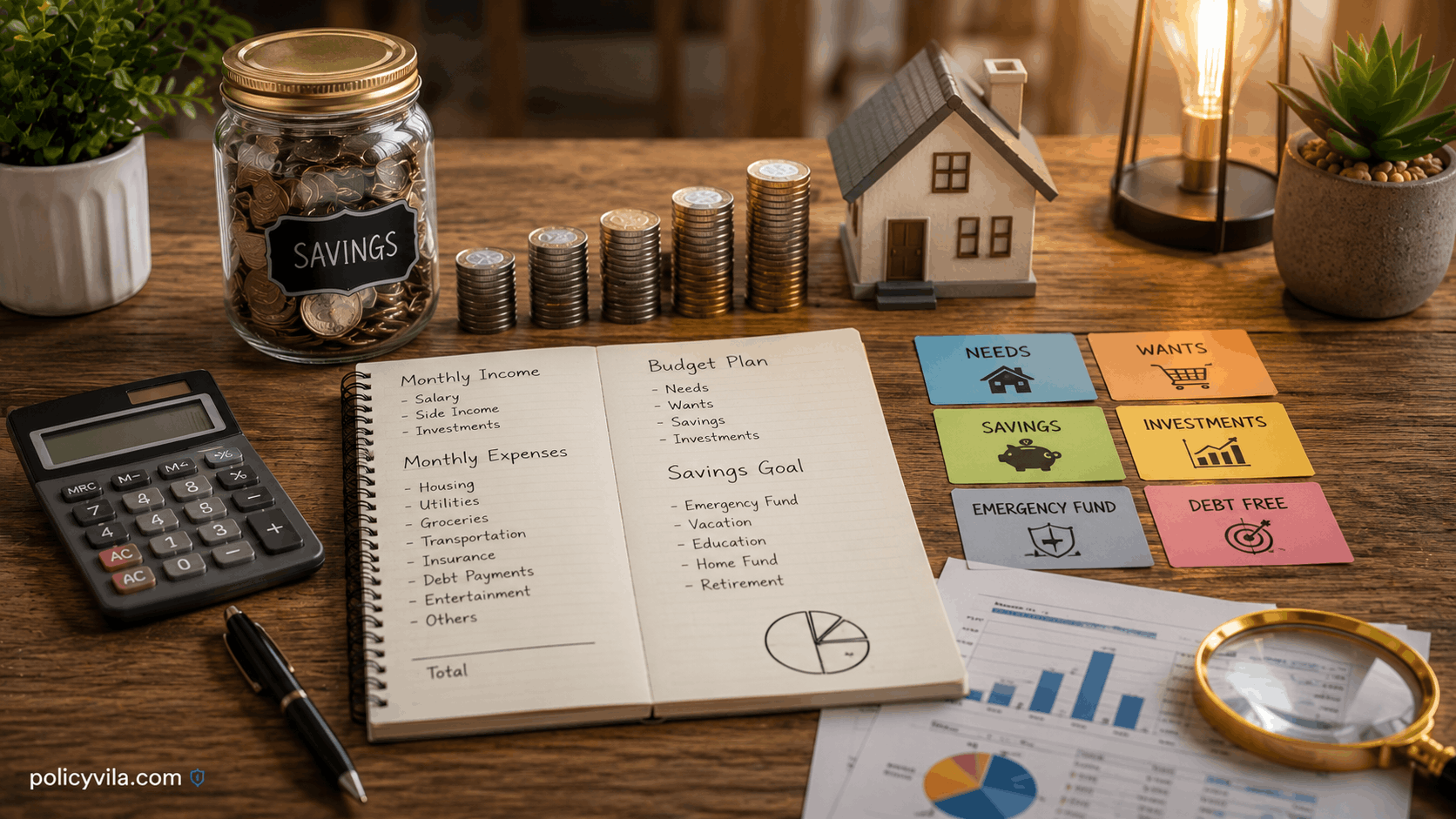
Budgeting Approaches That Make This Easier
The 50/30/20 Rule
Split after-tax income into roughly 50% needs, 30% wants, and 20% savings and debt repayment. It’s simple enough to be a good starting framework for people new to budgeting.
Pay Yourself First
Move money to savings as soon as your paycheck lands, then budget the rest — instead of saving whatever happens to be left at the end of the month.
Zero-Based Budgeting
Every dollar gets assigned a job — bills, savings, debt, spending — so income minus expenses equals zero not because you’ve spent it all, but because it’s all accounted for.
Weekly Check-Ins
A five-minute weekly review of balances, recent transactions, and upcoming bills tends to catch small problems before they become bigger ones.
Cut the Small Stuff First
Unused subscriptions, frequent takeout, and impulse purchases are usually easier to trim than major lifestyle expenses, and redirecting that money toward your emergency fund adds up faster than it seems.
Frequently Asked Questions
Can I use the same bank for both my emergency fund and my other savings?
Yes. What matters more than the institution is keeping the funds in separate accounts so you can see at a glance how much is available for emergencies versus planned spending.
Does paying down debt take priority over building an emergency fund?
Most planners suggest doing both in parallel — keep making required debt payments while building a small starter emergency fund of a few hundred to a thousand dollars, since that cushion can prevent new debt from unexpected expenses.
What if my income changes every month?
Base your essential expense calculation on your lowest typical income month, and consider a larger emergency fund — six to twelve months of expenses — to smooth out the unpredictability.
Is it a problem to keep my emergency fund and everyday spending money in the same bank, just different accounts?
No, as long as the accounts are genuinely separate and you’re not routinely transferring emergency funds back into checking for non-emergencies.
Should I stop contributing to retirement accounts while building an emergency fund?
Not necessarily. Many people continue contributing enough to capture any employer match while simultaneously building a starter emergency fund, then increase the emergency fund contributions further once the match is secured.
How do I know if an expense is a “want” or a genuine emergency?
Ask whether it’s unexpected, necessary, and needs immediate attention. If all three are true, it likely qualifies. If you had time to plan for it or could reasonably delay it, it probably belongs in regular savings instead.
What should I do if I have to drain my emergency fund completely?
Treat rebuilding it as your next financial priority, using the same milestone approach you used the first time — a small starter goal followed by gradual increases.
Can a line of credit substitute for an emergency fund?
It can serve as a backup, but it isn’t a substitute. A line of credit still carries interest and depends on approval and available limits, both of which can change right when you need them most.
Is three months enough if I have strong job security?
For many people with stable employment and no dependents, three months of essential expenses is a reasonable target. Those with less predictable income or more financial responsibilities are usually better served by aiming higher.
read also: The Smart Policyholder’s Handbook to Insurance Claim Adjusters
Final Thoughts
The comparison isn’t really about choosing one over the other — it’s about giving each type of savings its own job. An emergency fund protects you from the unpredictable. A savings account gets you somewhere you’ve chosen to go. For most households, building a starter emergency fund first, then growing it toward three to six months of expenses, creates the stability needed to pursue other financial goals without one bad month wiping out months of progress.
Once that foundation exists, the rest becomes a matter of consistency: automate what you can, review your numbers periodically, and adjust as your expenses and income change. None of this requires a large income to start — it requires a system you’ll actually stick with.
1 thought on “Emergency Fund vs Savings Account: Where Should Your Money Go First in 2026?”