
Quick Answer
The single most common and costly budgeting mistake is failing to track expenses consistently after setting a budget. A budget that isn’t checked against real spending is just a wish list — small recurring costs (subscriptions, delivery fees, daily impulse buys) quietly add up to thousands of dollars a year without ever showing up as one obvious event. The fix isn’t complicated: review spending weekly, assign every dollar a purpose, and automate savings so it happens before you have a chance to spend it.
Table of Contents
- The Mistake: Setting a Budget but Never Checking It
- Why Small Expenses Add Up to Real Money
- How Overspending Happens Without Anyone Noticing
- A Simple Monthly Budget, Broken Down
- Expense Tracking Methods That Actually Work
- The Psychology Behind Overspending
- Other Budgeting Mistakes Worth Fixing
- Habits That Separate Successful Budgeters
- Quick Self-Check: Signs Your Budget Isn’t Working
- Frequently Asked Questions
- Final Thoughts
The Mistake: Setting a Budget but Never Checking It
Building a budget is the easy part. The habit that actually determines whether it works is going back and comparing what you planned to spend against what you actually spent — and most people skip this step entirely.
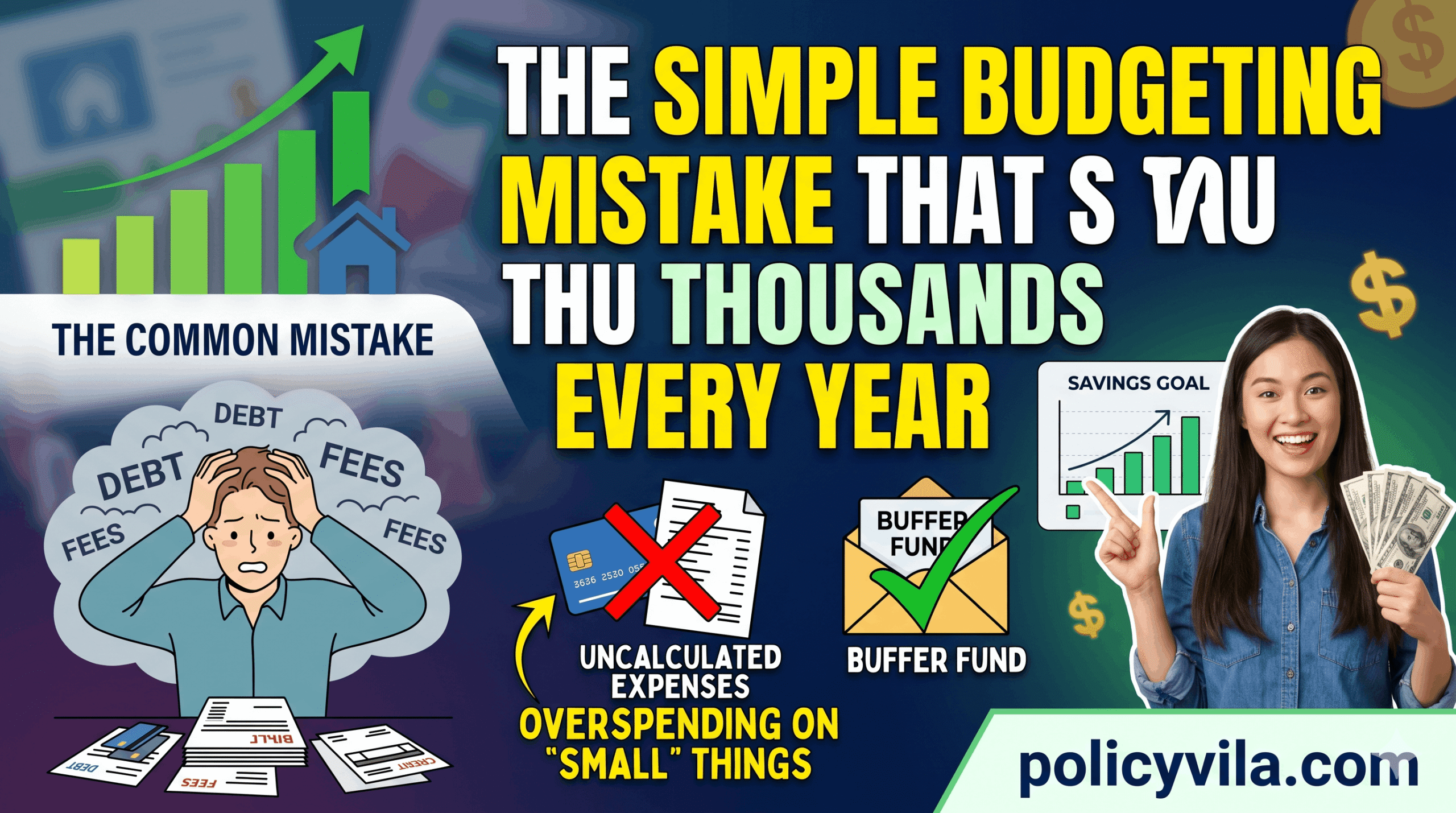
Without that comparison, a few things happen quietly: estimated expenses replace actual numbers, small daily purchases go unnoticed, recurring subscriptions get forgotten, and bank statements go unreviewed for weeks at a time. None of these individually feels like a crisis. Together, they create a gap between what someone believes they’re spending and what they’re actually spending — and that gap is where “surprise” debt and stalled savings goals usually come from.
Why Small Expenses Add Up to Real Money
Small, recurring purchases are easy to dismiss individually, but the math changes when you look at them annually instead of per-transaction.
| Expense | Typical Cost | Annual Total |
|---|---|---|
| Daily coffee | $5/day | ~$1,800 |
| Streaming subscriptions | $40/month | ~$480 |
| Food delivery fees | $25/week | ~$1,300 |
None of these are inherently bad purchases — the point isn’t to eliminate every convenience. It’s that these costs are easy to underestimate specifically because they’re automatic, individually cheap, and spread across the month, which makes them nearly invisible without active tracking.
How Overspending Happens Without Anyone Noticing
Impulse Purchases
Limited-time offers, one-click checkout, and social media all lower the friction that used to make people pause before buying. Individually small purchases add up fast when that friction disappears.
Subscription Overload
Streaming platforms, fitness apps, software subscriptions, and cloud storage plans often renew automatically. Because the charge repeats without any action required, it’s common to keep paying for services that stopped being used months earlier.
Lifestyle Inflation
When spending rises to match every raise or bonus, savings rate stays flat even as income grows. This is one of the more common reasons higher earners don’t always end up with proportionally higher net worth.
A Simple Monthly Budget, Broken Down
Assigning every dollar of income a specific job is one of the clearest ways to keep a budget realistic. Here’s an example for someone earning $3,000 per month after taxes:
| Category | Items | Amount |
|---|---|---|
| Essential expenses | Housing, utilities, transportation, food | $1,800 |
| Financial priorities | Savings, emergency fund, debt repayment | $700 |
| Personal spending | Entertainment, dining out, miscellaneous | $500 |
| Total | $3,000 |
This works because essential costs are covered first, financial goals get dedicated funding rather than “whatever’s left,” and discretionary spending is included on purpose — a budget with zero room for enjoyment tends to get abandoned within a few months.

The 50/30/20 Framework
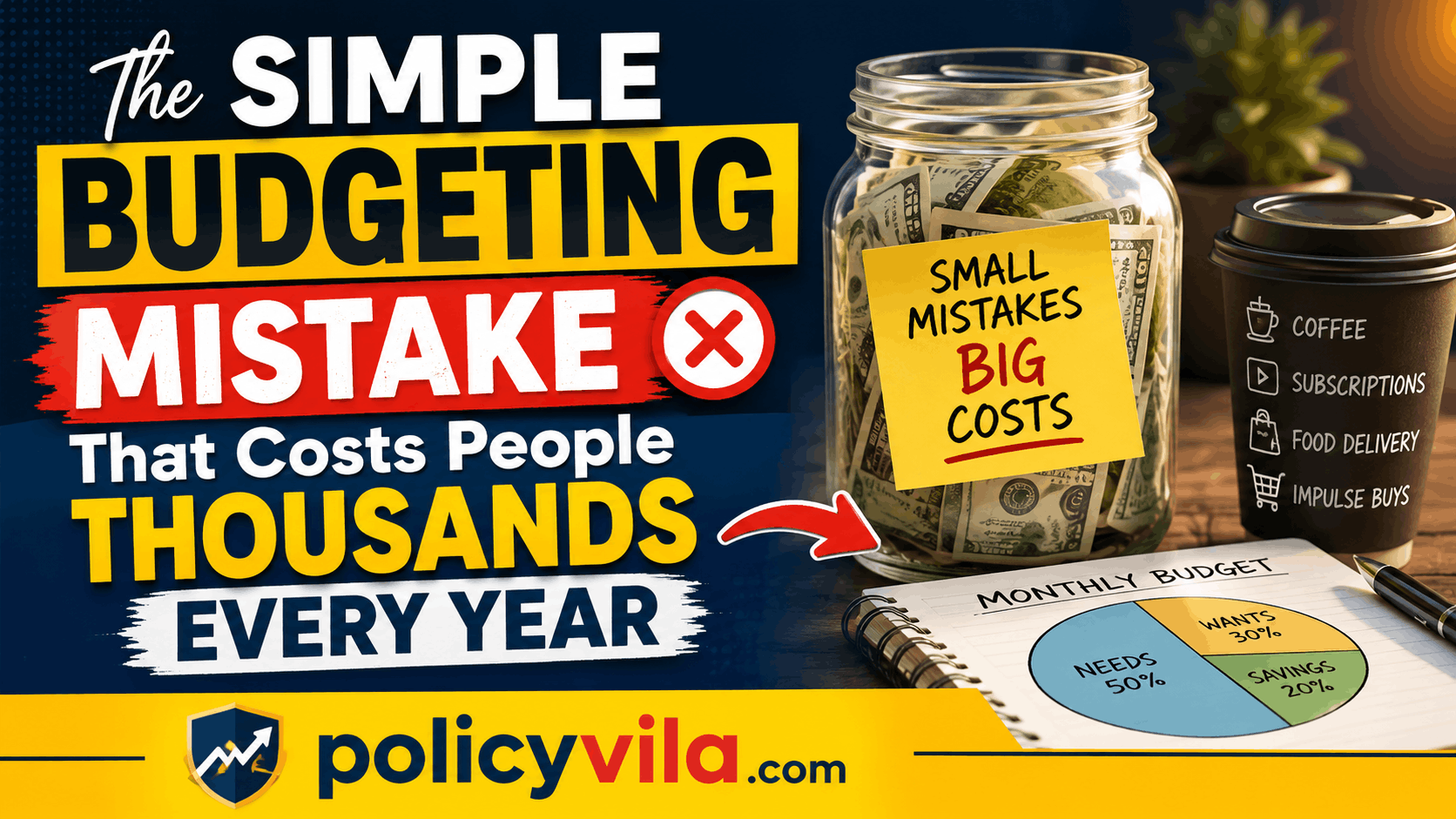
A widely used starting point splits after-tax income into three broad categories: roughly 50% for needs (housing, utilities, food, transportation), 30% for wants (entertainment, dining out, hobbies), and 20% for savings and debt repayment. It’s a starting ratio to adjust, not a rule — someone with high rent or student loan payments may need to shift these percentages to fit their actual costs.
Expense Tracking Methods That Actually Work
Manual Tracking
Recording every expense in a notebook or spreadsheet takes more effort up front but tends to build stronger awareness of spending patterns, since the act of writing something down forces a moment of attention a swipe or tap doesn’t.
Budgeting Apps
Apps that automatically categorize transactions and flag spending against a set budget reduce the manual effort considerably. The trade-off is that automatic categorization isn’t always accurate, so periodic review of the categories still matters.
Weekly Reviews
A short weekly check-in — even 15 minutes — catches overspending while it’s still a small, easily corrected issue, rather than discovering it as a shock at the end of the month.
The Psychology Behind Overspending
Spending decisions are often emotional rather than purely logical. Stress, boredom, and excitement can all trigger a purchase that has little to do with genuine need, and the instant reward of buying something now tends to outweigh the more abstract, delayed benefit of saving for a future goal. Social comparison — seeing what friends, influencers, or colleagues have — adds another layer of pressure to spend in ways that match an image rather than an actual need.
None of this makes emotional spending a personal failing; it’s a predictable pattern. Recognizing the trigger in the moment — “I’m buying this because I’m stressed, not because I need it” — is often enough to create a pause before the purchase happens.
Other Budgeting Mistakes Worth Fixing
- Setting an unrealistically strict budget. A plan with zero discretionary spending is hard to sustain and often gets abandoned within a few months.
- Ignoring irregular expenses. Car maintenance, annual insurance renewals, and holiday costs are predictable in general even if the exact month varies — budgeting a small monthly amount for them avoids being blindsided.
- Skipping an emergency fund. Without one, an unexpected repair or medical bill often gets paid for with high-interest debt instead of savings.
- Never updating the budget. A budget built for last year’s income and expenses stops reflecting reality once either one changes.
Habits That Separate Successful Budgeters
- They review spending on a schedule — weekly or biweekly, not just when something feels off.
- They save before they spend (“pay yourself first”), often through an automatic transfer that happens the same day income arrives.
- They resist matching every raise with new spending, directing at least part of any increase toward savings or debt repayment instead.
- They plan for irregular and future costs — emergencies, retirement, major purchases — rather than budgeting only for the current month.
- They adjust the budget as circumstances change, rather than treating the original plan as permanent.
Quick Self-Check: Signs Your Budget Isn’t Working
- You’re surprised by your account balance more often than not.
- You can’t say, without checking, what you spent on dining out or subscriptions last month.
- Money set aside for savings routinely gets spent before the transfer happens.
- An irregular expense (car repair, annual premium) regularly turns into a credit card balance.
- You haven’t reviewed your budget categories in over six months.
Recognizing two or more of these is a reasonable signal that it’s time for a proper review, not just a tweak.
read also: Can I Insure a Car Not in My Name? Rules, Exceptions & What You Need to Know in 2026
Frequently Asked Questions
How do I know if a subscription is worth keeping?
A simple test: if you can’t recall the last time you used it, or you’d forgotten you were still paying for it, that’s a strong sign it’s worth canceling — the value of a forgotten subscription is effectively zero regardless of its price.
Is it better to track every purchase or just categories?
Category-level tracking (groceries, entertainment, dining) is usually enough for spotting overspending trends and is far more sustainable long-term than logging every individual transaction, which tends to get abandoned after a few weeks.
What should I do first if I don’t have any savings yet?
Most financial guidance prioritizes a small starter emergency fund — enough to cover an unexpected few-hundred-dollar expense — before aggressively paying down debt or investing, since that buffer prevents a small emergency from becoming new debt.
How do irregular expenses fit into a monthly budget?
Estimate their annual total, divide by twelve, and set that amount aside every month in a separate “irregular expenses” category, so the money is already there when the annual insurance bill or car repair shows up.
Does automating savings actually help if I can just transfer it back?
Yes, mainly because it removes the decision point. Even though the money is technically accessible, automatic transfers reduce the number of times you have to actively choose to save versus spend, which in practice leads to more consistent saving for most people.
How strict should a budget be to actually work long-term?
Strict enough to make progress on savings and debt goals, but loose enough to include planned discretionary spending — budgets that eliminate all non-essential spending tend to be abandoned faster than more moderate ones.
Final Thoughts
The budgeting mistake that costs people the most isn’t usually one big bad decision — it’s the absence of a habit that catches small ones before they add up. A budget only works as well as the tracking behind it; without regularly checking actual spending against a plan, small leaks like unused subscriptions, forgotten delivery fees, and creeping lifestyle inflation go unnoticed for months or years at a time.
The fix doesn’t require strict deprivation or complicated tools. Assigning every dollar a job, reviewing spending on a consistent schedule, and automating savings so it happens before spending does are enough to close most of the gap between financial intentions and financial reality.
3 thoughts on “The Simple Budgeting Mistake That Costs People Thousands Every Year”