
Cash Flow Explained: The Financial Metric That Can Make or Break Your Future in 2026

Cash Flow Is Your Financial Pulse

Cash Flow Explained: Money is constantly moving through your life. It comes in through your paycheck, business income, or freelance work, and it flows out to pay for housing, groceries, transportation, insurance, utilities, debt, and everything else you need. The direction and speed of that movement determine whether your finances become stronger or weaker over time.

This is why cash flow is often compared to your body’s circulation system.

Your heart can be healthy, but if blood stops flowing properly, every organ begins to struggle. In the same way, earning a good income means very little if your money leaves your account faster than it arrives.

Think of cash flow as the financial pulse that reveals the true condition of your money. It tells you whether your finances are healthy, under pressure, or heading toward trouble long before major problems appear.

Many people focus almost entirely on how much they earn. They celebrate promotions, larger paychecks, bonuses, and successful business months. While those achievements certainly matter, they represent only one side of the financial equation.

The other side is far more important.

What happens to your money after you receive it?

If every dollar immediately goes toward bills, loan payments, subscriptions, shopping, dining out, and lifestyle upgrades, your financial health may not improve at all. A higher income simply creates larger expenses if spending grows at the same pace.

Healthy cash flow means you consistently have money left after paying your essential expenses. That remaining money gives you options. It allows you to save for emergencies, invest for retirement, pay down debt, prepare for major purchases, and handle unexpected financial challenges without relying on credit cards.

Poor cash flow has the opposite effect.

When monthly expenses regularly exceed income, financial stress begins to build. Savings slowly disappear, debt increases, and even small emergencies become difficult to manage. Over time, negative cash flow can prevent you from reaching important goals such as buying a home, changing careers, or retiring comfortably.

A Simple Cash Flow Example

Consider two households with very different financial situations.

Household A

  • Monthly Income: $9,000
  • Monthly Expenses: $9,400
  • Monthly Cash Flow: –$400

Although this family earns an impressive income, they spend more than they make every month. They rely on savings or credit cards to cover the difference, making their financial position weaker over time.

Household B

  • Monthly Income: $4,800
  • Monthly Expenses: $3,900
  • Monthly Cash Flow: +$900

This family earns much less, yet they consistently save money every month. Their positive cash flow helps them build an emergency fund, invest for the future, and reduce financial stress.

Who is healthier financially?

Most people would assume Household A because of the higher salary. In reality, Household B is building a much stronger financial foundation.

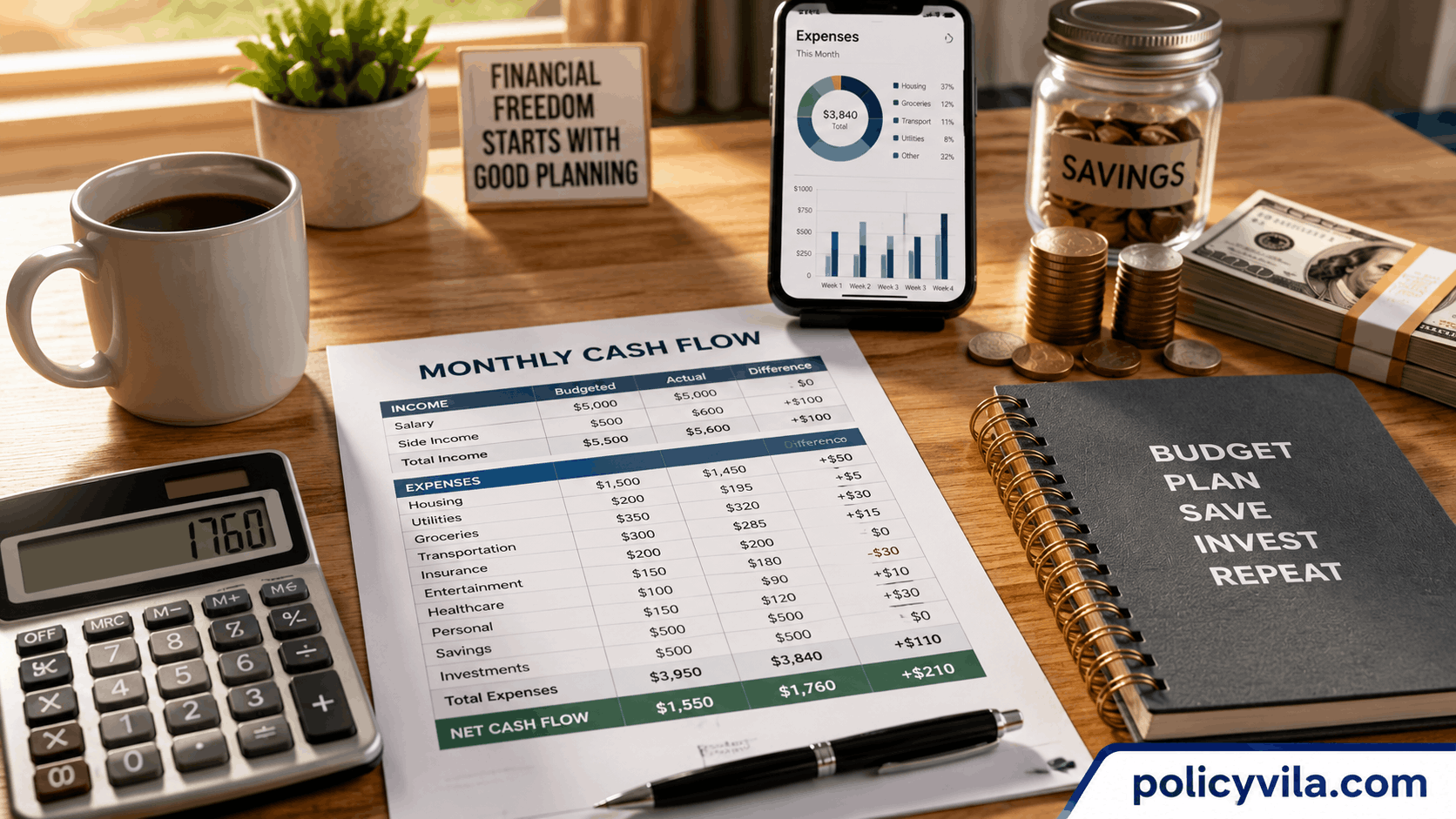
Monthly cash flow worksheet with calculator, savings jar, receipts, and personal finance planning desk.
Tracking your monthly cash flow helps you make smarter financial decisions and identify spending habits.

Why Positive Cash Flow Changes Everything

Positive cash flow provides opportunities that many people overlook.

It allows you to:

  • Build an emergency fund.
  • Invest for long-term wealth.
  • Pay off debt faster.
  • Handle unexpected expenses with confidence.
  • Reduce financial stress.
  • Make career decisions without panic.
  • Prepare for retirement.
  • Enjoy greater financial flexibility.

Negative cash flow creates the opposite experience.

Instead of planning for the future, you’re constantly trying to catch up with today’s expenses. Bills become stressful, savings disappear, and every unexpected cost feels like a financial setback.

Cash Flow Is More Than a Number

Many people think cash flow is only something businesses measure. In reality, every household has its own cash flow.

Whether you earn $35,000 or $350,000 per year, your financial future depends on one simple question:

Does more money stay in your life than leave it?

If the answer is yes, you’re creating a stronger financial future.

If the answer is no, increasing your income alone may not solve the problem. Understanding and improving your cash flow is often the first step toward lasting financial stability and long-term wealth.

Why Income Alone Is One of the Biggest Financial Illusions

Many people believe that earning a high salary is the key to financial success. Society often celebrates six-figure incomes, executive job titles, and successful businesses as signs of wealth. While a strong income can certainly create opportunities, it does not guarantee financial security.

The truth is simple: income and financial stability are not the same thing.

Every year, countless professionals receive promotions and pay raises, yet many still struggle to save money, pay off debt, or prepare for the future. Their income increases, but so do their expenses. As a result, they continue living paycheck to paycheck despite earning far more than the average household.

A Bigger Paycheck Doesn’t Always Mean More Wealth

Imagine two friends.

Alex earns $180,000 per year. He owns a luxury SUV, recently upgraded to a larger home, enjoys frequent vacations, and finances many of his purchases. His monthly income is impressive, but so are his monthly bills. By the end of each month, very little money remains.

David earns $75,000 annually. He drives a reliable used car, keeps his housing costs reasonable, avoids unnecessary debt, and invests part of every paycheck. Although his salary is much lower, his savings and investments continue growing year after year.

Who is in a better financial position?

Most people would guess Alex because of his higher income. However, David is steadily building long-term wealth because he controls where his money goes.

The Hidden Trap of Lifestyle Inflation

One of the biggest reasons high-income earners struggle financially is lifestyle inflation.

Lifestyle inflation happens when spending increases every time income increases.

For example, after receiving a raise, someone might decide to:

  • Move into a larger house.
  • Lease a luxury vehicle.
  • Upgrade to expensive electronics.
  • Dine out more often.
  • Take more frequent vacations.
  • Purchase premium memberships.

Each decision may seem harmless on its own. Together, they can consume every extra dollar of income.

Instead of becoming financially stronger, the person simply becomes more expensive to support.

Why Society Focuses on Salary

Income is easy to measure.

People often ask:

  • What do you do for work?
  • How much do you earn?
  • What kind of car do you drive?
  • Where do you live?

These visible signs create the impression of financial success.

What people rarely see are:

  • Credit card balances.
  • Personal loans.
  • Mortgage payments.
  • Financial stress.
  • Limited savings.
  • Retirement shortfalls.

A high-income lifestyle can sometimes hide serious financial problems.

Social Media Adds More Pressure

Social media has changed the way many people think about money.

Every day, people see photos of luxury vacations, designer clothes, expensive restaurants, new homes, and high-end vehicles. These images often create the feeling that everyone else is getting ahead financially.

What isn’t shown are the monthly payments, debt, or financial sacrifices behind those purchases.

Trying to keep up with someone else’s lifestyle can quickly damage your own financial health.

Focus on What You Keep, Not What You Earn

A large income is valuable only if it helps improve your financial future.

Instead of asking:

“How much money do I make?”

Start asking:

“How much money do I keep?”

That simple shift changes the way you think about spending, saving, investing, and building wealth.

People who achieve long-term financial success usually focus less on increasing their lifestyle and more on increasing their financial freedom. They understand that every dollar they keep and invest today has the potential to create even greater opportunities tomorrow.

The Four Cash Flow Personalities

Everyone manages money differently. Some people struggle to cover basic bills, while others earn excellent incomes but still feel financially trapped. Your financial future depends less on your salary and more on the habits that shape your monthly cash flow.

To better understand your financial behavior, let’s look at four common cash flow personalities. You may recognize yourself in one of them—or even see traits from more than one.


1. The Survivor

The Survivor works hard but feels like every paycheck disappears almost immediately. Their income usually covers necessities, but there is little room for savings or unexpected expenses.

Common Traits

  • Lives paycheck to paycheck.
  • Has little or no emergency savings.
  • Uses credit cards for unexpected expenses.
  • Feels stressed when bills arrive.
  • Struggles to save consistently.

Biggest Challenge

One unexpected expense, such as a car repair or medical bill, can quickly create financial problems.

Next Step

Focus on creating a small monthly surplus by reducing unnecessary expenses and building an emergency fund, even if you start with a small amount.

Comparison of positive and negative cash flow with savings, bills, and financial growth illustration.
Positive cash flow creates opportunities, while negative cash flow increases financial stress.

2. The Spender

The Spender often has a comfortable income but spends nearly everything they earn. Financial success is measured by lifestyle rather than long-term security.

Common Traits

  • High monthly income.
  • Luxury purchases are common.
  • Frequently upgrades homes, cars, or gadgets.
  • Carries credit card or personal loan debt.
  • Saves very little.

Biggest Challenge

Lifestyle inflation keeps monthly expenses rising alongside income, leaving little money for future goals.

Next Step

Review recurring expenses and separate “wants” from “needs.” Direct future salary increases toward savings and investments instead of lifestyle upgrades.


3. The Saver

The Saver manages money carefully and consistently spends less than they earn. They avoid unnecessary debt and feel more financially secure than many people with higher incomes.

Common Traits

  • Positive monthly cash flow.
  • Healthy emergency savings.
  • Careful spending habits.
  • Low financial stress.
  • Avoids unnecessary debt.

Biggest Challenge

Many Savers become so focused on protecting their money that they hesitate to invest for long-term growth.

Next Step

Continue saving while gradually investing part of your surplus to help build long-term wealth.


4. The Wealth Builder

The Wealth Builder views every dollar as a tool for creating future financial freedom. Instead of increasing spending after every raise, they increase investments and build assets that generate long-term value.

Common Traits

  • Consistent positive cash flow.
  • Regular investing.
  • Growing net worth.
  • Low consumer debt.
  • Long-term financial goals.
  • Focus on building assets instead of buying liabilities.

Biggest Challenge

Maintaining discipline while balancing present enjoyment with future financial security.

Next Step

Keep reviewing financial goals, diversify income sources when possible, and continue investing consistently.


Which Personality Sounds Most Like You?

Use these questions as a quick self-check:

  • Do you usually have money left at the end of the month?
  • Are you saving and investing regularly?
  • Would an unexpected $1,000 expense create financial stress?
  • Have your expenses increased every time your income increased?
  • Are you building assets that improve your future financial security?

Your answers reveal far more about your financial health than your salary ever will.

The good news is that your cash flow personality isn’t permanent. With better financial habits and consistent decisions, anyone can move from Survivor or Spender to Saver and eventually become a Wealth Builder.

Perform Your Personal Cash Flow Audit

Most people check their bank balance several times a week, but very few take time to understand where their money actually goes. Knowing how much money you have today is helpful, but knowing how money moves through your life is even more valuable.

A personal cash flow audit is like a financial health checkup. It helps you identify whether your income is creating financial stability or quietly disappearing through everyday spending.

The good news is that you don’t need accounting software or financial expertise. You only need a clear picture of your monthly income and expenses.


Step 1: Calculate Your Monthly Income

Start by adding all reliable sources of income.

Include:

  • Salary or wages
  • Freelance income
  • Business profits
  • Rental income
  • Side hustle earnings
  • Investment income
  • Pension or retirement income
  • Other regular income

Monthly Total Income = $__________


Step 2: Add Your Fixed Expenses

These are bills that stay nearly the same each month.

Examples include:

  • Rent or mortgage
  • Insurance premiums
  • Car payments
  • Internet service
  • Phone bills
  • Childcare
  • Loan payments
  • Subscription services

Monthly Fixed Expenses = $__________


Step 3: Track Your Lifestyle Expenses

Lifestyle spending usually changes from month to month and is often where money quietly disappears.

Include:

  • Groceries
  • Dining out
  • Coffee
  • Shopping
  • Entertainment
  • Fuel
  • Travel
  • Hobbies
  • Gifts
  • Personal care

Monthly Lifestyle Expenses = $__________


Step 4: Calculate Debt Payments

List every monthly debt payment.

Examples:

  • Credit cards
  • Personal loans
  • Student loans
  • Medical debt
  • Buy Now, Pay Later payments

Monthly Debt Payments = $__________


Step 5: Record Your Savings

Don’t count what’s left over.

Instead, record what you intentionally save each month.

Examples:

  • Emergency fund
  • Vacation savings
  • Home down payment
  • Children’s education
  • Retirement savings

Monthly Savings = $__________


Step 6: Record Your Investments

Include money invested for long-term growth.

Examples:

  • Retirement accounts
  • Mutual funds
  • Index funds
  • Stocks
  • Real estate investments

Monthly Investments = $__________


Your Personal Cash Flow Worksheet

CategoryMonthly Amount
Total Income$________
Fixed Expenses$________
Lifestyle Expenses$________
Debt Payments$________
Savings$________
Investments$________
Money Remaining (Cash Flow)$________

How to Read Your Results

Positive Cash Flow

If money remains after covering all expenses, savings, and investments, you’re creating positive cash flow. This gives you flexibility to prepare for emergencies, invest more, and achieve long-term financial goals.

Break-Even Cash Flow

If your income and expenses are nearly equal, you’re financially stable for now, but you have very little room for unexpected costs.

Negative Cash Flow

If you’re spending more than you earn, it’s a warning sign that needs attention. Continuing this pattern often leads to growing debt and financial stress.


Questions to Ask Yourself

After completing your audit, ask these simple questions:

  • Where does most of my money go each month?
  • Which expenses truly improve my life?
  • Which spending habits could I reduce without feeling deprived?
  • Am I saving and investing consistently?
  • If I lost my income tomorrow, how long could I cover my expenses?

These answers often reveal opportunities to strengthen your finances without needing a higher salary.


Why This Audit Matters

Your monthly cash flow tells the real story of your financial health. It shows whether your current habits are helping you build wealth or quietly holding you back.

The goal isn’t to eliminate every unnecessary expense. The goal is to make sure your money is supporting your future instead of disappearing without a clear purpose.

Cash Flow Warning Signs Most People Ignore

Financial problems rarely happen overnight. In most cases, they develop gradually through small habits and decisions that seem harmless at first. By the time many people realize something is wrong, debt has increased, savings have disappeared, and financial stress has become part of everyday life.

Learning to recognize these warning signs early can help you protect your cash flow before small issues become major financial problems.

Hidden money leaks including subscriptions, shopping receipts, coffee purchases, and credit card expenses.
Small everyday expenses can quietly reduce your monthly cash flow without you noticing.

1. Your Savings Keep Shrinking

If you regularly transfer money from your savings account to cover everyday expenses, it’s a clear sign that your monthly cash flow isn’t healthy.

Savings should be used for emergencies and long-term goals—not to pay routine bills.

Warning Sign: Your savings balance is lower today than it was six months ago.


2. Credit Card Balances Keep Growing

Using a credit card occasionally isn’t necessarily a problem. However, carrying a balance month after month often means you’re spending more than you earn.

Interest charges can quickly make this situation worse.

Warning Sign: You pay only the minimum payment each month.


3. You’re Living Paycheck to Paycheck

If every paycheck is already planned before it arrives, you have little financial flexibility.

One delayed paycheck or unexpected expense can create immediate stress.

Warning Sign: Your bank balance is close to zero before every payday.


4. Bonuses Are Used to Catch Up

Annual bonuses, tax refunds, or extra income should ideally help you save, invest, or reach financial goals.

If they’re always used to pay overdue bills or reduce debt, your regular income may not be covering your lifestyle.

Warning Sign: Extra income disappears within days.


5. You Don’t Have an Emergency Fund

Unexpected expenses are part of life.

Car repairs, medical bills, or home maintenance shouldn’t automatically lead to borrowing money.

Warning Sign: A single emergency would force you to use a credit card or loan.


6. Lifestyle Inflation Happens After Every Raise

Receiving a raise should improve your financial future.

Instead, many people celebrate by upgrading their home, car, phone, or daily spending.

When expenses grow as fast as income, cash flow stays exactly the same.

Warning Sign: Your salary has increased, but your savings haven’t.


7. Impulse Spending Has Become Routine

Small purchases may not seem important, but repeated impulse spending slowly drains positive cash flow.

Examples include:

  • Daily coffee runs
  • Online shopping
  • Food delivery
  • Flash sales
  • Unplanned purchases

Warning Sign: You often buy first and think later.


8. You’re Making Only Minimum Debt Payments

Paying the minimum keeps your account current, but it also keeps you in debt much longer.

Interest continues to grow while your financial flexibility shrinks.

Warning Sign: Your total debt barely changes from month to month.


Positive vs. Negative Cash Flow

Understanding the difference between positive and negative cash flow makes it easier to evaluate your financial health.

Financial AreaPositive Cash FlowNegative Cash Flow
Monthly Income vs. ExpensesIncome is greater than expensesExpenses exceed income
SavingsGrow consistentlyDecline over time
Stress LevelLowerHigher
Emergency ReadinessBetter preparedFinancially vulnerable
Investment OpportunitiesRegular investing is possibleInvesting is often delayed
DebtEasier to reduceOften increases
Financial FlexibilityHighLimited
Long-Term WealthMore likely to growDifficult to build

Why Positive Cash Flow Matters

Positive cash flow doesn’t mean you’re wealthy.

It means you’re creating opportunities.

With money left over each month, you can:

  • Build an emergency fund.
  • Invest consistently.
  • Pay off debt faster.
  • Handle unexpected expenses.
  • Prepare for future goals.
  • Reduce financial stress.

The Cost of Negative Cash Flow

Negative cash flow often creates a cycle that’s difficult to break.

It can lead to:

  • Growing credit card balances.
  • Delayed financial goals.
  • Increased borrowing.
  • Less money available for investing.
  • Higher stress and uncertainty.

The earlier you recognize the warning signs, the easier it becomes to change direction.

Healthy cash flow isn’t about earning the most money—it’s about making sure more money stays with you each month than leaves you. That simple habit lays the foundation for long-term financial stability and lasting wealth.

Why Cash Flow Determines Financial Freedom

Many people think financial freedom comes from earning a six-figure salary, owning a luxury home, or reaching a certain net worth. While those milestones may help, they aren’t what truly creates financial freedom.

The real foundation is healthy cash flow.

Financial freedom begins when your money consistently supports your goals instead of controlling your decisions. It gives you the ability to plan ahead, handle unexpected expenses, and make life choices with greater confidence.

Cash Flow Gives You More Choices

Every positive dollar of cash flow creates options.

When you consistently have money left over each month, you can choose to:

  • Save for future goals.
  • Invest to build long-term wealth.
  • Pay off debt faster.
  • Change careers without immediate financial pressure.
  • Take time off for family or personal priorities.
  • Start a business or side hustle.
  • Prepare for retirement with confidence.

Without positive cash flow, even simple financial decisions can become stressful.


Buying a Home Becomes More Realistic

Saving for a down payment requires consistent monthly surplus.

If every paycheck is already committed to bills and debt, reaching that goal becomes difficult. Positive cash flow allows you to build savings steadily without depending on bonuses or unexpected income.

It also makes it easier to handle the ongoing costs of homeownership, such as maintenance, insurance, and property taxes.


Career Decisions Become Less Stressful

Many people stay in jobs they dislike because they can’t afford a temporary loss of income.

Healthy cash flow changes that situation.

A strong financial cushion provides flexibility to:

  • Search for a better opportunity.
  • Learn new skills.
  • Start a business.
  • Work fewer hours.
  • Take parental leave.
  • Recover from unexpected job changes.

Financial freedom often begins with having choices—not necessarily having millions of dollars.


Emergencies Become Easier to Handle

Unexpected expenses are unavoidable.

Your car may need repairs.

A medical bill may arrive.

Your home may require maintenance.

Families with positive cash flow usually recover more quickly because they have savings and financial flexibility. Those with negative cash flow often rely on credit cards or loans, creating even greater financial pressure.


Investing Becomes Consistent

One of the biggest advantages of positive cash flow is the ability to invest regularly.

Instead of waiting for “extra money,” you can consistently direct part of your monthly surplus toward building long-term assets.

Small, regular investments made over many years often have a greater impact than occasional large contributions.

Consistency matters more than perfection.

Growing money tree with savings, investment reports, debt-free checklist, and financial planning documents.
Healthy cash flow creates the foundation for long-term financial growth and stability.

Cash Flow Reduces Financial Stress

Money worries affect more than your bank account.

Financial stress can influence sleep, relationships, work performance, and overall well-being.

Positive cash flow doesn’t eliminate every financial challenge, but it creates breathing room. Knowing you can cover your bills, save for the future, and handle unexpected expenses brings a level of confidence that many people never experience.


Cash Flow Supports Wealth Building

Wealth is built one month at a time.

Every month of positive cash flow creates an opportunity to:

  • Increase savings.
  • Invest more.
  • Buy appreciating assets.
  • Reduce debt.
  • Improve net worth.

Over time, these small monthly improvements compound into significant financial progress.


Financial Freedom Starts With Small Steps

Many people believe financial freedom requires winning the lottery or earning an extraordinary salary.

In reality, it often begins with ordinary habits practiced consistently.

  • Spend less than you earn.
  • Save before you spend.
  • Invest regularly.
  • Reduce unnecessary debt.
  • Review your cash flow every month.

These simple actions may not seem dramatic today, but over the years they create greater security, flexibility, and independence.

Hidden Money Leaks That Destroy Cash Flow

Not every financial problem comes from a major purchase. In fact, many cash flow issues are caused by small, recurring expenses that seem insignificant on their own. These “money leaks” slowly reduce the amount you have available to save, invest, or pay off debt.

The first step to fixing them is recognizing where your money quietly disappears.

Common Hidden Money Leaks

  • Frequently ordering food delivery instead of cooking at home.
  • Convenience purchases at gas stations or coffee shops.
  • Unused gym memberships or streaming subscriptions.
  • Paying only the minimum on high-interest debt.
  • Financing purchases that could have been saved for.
  • Impulse shopping during online sales.
  • Automatic renewals you forgot about.
  • Upgrading your lifestyle after every raise.
  • Bank or late-payment fees.
  • Buying items for status instead of value.

Small expenses repeated every week can add up to thousands of dollars over a year. Plugging even a few of these leaks can significantly improve your monthly cash flow.


The Cash Flow Pyramid

Healthy finances are built in stages. Trying to invest heavily before controlling expenses or paying down expensive debt often leads to frustration.

Think of financial progress as a pyramid, where each level supports the next.

Level 1: Income Stability

A reliable income forms the foundation of positive cash flow. Whether you earn a salary, run a business, or freelance, consistent income makes planning much easier.

Level 2: Expense Control

Understanding where your money goes helps you avoid unnecessary spending and create a monthly surplus.

Level 3: Emergency Fund

Saving several months of essential living expenses helps you handle unexpected events without borrowing money.

Level 4: Debt Reduction

Reducing high-interest debt frees up more money each month and improves your financial flexibility.

Level 5: Investing

Once your financial foundation is strong, consistent investing can help grow your wealth over time.

Level 6: Passive Income

As your assets grow, they may begin generating income that requires less of your daily effort.

Level 7: Financial Independence

At the top of the pyramid is financial independence—where your assets and cash flow provide enough flexibility to support your lifestyle and future goals.


Cash Flow Strategies for Different Income Levels

Everyone’s financial situation is unique. The best strategy depends on your current income and responsibilities.

Annual Income Under $40,000

Priorities:

  • Build a starter emergency fund.
  • Avoid unnecessary debt.
  • Increase income through skills or side work.
  • Track every dollar spent.

Annual Income: $40,000–$75,000

Priorities:

  • Increase savings.
  • Pay off high-interest debt.
  • Begin investing regularly.
  • Prevent lifestyle inflation.

Annual Income: $75,000–$150,000

Priorities:

  • Grow investments consistently.
  • Maximize retirement savings.
  • Diversify income sources.
  • Review spending habits every month.

Annual Income Above $150,000

Priorities:

  • Focus on net worth rather than salary.
  • Invest additional income instead of upgrading lifestyle.
  • Continue reducing unnecessary expenses.
  • Build long-term financial security.

Regardless of income level, positive cash flow remains the foundation of financial success.


The 30-Day Cash Flow Reset Challenge

Small actions taken consistently often produce the biggest financial improvements.

Week 1 – Understand Your Money

  • Calculate monthly income.
  • Track every expense.
  • Complete a personal cash flow audit.
  • Identify unnecessary spending.

Week 2 – Stop the Leaks

  • Cancel unused subscriptions.
  • Reduce impulse purchases.
  • Cook more meals at home.
  • Compare monthly service bills.

Week 3 – Strengthen Your Cash Flow

  • Increase emergency savings.
  • Make extra debt payments if possible.
  • Automate savings.
  • Set a weekly spending limit.

Week 4 – Build Better Habits

  • Review your progress.
  • Adjust your budget if needed.
  • Set financial goals for the next three months.
  • Schedule a monthly cash flow review.

After just one month, many people discover they have greater control over their money than they expected.


Monthly Cash Flow Scorecard

Use this checklist at the end of each month.

Financial CheckYesNo
Income increased or remained stable
Spent less than earned
Saved money this month
Invested consistently
Reduced debt
Avoided unnecessary purchases
Reviewed subscriptions
Updated financial goals
Emergency fund grew
Overall cash flow improved

The more “Yes” answers you have, the healthier your financial habits are becoming.

Financial freedom concept with mortgage-free documents, travel savings, investment reports, and sunrise.
Positive cash flow provides greater financial freedom, flexibility, and long-term security.

21 Small Habits That Create Massive Positive Cash Flow

  1. Pay yourself first.
  2. Automate monthly savings.
  3. Track weekly spending.
  4. Wait 24 hours before impulse purchases.
  5. Review subscriptions every quarter.
  6. Cook more meals at home.
  7. Compare insurance annually.
  8. Negotiate recurring bills.
  9. Use shopping lists.
  10. Avoid lifestyle inflation.
  11. Build an emergency fund.
  12. Increase savings after every raise.
  13. Pay extra toward high-interest debt.
  14. Review financial goals monthly.
  15. Avoid emotional spending.
  16. Buy quality items that last longer.
  17. Plan major purchases.
  18. Increase income through new skills.
  19. Monitor your net worth.
  20. Invest consistently.
  21. Celebrate financial progress—not expensive purchases.

Common Cash Flow Myths

Myth 1: “I Earn Enough.”

Income alone doesn’t guarantee financial stability. Spending habits matter just as much.

Myth 2: “I’ll Save Later.”

Waiting often means missed opportunities to build long-term financial security.

Myth 3: “Bonuses Will Fix Everything.”

One-time income can’t solve ongoing cash flow problems caused by overspending.

Myth 4: “Debt Isn’t a Big Deal.”

Debt reduces future cash flow by increasing monthly obligations and interest costs.

Myth 5: “Investing Can Wait.”

The earlier you begin investing, the more time your money has to grow.


Frequently Asked Questions (FAQs)

1. Why is cash flow more important than salary?

Cash flow shows whether you consistently have money left after paying your expenses. A high salary doesn’t guarantee financial security if your spending grows just as quickly.

2. How often should I review my cash flow?

A monthly review is ideal. Regular checkups help you spot spending patterns, adjust your budget, and stay on track with financial goals.

3. What causes negative cash flow?

Overspending, lifestyle inflation, growing debt, unexpected expenses, and inconsistent income are among the most common causes.

4. Can someone with a modest income have positive cash flow?

Yes. Spending less than you earn and making intentional financial decisions are more important than earning a high salary.

5. How much should I save each month?

There’s no universal amount. Aim to save consistently while balancing your income, expenses, and financial goals.

6. Is positive cash flow enough to build wealth?

Positive cash flow creates the opportunity to build wealth, but saving and investing consistently are also important.

7. What is the fastest way to improve cash flow?

Track expenses, eliminate unnecessary spending, reduce high-interest debt, and increase income when possible.

8. Should I pay off debt or build savings first?

Many people benefit from building a small emergency fund while prioritizing high-interest debt. Your situation may vary, so consider professional advice if needed.

9. Does cash flow matter after retirement?

Yes. Managing retirement income and expenses carefully helps ensure your savings last longer.

10. Can better cash flow reduce financial stress?

Absolutely. Positive cash flow provides greater flexibility, improves financial confidence, and helps you prepare for unexpected expenses.


Final Thoughts

Cash flow is much more than a financial calculation.

It reflects your daily habits, spending decisions, priorities, and long-term goals. Every dollar you earn has a purpose, and the choices you make with that money determine whether you move closer to financial freedom or further away from it.

You don’t need a perfect income or a perfect financial plan to improve your cash flow. Small, consistent improvements—such as reducing unnecessary expenses, saving regularly, paying down debt, and reviewing your finances each month—can produce meaningful results over time.

Remember, financial progress isn’t measured by how much money you earn. It’s measured by how effectively you manage the money that stays with you.

Every positive financial decision you make today strengthens your future.

Leave a Comment