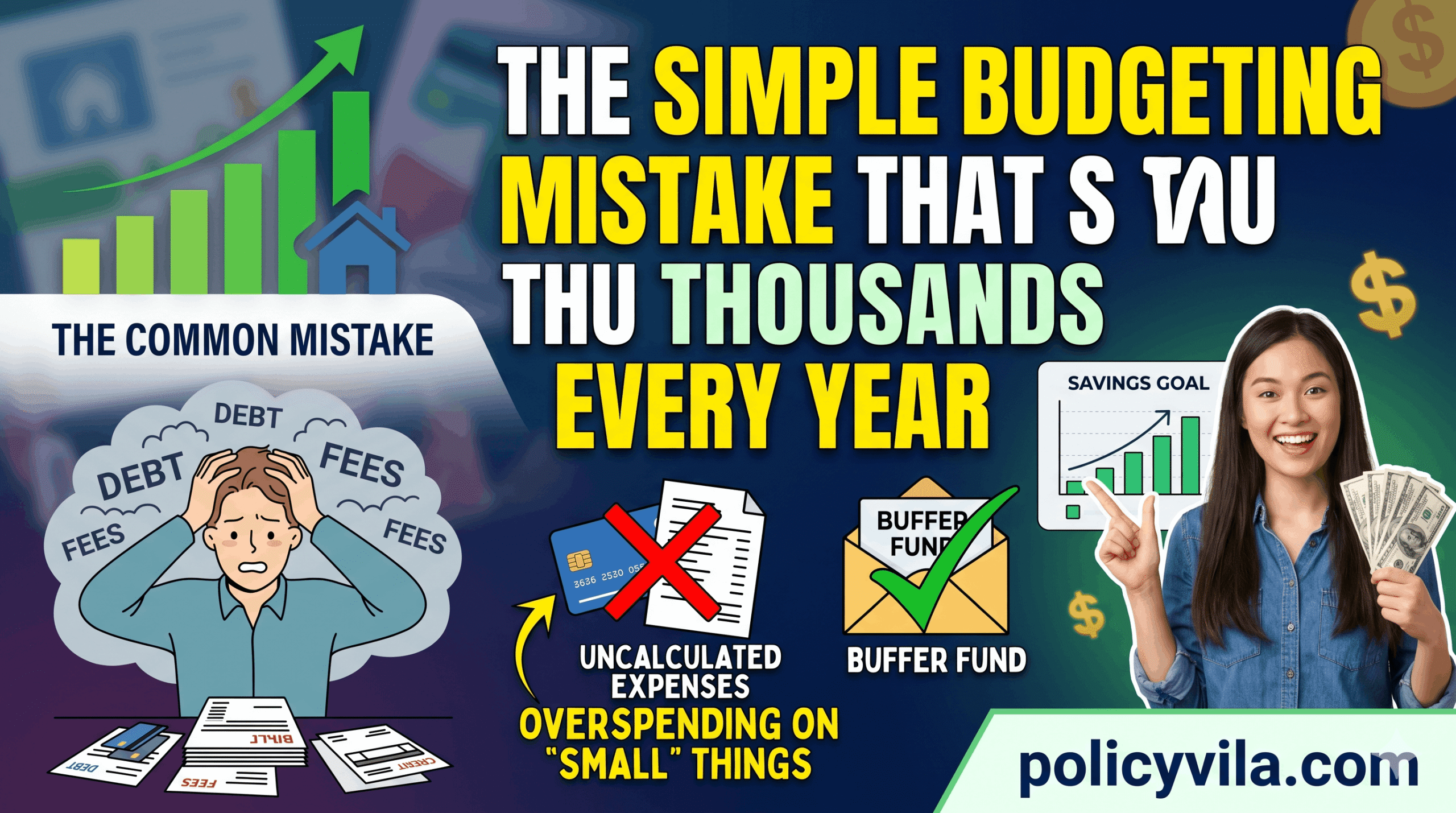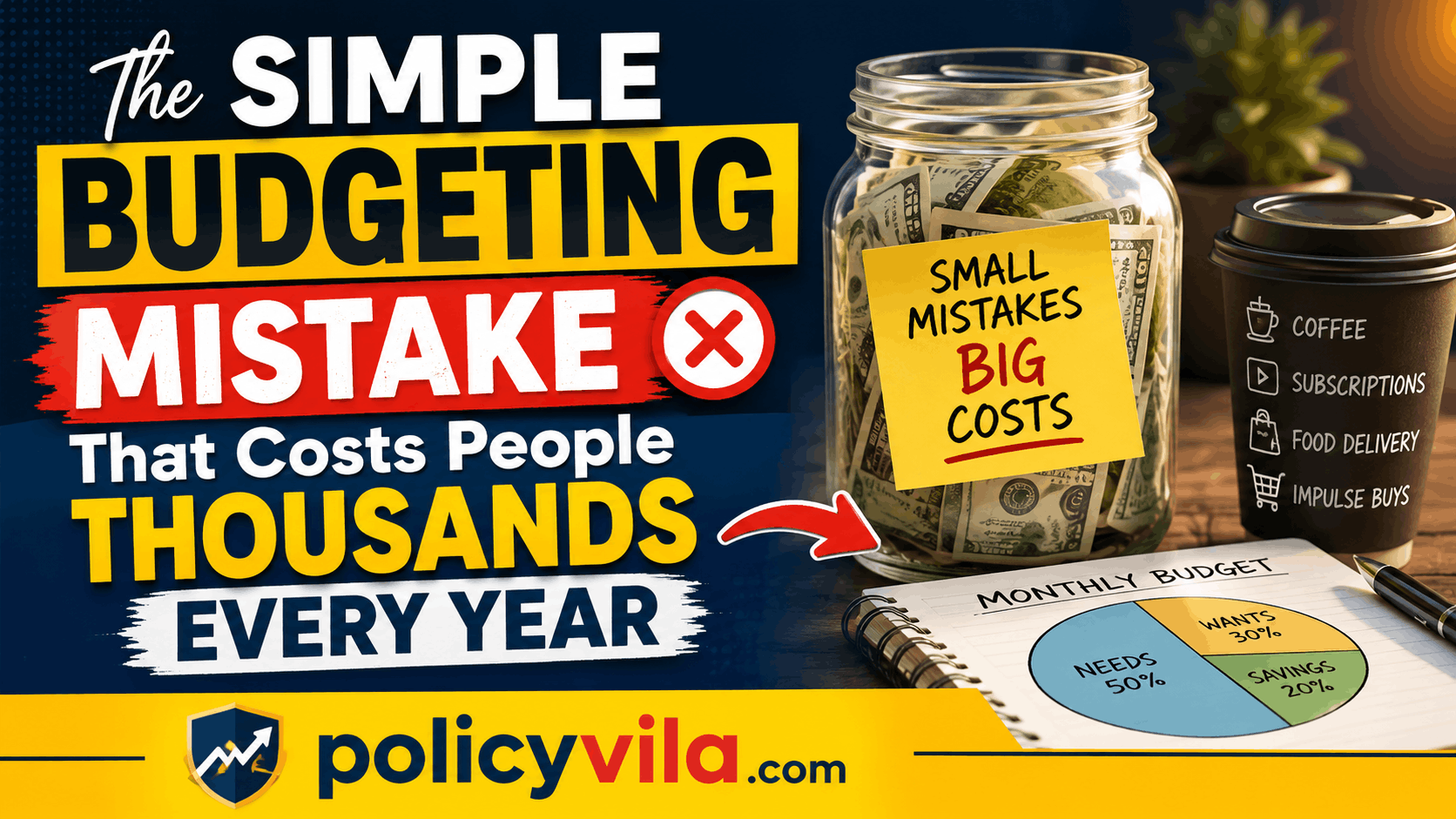

The Simple Budgeting Mistake That Costs People Thousands Every Year

Introduction

Many people believe that financial success depends on earning a high income. While income certainly matters, the reality is that budgeting habits often have a greater impact on long-term financial health than salary alone. Every year, millions of individuals lose significant amounts of money not because they earn too little, but because they make one simple budgeting mistake that quietly drains their finances.

The Simple Budgeting Mistake That Costs People Thousands Every Year

The mistake is surprisingly common: spending money without consistently tracking where it goes.

Small daily expenses often seem harmless. A coffee on the way to work, an online subscription, frequent food deliveries, or impulse purchases may not appear significant individually. However, over months and years, these expenses accumulate and can cost thousands of dollars.

Budgeting is not about restricting every purchase or eliminating enjoyment from life. Instead, it is about understanding your financial habits and making intentional decisions with your money. When people fail to track expenses, they lose visibility into their spending patterns. Consequently, they may struggle to save, build emergency funds, reduce debt, or achieve long-term financial goals.

In 2026, digital payment systems have made spending easier than ever. Mobile wallets, online shopping platforms, and subscription services allow consumers to spend money with just a few clicks. While convenience has improved, financial awareness has often declined.

This guide explains the most common budgeting mistake, why it happens, how it affects financial health, and practical strategies to avoid it. Whether you are just beginning your financial journey or looking to improve your money management skills, understanding this issue can help you keep more of your hard-earned money.


Understanding the Most Common Budgeting Mistake

One of the most common and costly budgeting mistakes people make is failing to track their expenses consistently. Many individuals create a monthly budget and believe that the job is done. However, a budget is only effective when it is regularly monitored and adjusted based on actual spending behavior.

Expense tracking involves recording, reviewing, and analyzing where money is spent throughout the month. This simple habit provides valuable insights into spending patterns and helps identify areas where money may be wasted unnecessarily. Without proper tracking, it becomes difficult to determine whether financial goals are being achieved or whether spending is exceeding planned limits.

Many people unintentionally lose control of their budgets because they:

  • Estimate expenses instead of tracking them accurately
  • Overlook small daily purchases
  • Forget about recurring subscription payments
  • Rarely review bank or credit card statements
  • Spend impulsively without monitoring totals

As a result, actual expenses often exceed budgeted amounts without the individual realizing it. Small purchases may seem insignificant on their own, but when combined over weeks, months, and years, they can add up to substantial financial losses.

Furthermore, failing to track expenses creates a gap between financial intentions and financial reality. Someone may believe they are saving money effectively, while their spending habits tell a completely different story. Consequently, important financial goals such as building an emergency fund, reducing debt, or increasing savings may become much harder to achieve.

Therefore, consistent expense tracking remains one of the most powerful budgeting tools available. By understanding exactly where money goes each month, individuals can make smarter financial decisions, reduce unnecessary spending, and maintain greater control over their personal finances.


Why Small Expenses Create Big Problems

One of the biggest reasons budgeting mistakes become expensive is that people often underestimate the long-term impact of small, everyday purchases. While major financial decisions such as buying a home or taking out a loan receive a great deal of attention, minor daily expenses frequently go unnoticed. Unfortunately, these small purchases can quietly consume a significant portion of a person’s income over time.

Consider a simple example. Purchasing a coffee for $5 each day may not seem like a major expense. However, when that habit continues throughout the month and year, the cost becomes much more substantial.

Example of Small Expenses Adding Up

Daily Coffee

  • Cost per day: $5
  • Monthly cost: Approximately $150
  • Annual cost: Approximately $1,800

Similarly, many people pay for multiple digital services without fully considering their combined cost.

Streaming Subscriptions

  • Monthly cost: $40
  • Annual cost: Approximately $480

Food delivery services can also increase spending significantly through service fees and convenience charges.

Food Delivery Fees

  • Weekly cost: $25
  • Annual cost: Approximately $1,300

Individually, these expenses may appear affordable and harmless. However, when combined, they can exceed several thousand dollars each year. In many cases, people are surprised when they calculate the total amount spent on these seemingly minor purchases.

The Power of Accumulation

Small expenses become problematic because they occur repeatedly. A single purchase may have little impact on a budget, but recurring spending creates a cumulative effect that can significantly reduce savings and financial flexibility.

For example, money spent on unnecessary subscriptions, impulse purchases, and convenience services could potentially be redirected toward:

  • Emergency savings
  • Debt repayment
  • Investment accounts
  • Retirement planning
  • Major financial goals

As a result, even modest spending reductions can create meaningful financial improvements over time.

Why These Expenses Often Go Unnoticed

Many recurring expenses are easy to overlook because they are:

  • Automatically charged
  • Relatively inexpensive individually
  • Spread throughout the month
  • Viewed as normal daily habits

Consequently, money leaves bank accounts gradually and quietly, making it difficult to recognize the true financial impact without proper expense tracking.


How Overspending Happens Without Notice

Overspending rarely occurs because someone intentionally decides to waste money.

Instead, it typically develops gradually through everyday habits.

Common causes include:

Impulse Purchases

Online shopping has made impulse buying easier than ever.

Consumers frequently purchase items because:

  • They appear discounted
  • Limited-time offers create urgency
  • Social media influences buying decisions
  • Convenience encourages spending

While individual purchases may seem insignificant, repeated impulse buying can seriously damage a budget.

Person reviewing monthly budget and tracking expenses to avoid common budgeting mistakes
The Simple Budgeting Mistake That Costs People Thousands Every Year

Subscription Overload

Many people forget about recurring subscriptions.

Examples include:

  • Streaming platforms
  • Fitness memberships
  • Software services
  • Mobile applications
  • Online storage plans

Because these payments occur automatically, they often escape attention.

As a result, consumers continue paying for services they rarely use.


Lifestyle Inflation

Lifestyle inflation occurs when spending increases alongside income.

For example:

  • Salary increases
  • Spending increases immediately
  • Savings remain unchanged

Rather than using additional income to improve financial security, individuals expand their lifestyle.

This pattern prevents wealth accumulation despite higher earnings.


Why Expense Tracking Changes Everything

Expense tracking provides visibility into financial behavior.

When people monitor spending consistently, they begin noticing patterns that were previously invisible.

Benefits include:

Increased Financial Awareness

Tracking reveals:

  • Spending categories
  • Monthly habits
  • Wasteful purchases
  • Savings opportunities

Awareness often leads to better decision-making.


Better Budget Accuracy

Without tracking, budgets are based on assumptions.

With tracking, budgets reflect actual behavior.

This allows individuals to:

  • Create realistic spending limits
  • Identify overspending areas
  • Improve financial planning

Stronger Saving Habits

Expense tracking frequently uncovers money that can be redirected toward:

  • Emergency funds
  • Debt reduction
  • Investments
  • Financial goals

Consequently, saving becomes easier and more consistent.


The Hidden Cost of Ignoring a Budget

Ignoring a budget creates financial consequences that extend beyond simple overspending.

Potential effects include:

Increased Debt

When expenses exceed income, many individuals rely on:

  • Credit cards
  • Personal loans
  • Buy-now-pay-later services

Over time, borrowing creates additional financial pressure.


Delayed Financial Goals

Overspending often delays important goals such as:

  • Home ownership
  • Education funding
  • Retirement savings
  • Business investments

Small budgeting mistakes today can postpone major achievements tomorrow.


Financial Stress

Money problems remain one of the leading sources of stress.

Uncontrolled spending often creates:

  • Anxiety
  • Relationship conflicts
  • Sleep difficulties
  • Reduced financial confidence

Therefore, budgeting is not merely a financial tool—it is also a stress-management strategy.


A Simple Monthly Budget Example

Creating a monthly budget does not have to be complicated. In fact, one of the most effective ways to manage money is to assign every dollar of income a specific purpose. This approach helps ensure that essential expenses are covered, financial goals are funded, and discretionary spending remains under control.

Consider a person earning $3,000 per month after taxes. A simple budget could be organized into three main categories: essential expenses, financial priorities, and personal spending.

Essential Expenses

These are the costs required for everyday living and basic needs.

  • Housing: $900
  • Utilities: $200
  • Transportation: $300
  • Food and groceries: $400

Total Essential Expenses: $1,800

Since these expenses are necessary, they should generally receive the highest priority in a budget.

Financial Priorities

This category focuses on building financial security and reducing future financial risks.

  • Savings: $300
  • Emergency Fund: $200
  • Debt Repayment: $200

Total Financial Priorities: $700

Allocating money toward savings and debt reduction each month helps create long-term financial stability. Even small contributions can grow significantly over time when maintained consistently.

Expense tracking dashboard showing spending categories and monthly budget analysis
The Simple Budgeting Mistake That Costs People Thousands Every Year

Personal Spending

Personal spending includes non-essential purchases and lifestyle choices.

  • Entertainment: $200
  • Dining Out: $150
  • Miscellaneous Expenses: $150

Total Personal Spending: $500

Including discretionary spending in a budget is important because it makes the plan more realistic and easier to maintain over the long term.

Budget Summary

Category Amount
Essential Expenses $1,800
Financial Priorities $700
Personal Spending $500
Total Income Allocated $3,000

Why This Budget Works

This example demonstrates how a balanced budget can help individuals manage their money effectively. Essential expenses are covered first, financial goals receive dedicated funding, and personal spending is kept within reasonable limits.

Furthermore, assigning every dollar a purpose reduces unnecessary spending, improves financial awareness, and helps prevent unexpected budget shortfalls. As a result, individuals gain greater control over their finances and make steady progress toward both short-term and long-term financial goals.

Expense Tracking Methods That Actually Work

Creating a budget is only the first step. The real challenge is consistently tracking expenses and comparing actual spending against planned spending.

Fortunately, modern technology makes this easier than ever.

The Manual Tracking Method

Some people prefer recording every expense manually.

This can be done using:

  • A notebook
  • A spreadsheet
  • A budgeting journal

Benefits include:

  • Greater awareness of spending
  • Improved financial discipline
  • Better understanding of spending patterns

Although manual tracking requires effort, it helps people develop stronger money management habits.


Budgeting Apps

Many budgeting applications automatically categorize expenses.

Popular features include:

  • Expense tracking
  • Spending reports
  • Savings goals
  • Budget alerts

These tools help users identify problem areas and monitor financial progress more efficiently.


Weekly Financial Reviews

Instead of waiting until the end of the month, successful budgeters review finances weekly.

A weekly review allows you to:

  • Spot overspending early
  • Adjust spending habits quickly
  • Prevent financial surprises

Even 15 minutes per week can significantly improve budgeting success.


The Psychology Behind Overspending

Understanding why people overspend is just as important as understanding how to budget.

Many spending decisions are emotional rather than logical.

Emotional Spending

People often spend money when experiencing:

  • Stress
  • Boredom
  • Excitement
  • Anxiety
  • Frustration

Shopping may provide temporary satisfaction, but emotional spending frequently creates long-term financial problems.

Recognizing emotional triggers helps reduce unnecessary purchases.


Instant Gratification

Humans naturally prefer immediate rewards over future benefits.

For example:

  • Buying a new gadget today feels rewarding.
  • Saving money for retirement feels distant.

This tendency often leads to overspending.

However, learning to delay gratification can dramatically improve financial outcomes.


Social Comparison

Social media has increased financial pressure for many people.

Individuals frequently compare themselves to:

  • Friends
  • Influencers
  • Colleagues
  • Celebrities

Consequently, people may spend money trying to maintain appearances rather than meeting genuine needs.

A healthy budget focuses on personal goals instead of external expectations.


Common Budgeting Mistakes Beyond Expense Tracking

Failing to track expenses is the biggest budgeting mistake, but it is not the only one.

Setting Unrealistic Budgets

Some people create extremely restrictive budgets.

For example:

  • No entertainment spending
  • No dining out
  • No personal purchases

Such budgets are difficult to maintain long-term.

Instead, realistic budgets should include reasonable discretionary spending.


Ignoring Irregular Expenses

Many budgets account for monthly bills but ignore occasional expenses.

Examples include:

  • Car maintenance
  • Insurance renewals
  • Holiday shopping
  • Medical expenses
  • Home repairs

Ignoring these costs often results in unexpected financial stress.

Therefore, a portion of monthly income should be reserved for irregular expenses.


Not Having an Emergency Fund

Unexpected expenses happen to everyone.

Without emergency savings, individuals often rely on debt.

A strong emergency fund helps cover:

  • Medical emergencies
  • Job loss
  • Vehicle repairs
  • Home maintenance

As a result, savings provide financial stability during difficult times.


Failing to Adjust the Budget

Financial situations change over time.

Income may increase.

Expenses may rise.

Family responsibilities may evolve.

Therefore, budgets should be reviewed and adjusted regularly rather than remaining fixed indefinitely.

Personal finance budgeting plan with savings goals, bills, and expense management chart
The Simple Budgeting Mistake That Costs People Thousands Every Year

Building a Sustainable Budget

The best budget is not necessarily the strictest one.

The best budget is the one you can maintain consistently.

Start With Financial Goals

Every budget should support specific goals.

Examples include:

  • Paying off debt
  • Building emergency savings
  • Purchasing a home
  • Saving for education
  • Planning retirement

Goals provide motivation and direction.


Use the 50/30/20 Framework

A popular budgeting method divides income into three categories:

50% Needs

Essential expenses:

  • Housing
  • Utilities
  • Transportation
  • Food

30% Wants

Lifestyle spending:

  • Entertainment
  • Dining out
  • Hobbies

20% Savings and Debt Repayment

Financial priorities:

  • Emergency funds
  • Investments
  • Loan repayments

This structure provides flexibility while encouraging responsible money management.


Automate Savings

One of the simplest ways to improve financial health is automation.

Automatic transfers help ensure savings occur consistently.

Benefits include:

  • Reduced temptation to spend
  • Improved savings discipline
  • Faster progress toward goals

Many successful savers treat savings like a mandatory monthly bill.


How Budgeting Can Save Thousands Over Time

Small improvements create powerful long-term results.

Consider an individual who reduces unnecessary spending by:

  • $5 per day

Annual savings:

Approximately $1,825

Over five years:

More than $9,000

Without considering investment growth.

This example demonstrates how small financial decisions can create substantial long-term benefits.


The Connection Between Budgeting and Financial Freedom

Financial freedom does not necessarily mean becoming wealthy.

Instead, it means having sufficient control over money to make choices confidently.

Budgeting contributes to financial freedom by:

  • Reducing debt
  • Increasing savings
  • Improving cash flow
  • Lowering financial stress
  • Supporting long-term goals

Consequently, budgeting serves as the foundation of personal financial success.


Financial Habits of Successful Budgeters

People who consistently manage their finances well often follow a set of habits that help them stay in control of their money. While income levels may vary, successful budgeters typically share similar behaviors that support long-term financial stability and growth. These habits allow them to avoid unnecessary debt, build savings, and achieve their financial goals more effectively.

They Track Spending Regularly

One of the most important habits of successful budgeters is monitoring where their money goes. They do not rely on estimates or assumptions. Instead, they regularly review bank statements, payment histories, and spending reports to maintain a clear picture of their finances.

Benefits of regular expense tracking include:

  • Greater financial awareness
  • Better budget accuracy
  • Faster identification of overspending
  • Improved decision-making

By reviewing transactions frequently, successful budgeters can quickly spot spending patterns and make adjustments before small issues become major financial problems.

They Save Before Spending

Many people save whatever money remains at the end of the month. Successful budgeters take the opposite approach. They treat savings as a priority rather than an afterthought.

This strategy is often called “paying yourself first.” As soon as income is received, a portion is allocated to:

  • Savings accounts
  • Emergency funds
  • Investment accounts
  • Long-term financial goals

By saving before spending, individuals build financial security consistently and reduce the temptation to use all available income on discretionary purchases.

They Avoid Lifestyle Inflation

Lifestyle inflation occurs when spending increases every time income increases. While it is natural to improve one’s quality of life over time, excessive lifestyle inflation can prevent long-term wealth building.

Successful budgeters understand this risk. When they receive:

  • Salary increases
  • Bonuses
  • Business profits
  • Additional income sources

they often direct part of the extra income toward savings and investments instead of increasing spending at the same rate.

As a result, their net worth grows more quickly and financial goals become easier to achieve.

They Plan for the Future

Financially disciplined individuals think beyond today’s expenses. They understand that unexpected events and future responsibilities require preparation.

Therefore, they regularly plan for:

  • Emergency situations
  • Retirement needs
  • Major purchases
  • Education expenses
  • Family responsibilities

Long-term planning reduces financial uncertainty and helps ensure that important goals can be achieved without excessive borrowing.

They Review and Adjust Their Budgets

Successful budgeters recognize that financial situations change over time. Income, expenses, and priorities may evolve, making it important to review and update budgets regularly.

They often:

  • Analyze monthly spending
  • Adjust financial goals
  • Reevaluate savings targets
  • Improve budgeting strategies

This flexibility helps maintain financial control even during changing circumstances.

read also: Best Family Insurance Policies 2026: Compare Costs, Coverage & Hidden Benefits


Frequently Asked Questions

What is the biggest budgeting mistake?

The most common budgeting mistake is failing to track expenses consistently. Without tracking, it becomes difficult to identify overspending and control financial habits.

How often should I review my budget?

Most financial experts recommend reviewing your budget weekly and conducting a more detailed review monthly.

Can budgeting really save money?

Yes. Budgeting helps identify wasteful spending, improve savings habits, and reduce unnecessary expenses.

What percentage of income should be saved?

Many people aim to save at least 20% of income, although the ideal amount depends on personal circumstances and financial goals.

Do I need budgeting software?

No. Budgeting can be done using a notebook, spreadsheet, or mobile app. Consistency matters more than the tool itself.


Conclusion

The simple budgeting mistake that costs people thousands every year is not tracking expenses consistently. While the mistake appears small, its long-term impact can be significant. Unmonitored spending, impulse purchases, subscription overload, and lifestyle inflation quietly reduce financial progress and make saving more difficult.

Fortunately, the solution is straightforward. By tracking expenses, reviewing spending habits, creating realistic budgets, and aligning money decisions with financial goals, individuals can gain greater control over their finances.

Budgeting is not about restricting your lifestyle. Instead, it is about making informed decisions that support financial security, reduce stress, and create opportunities for future success.

Ultimately, every dollar has a purpose. The more intentional you become with your spending, the easier it becomes to save, invest, and build a stronger financial future.

Money management and budgeting strategy helping reduce overspending and improve financial health
The Simple Budgeting Mistake That Costs People Thousands Every Year

Leave a Comment