
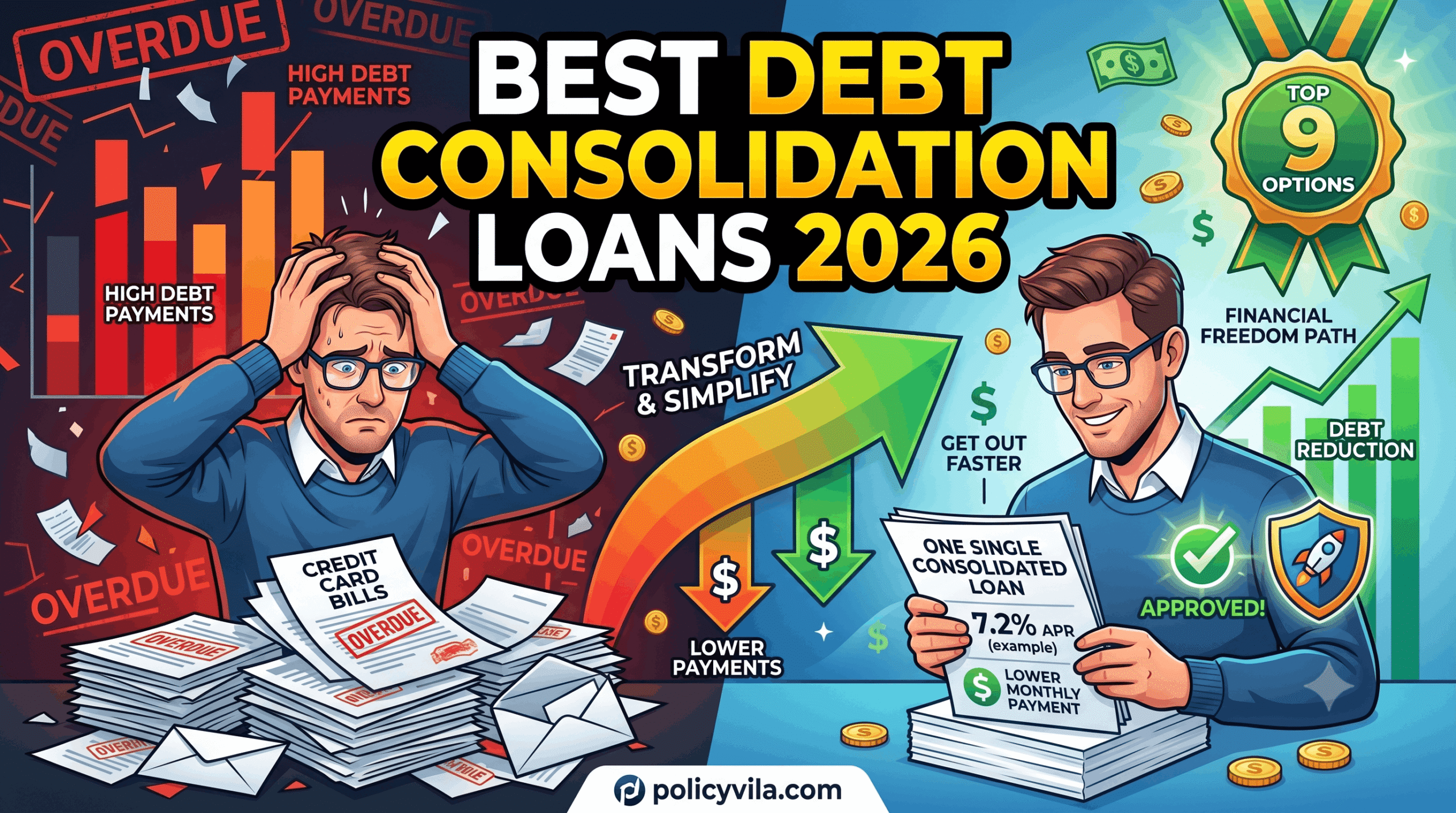
This guide explains how debt consolidation works, which lender categories tend to fit which financial situations, how to compare offers properly, and the mistakes that turn a potentially helpful tool into a more expensive one.
Quick Answer: What Is a Debt Consolidation Loan?
A debt consolidation loan combines multiple existing debts into a single new loan, ideally at a lower interest rate, so you make one monthly payment instead of several. It works best for borrowers with stable income and multiple high-interest balances who are committed to not accumulating new debt afterward.
What a Debt Consolidation Loan Actually Does
A debt consolidation loan pays off your existing debts — typically credit cards, personal loans, or store financing — and replaces them with one new loan carrying its own rate, term, and monthly payment.

Example
Consider a borrower with the following balances:
| Debt | Balance | APR |
|---|---|---|
| Credit Card A | $4,000 | 26% |
| Credit Card B | $3,000 | 24% |
| Personal Loan | $5,000 | 15% |
That’s $12,000 spread across three payments and three interest rates. A $12,000 consolidation loan at a lower fixed rate — say 10% — pays off all three, leaving one monthly payment, one due date, and, in this case, a meaningfully lower combined interest cost.
[Relevant image: three separate bills merging into a single monthly payment]
How Consolidation Can Lower Monthly Payments
A Lower Interest Rate
Many borrowers use consolidation to replace high-interest credit card debt — often in the 20%–27% range — with a personal loan at a meaningfully lower rate, which reduces how much of each payment goes toward interest rather than principal.
A Longer Repayment Term
Consolidation loans commonly run anywhere from two to seven years. Stretching repayment over more time lowers the monthly payment, but it’s worth being clear-eyed about the trade-off: a longer term usually means more total interest paid over the life of the loan, even at a lower rate.
One Payment Instead of Several
Tracking a single due date instead of four or five reduces the chance of an accidental missed payment, which matters since payment history is one of the biggest factors in credit scoring.
Who Should Consider Debt Consolidation
- Borrowers with multiple credit card balances — consolidating several high-rate cards into one loan simplifies repayment and can lower the blended interest rate
- Anyone paying 20% or more on revolving debt — even a personal loan in the mid-teens represents meaningful savings
- Households managing several financial obligations at once — a single payment can be easier to plan around than several scattered due dates
- Borrowers with stable, verifiable income — most lenders want confidence that the new payment is affordable long-term
- People ready to stop adding new debt — consolidation works best as a reset, not as a way to free up credit for more spending
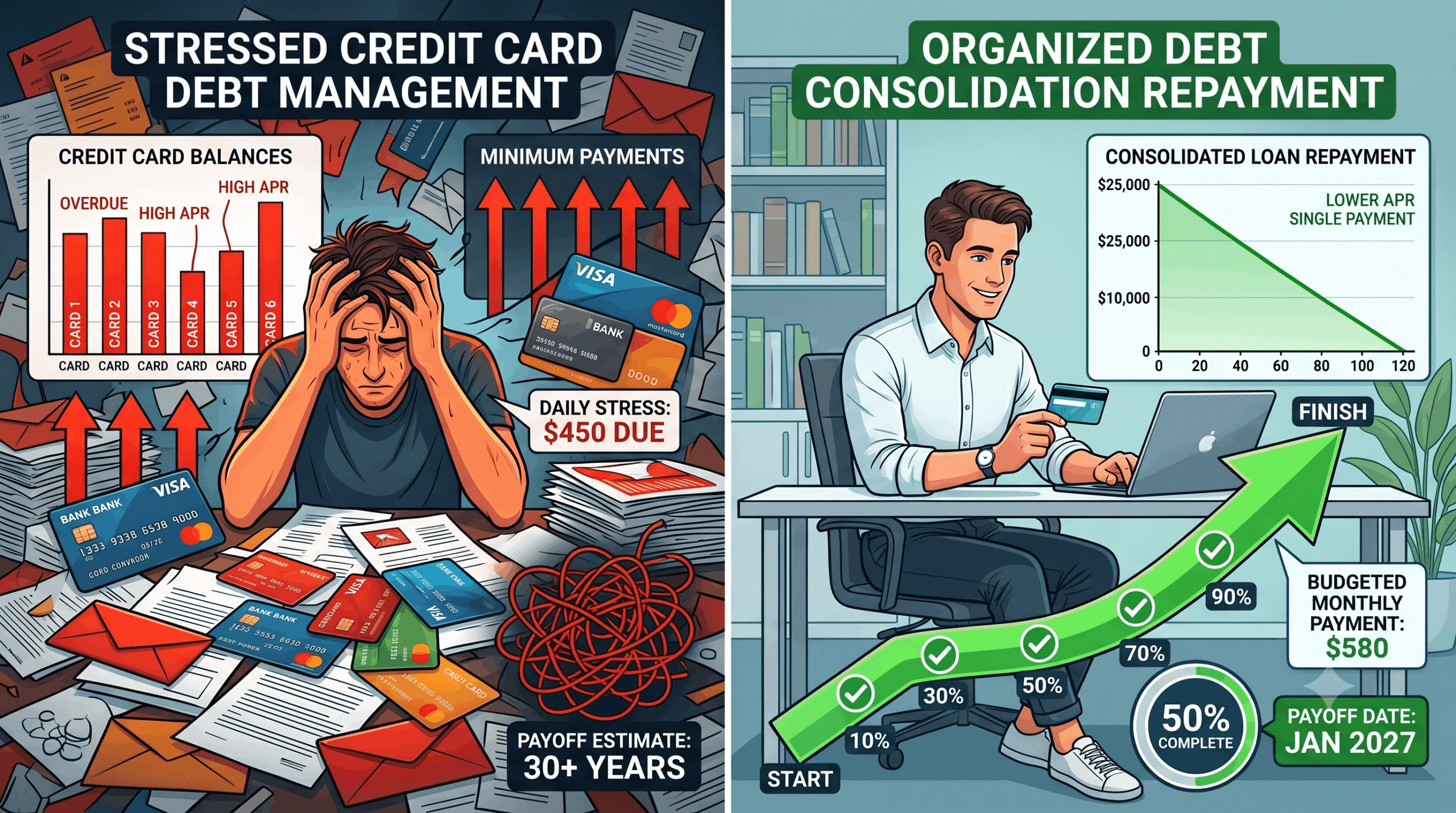
When Consolidation May Not Be the Right Fit
- Your credit isn’t strong enough to get a meaningfully better rate — if the consolidation loan’s APR isn’t lower than your current average, the main benefit disappears
- Your total debt is fairly small — for a balance you could reasonably pay off in a few months, the effort and any fees may not be worth it
- Spending habits haven’t changed — consolidating debt without addressing what created it often leads to the same balances building back up, this time alongside a new loan
- Fees outweigh the projected savings — origination fees and other charges can erase some or all of the interest savings on smaller loans
Types of Debt Consolidation Lenders
Rather than any single “best” lender, different lender categories tend to suit different financial profiles. Compare actual rate quotes from a few options in whichever category fits your situation.
Online Personal Loan Lenders
Online lenders are often the fastest route to funding, with fully digital applications and same-week decisions in many cases. Rates vary widely by credit profile, and some charge origination fees, so comparing the full cost — not just the advertised rate — matters here.
Credit Unions
As member-owned institutions, credit unions frequently offer competitive rates and more flexible underwriting than larger banks, though they typically require membership and may have fewer branches. They tend to suit borrowers who value a more personal lending relationship.
Traditional Banks
Banks remain a common source of consolidation loans, particularly for existing customers who may qualify for relationship-based terms. Approval standards tend to be stricter and funding can take longer than online alternatives.
Fixed-Rate Consolidation Loans
Loans with a fixed rate and fixed monthly payment offer predictability for the full loan term, which suits borrowers who want to avoid the payment swings that can come with variable-rate products.
Lenders Serving Fair-Credit Borrowers
Several lenders specifically underwrite for fair-credit applicants. Rates here run higher than what excellent-credit borrowers receive, but they can still land well below typical credit card APRs, which is often the more relevant comparison.
Fast-Funding Lenders
For borrowers facing an urgent situation, some lenders can fund a loan within one or two business days. Speed sometimes comes with a rate premium, so it’s worth weighing urgency against cost.
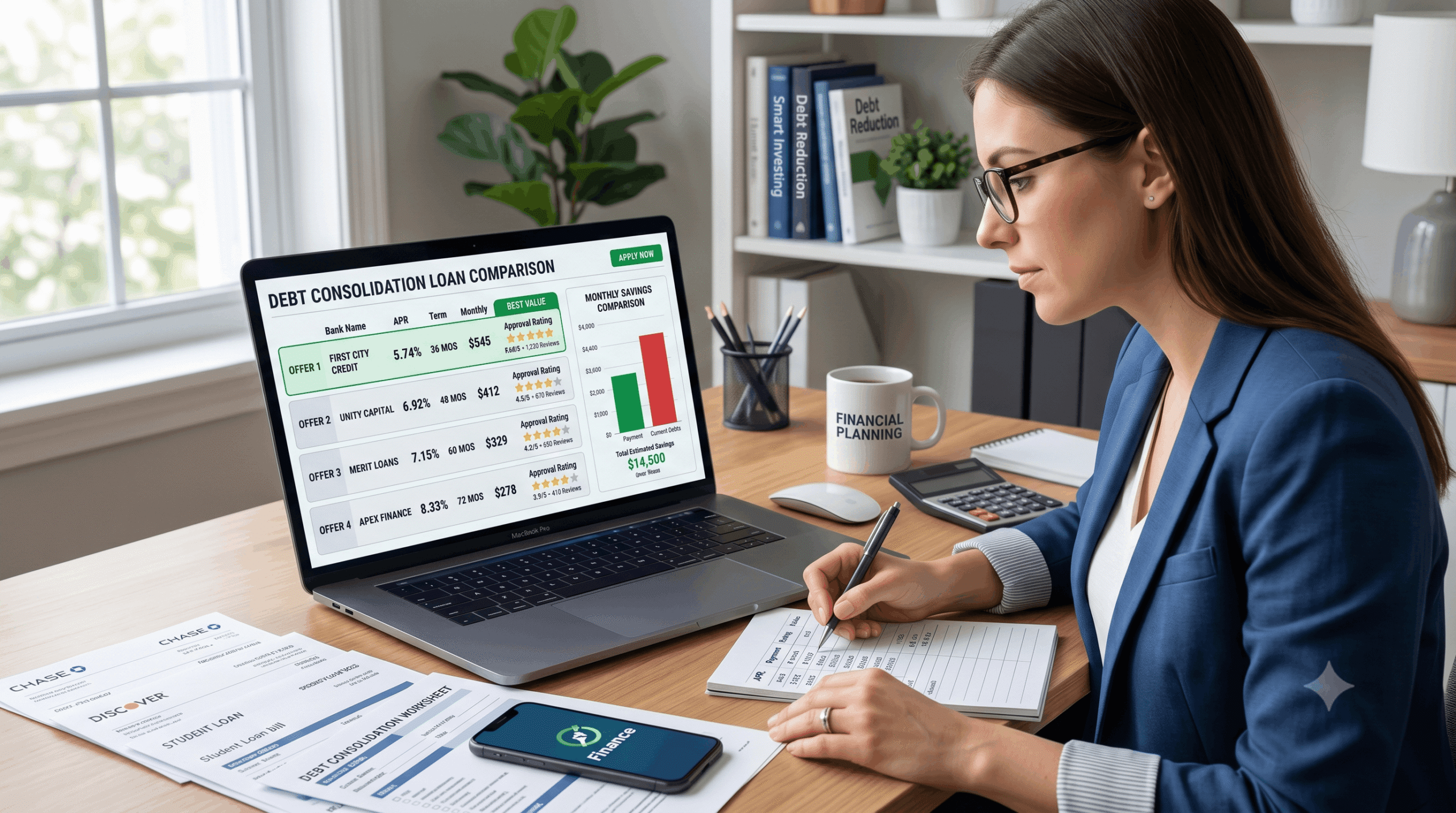
How to Compare Loan Offers
| Factor | What to Check |
|---|---|
| APR | The full annual cost of borrowing, not just the advertised rate |
| Loan term | Shorter terms mean higher payments but less total interest; longer terms do the opposite |
| Monthly payment | Realistically affordable alongside your other expenses |
| Fees | Origination fees, late fees, and prepayment penalties |
| Funding speed | How quickly the loan disburses if timing matters |
| Customer support | Especially relevant if your financial situation changes mid-loan |
A meaningful rate difference — even a few percentage points — compounds significantly over a multi-year term, so it’s worth getting quotes from more than one lender before committing.
Consolidation Loan vs. Balance Transfer Card
| Feature | Debt Consolidation Loan | Balance Transfer Card |
|---|---|---|
| Fixed monthly payment | Yes | Usually not |
| Fixed payoff date | Yes | Varies |
| Rate stability | Generally stable for the loan term | Introductory rates often expire |
| Best suited for | Larger balances, multiple debts | Smaller balances, fast payoff |
| Credit requirements | Moderate to high | Often higher for the best offers |
A consolidation loan tends to fit larger balances and borrowers who want a predictable, structured payoff. A balance transfer card can work well for a smaller balance that can realistically be paid off before an introductory rate expires — but if it isn’t, the rate typically reverts to a much higher standard APR.
How to Qualify for a Consolidation Loan
Lenders typically weigh several factors together rather than any single one in isolation:
- Credit score — higher scores generally unlock lower rates
- Income — stable, verifiable income supports repayment confidence
- Employment history — consistency matters more than a specific job title
- Existing debt load — lenders look at your full financial picture, not just the debts being consolidated
- Debt-to-income ratio — the percentage of gross monthly income already committed to debt payments
To improve approval odds, paying bills on time in the months before applying, reducing credit card balances where possible, checking your credit report for errors, and limiting other new credit applications all help.
Step-by-Step: How to Apply
- List every debt — balance, interest rate, and current monthly payment for each.
- Check your credit report — know your standing before lenders do, and correct any errors first.
- Get quotes from a few lenders — compare rates and terms rather than accepting the first offer.
- Calculate total cost, not just monthly payment — a lower payment on a longer term can still cost more overall.
- Submit an accurate application — inconsistencies can slow down or derail approval.
- Use the funds to pay off the targeted debts — confirm each old account shows a zero balance.
- Follow through with a repayment plan — and avoid rebuilding the balances you just paid off.
Common Mistakes to Avoid
- Consolidating without changing spending habits — a new loan doesn’t address the behavior that created the original debt
- Overlooking fees — origination and other charges can offset some of the interest savings
- Automatically choosing the longest term — lower monthly payments can mean significantly more total interest
- Missing payments — a single late payment can affect your credit and may trigger penalty terms
- Applying to too many lenders at once — multiple hard credit inquiries in a short window can temporarily lower your score
- Skipping the comparison step — accepting the first offer without checking others often means leaving savings on the table
- Borrowing more than the debt actually requires — extra borrowed funds tend to become new spending, not savings
- Expecting an immediate fix — consolidation restructures debt; it doesn’t erase it, and results build over the loan term
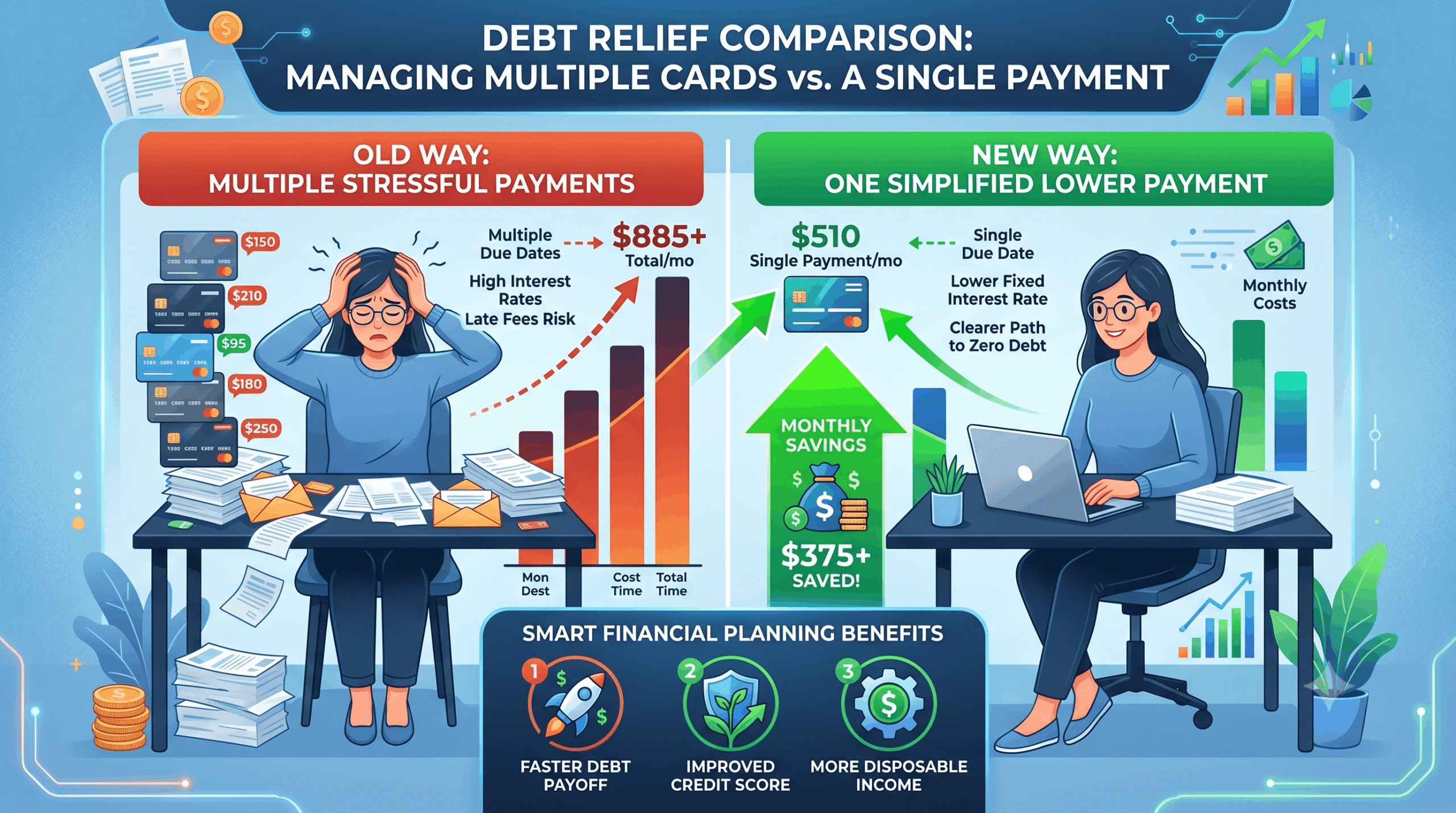
Alternatives Worth Knowing About
Debt Settlement
Debt settlement involves negotiating with creditors to pay less than the full balance owed. It can reduce total debt but often damages credit significantly and may involve tax consequences on forgiven amounts.
Credit Counseling and Debt Management Plans
Nonprofit credit counseling agencies can help negotiate lower rates with creditors and set up a structured repayment plan, often without requiring a new loan.
The Debt Avalanche or Snowball Method
Rather than consolidating, some borrowers choose to pay off existing debts in a specific order — highest interest rate first (avalanche) or smallest balance first (snowball) — while making minimum payments on the rest. This avoids taking on new financing entirely, though it doesn’t simplify multiple due dates the way consolidation does.
Pros and Cons of Debt Consolidation
| Pros | Cons |
|---|---|
| One monthly payment instead of several | Doesn’t work well if spending habits don’t change |
| Potentially lower interest rate than credit cards | Fees can offset some of the savings |
| A fixed, predictable payoff timeline | Longer terms can increase total interest paid |
| Simpler budgeting and fewer missed-payment risks | Requires decent credit to access the best rates |
Frequently Asked Questions
Will closing my old credit card accounts after consolidating hurt my credit?
It can, since closing an account reduces your total available credit and may raise your credit utilization ratio. Many financial advisors suggest keeping older accounts open, even at a zero balance, unless there’s a specific reason to close them.
Can I consolidate just one credit card instead of all my debts?
Yes. You’re not required to consolidate everything — some borrowers choose to combine only their highest-interest balances while continuing to manage the rest separately.
What happens if I miss a payment on a consolidation loan?
A missed payment is typically reported to credit bureaus and may trigger a late fee, similar to any other installment loan. Repeated missed payments can lead to default, which is significantly more damaging to your credit than the original scattered debts.
Does applying for a consolidation loan affect my credit score right away?
Most lenders perform a hard credit inquiry during formal application, which can cause a small, temporary dip. Some lenders offer pre-qualification with a soft inquiry that doesn’t affect your score, letting you compare estimated rates first.
Is a secured consolidation loan a better choice than an unsecured one?
Secured loans, backed by collateral like a vehicle or savings account, often come with lower rates, but they put that asset at risk if you default. Unsecured loans carry no collateral risk but typically require stronger credit for the best terms.
How much can debt consolidation actually save me?
It depends entirely on the rate difference between your old debts and the new loan, plus any fees. Comparing the total cost of your current debts against the total cost of the new loan — not just the monthly payments — gives the clearest picture.
Can I still use my credit cards after consolidating the balances?
Yes, but doing so undermines the purpose of consolidating in the first place. Running new balances on cards you just paid off often leaves borrowers with both the new loan payment and fresh credit card debt.
Do debt consolidation loans show up differently on a credit report than credit card debt?
Yes. A consolidation loan is installment debt, while credit cards are revolving debt. Some borrowers see a modest credit benefit from shifting balances from revolving to installment debt, since it can improve credit utilization on cards.
What’s a reasonable APR to expect on a consolidation loan?
Rates vary considerably by credit profile and lender, so there’s no single reasonable figure — the more useful comparison is your consolidation loan’s quoted APR against your current average rate across existing debts.
Can self-employed borrowers qualify for debt consolidation loans?
Yes, though lenders typically request additional documentation, such as tax returns or bank statements, to verify income consistency, since self-employment income can be less predictable than a salaried position.

Final Thoughts
Debt consolidation is a restructuring tool, not a debt-elimination shortcut. Combining several high-interest balances into one lower-rate loan can genuinely reduce what you pay in interest and make repayment easier to track — but only if the new loan’s terms are actually better than what you’re replacing, and only if it’s paired with a real commitment to not rebuilding the old balances.
Before applying anywhere, list your current debts, know your credit standing, and compare more than one loan offer side by side. The right consolidation loan is the one whose total cost — rate, term, and fees combined — is genuinely lower than continuing to carry your existing debts separately.
2 thoughts on “Best Debt Consolidation Loans in 2026: 9 Top Options to Lower Payments and Get Out of Debt Faster”